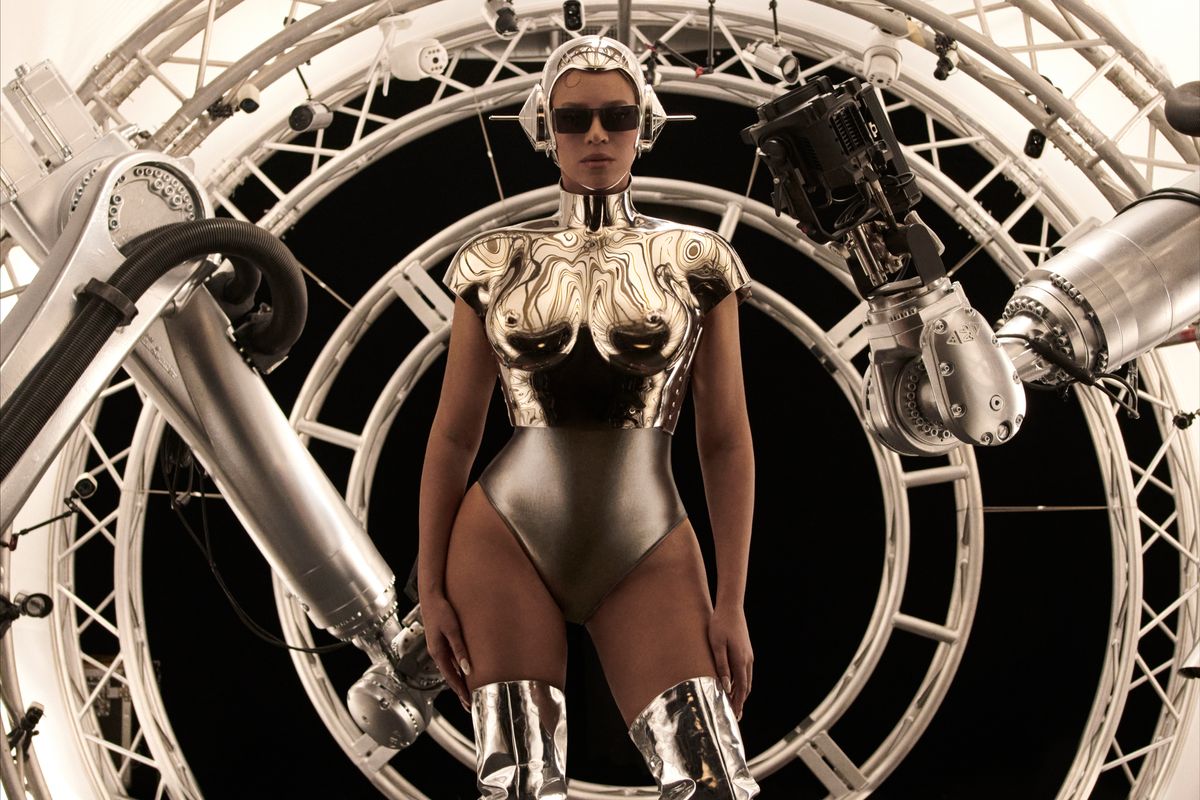


Bangalter said that the two became robots as they were working in their studio on the morning of September 9, 1999, at precisely 9:09 a.m. He explained that he and de Homem-Christo were working on their sampler when it exploded. When they regained consciousness, they discovered that they'd become machines. Regardless of the credibility of that tall tale, Bangalter's story was a fun way to defuse pre-millennial angst and poke fun at DJ culture in general. No one expected the costumes to last. But they did, and at this point, the helmets are as iconic as the KISS makeup or Iggy Pop's leather jacket. By now, the two are almost like method actors (or method DJs); they are rarely photographed without their masks. Many of their fans don't know what they look like. "The mask gets very hot," Bangalter admits. "But after wearing it for as long as I have, I am used to it."
Daft Punk met when they were 12, bonding over a mutual love of midnight movies, Easy Rider and the Velvet Underground. They founded a Beach Boys-inspired band called Darlin in high school (with Laurent Brancowitz, who later joined wistful French outfit Phoenix), and put out a single in 1992. A negative review in British music mag Melody Maker called their song "daft punk," and the two adopted the slur as identity, just as they were beginning to go to raves. ("Raves changed everything," Bangalter says.)
After years DJing around Paris, they released their debut, Homework, in 1997. Its dark, grinding house numbers, including "Da Funk" and "Around the World," became popular as DJ culture reached its zenith. Going back to the studio, Daft Punk returned in 2001 with the funkier Discovery, which was more sonically complex than its minimal predecessor and featured the undeniably joyful wedding disco of "One More Time." For that album, Daft Punk wrote and produced a Japanime film called Interstella 555: The 5tory of the 5ecret 5tar 5ystem, using Discovery as the soundtrack. After releasing a remix record, the two were on hiatus until 2004's Human After All, which was recorded in just six weeks and largely derided as a lackluster effort.
In the interim, dance artists had been rising to the fore in Paris, New York and elsewhere. James Murphy, one of the co-founders of DFA Records and the man behind LCD Soundsystem, was one who bridged the worlds of punk and dance. On his debut in 2005, Murphy released a single called "Daft Punk Is Playing at My House," which he has said was a fantasy of his, an extension of the typical punk-band-playing-the-rec-room dynamic of American youth. The lyrics imagine a fist-fighting good time as "robots descend from the bus." When asked about the song now, Bangalter becomes coy. "It's a cool song." The 32-year-old continues, "Would we play James Murphy's house now? We can't confirm and we can't deny. There are a lot of secrets about us. That's what's exciting, you know?"
Maintaining the aura of mystery is one tenet of the group, who have worked with some of the best video directors in the business to capture a moment and obfuscate their own identity: Spike Jonze, Roman Coppola and Michel Gondry. The latter director's older brother Olivier is directing and editing the video for the first single off of ALIVE 2007, "Harder Better Faster Stronger," which was shot at Coney Island earlier this summer. Daft Punk arranged for audience members to bring cameras (250 people did) -- post-modernism at work.
We are happy to mean something," Bangalter says. "The hardest thing for an artist isn't measuring up to people's expectations. It's about getting across the understanding that what we did was legitimate. We see it as a validation, sort of -- whether it comes five years or 10 years down the line, obviously it's better if the validation comes while you're still alive."