Popularity is relative, especially in the digital age. You could have hundreds of thousands of followers online but be completely unknown in the streets — massively famous on Instagram, YouTube or Twitter, but lack any kind of real, authentic cool in person. For our series Coolest Person in the Room, we pinpoint all the people whose energy is contagious regardless of their following count or celebrity. For this edition, we caught up with Alejandro Gómez Palomo, designer and creative director of the Spanish fashion label, Palomo.

What does cool mean to you, and has that relationship changed at all over time?
If I think of me being the coolest person in the room, I like to think that the thing that makes me cool in the room would be the energy that I have towards people I really like. It’s part of my education and part of who I am to really make people feel good around me. I feel like I’m kind of a host at the same time that I do all these jobs. Being a cool person in a room is making everyone else feel relaxed and nice and just have a good time.
I make quite a big effort in trying to get everyone to have a good time. Apart from that, of course, we do like playing dressing up a lot. I’m not only a designer that makes clothes for people to feel cool, I do enjoy dressing up myself as well. It’s always being about not being too shy, about putting on an outfit and showing up in a place.
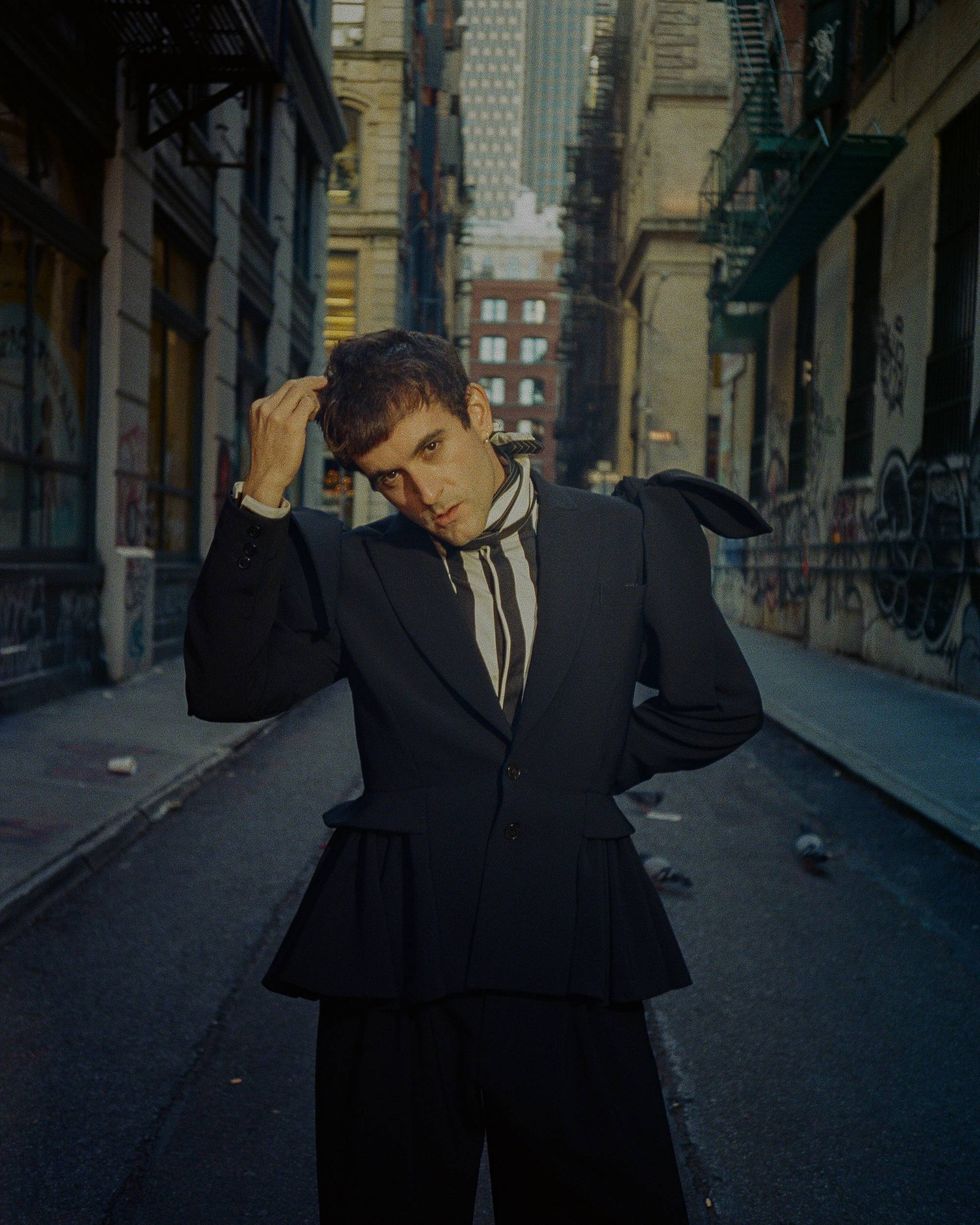
Full look: Palomo
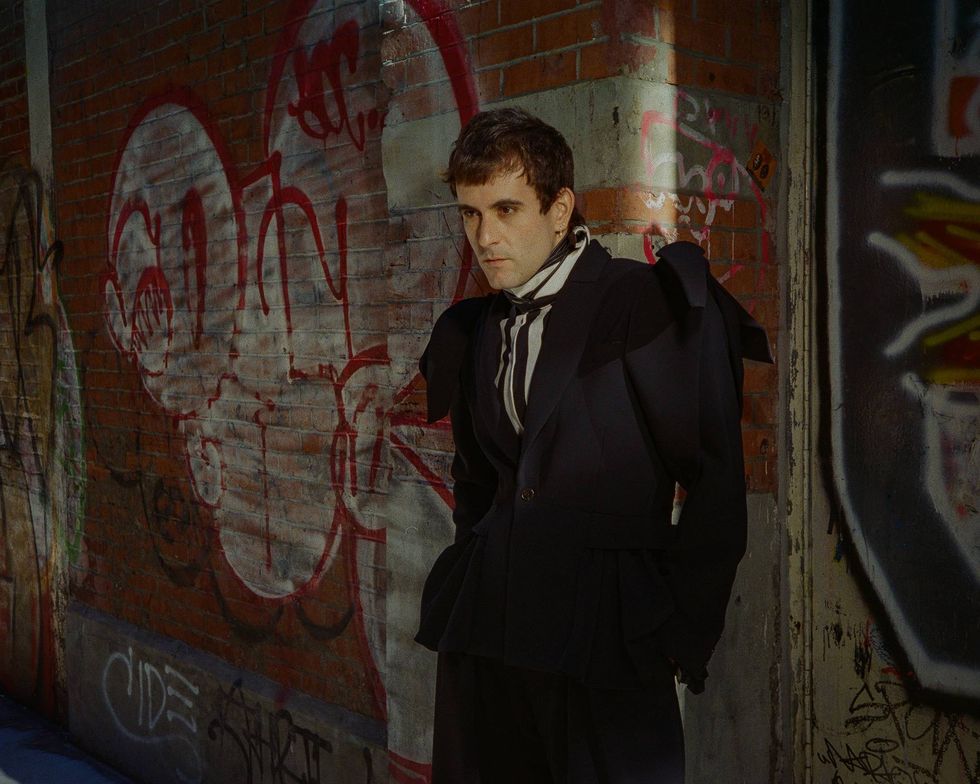
Culturally right now, what are you feeling excited about, and what feels alive to you?
Being back in the city, it’s changed my perspective completely. I was mostly getting all my inspiration from such a small folklore kind of surrounding. A lot of my work has a lot to do with that — with Southern Spain, with Flamenco, looking at the past rather than living in such a modern society.
But then traveling, or having lived in London, or going to New York a lot and mixing all that with going back to the village, was what made everything kind of very new and coherent, and had both modernity and the folkloric aspect. Now that i’m living in Madrid, it’s kind of part of the DNA, all that folklore inside me.
I’ve always been very curious, not only about art, but how younger generations really behave — observing what young people are doing. It’s been a lot of me reflecting this Christmas how communication and fashion has changed so much since I started until now. I can see a lot of young kids in New York or even in Madrid being what we were at the beginning, and it makes me think the whole thing is changing. We need to be really aware and really looking at what young people are saying, how they’re acting, how they’re dressing.
I like to find little kids from New York on Instagram or walk around Soho and observe how they’re dressing. Possibly New York and Madrid for me now are the only places in the world where fashion is still kind of exciting or is kind of in its moment. I find it really inspiring when fashion comes from absolutely nowhere, from no reference. It’s got nothing to do anymore with what’s proper and what isn’t. We were terrified by skinny jeans two days ago and now I see them in New York and I’m like, I want to be like them. Why are they wearing Jeremy Scott’s sneakers and skinny jeans again? And it all works for some reason.
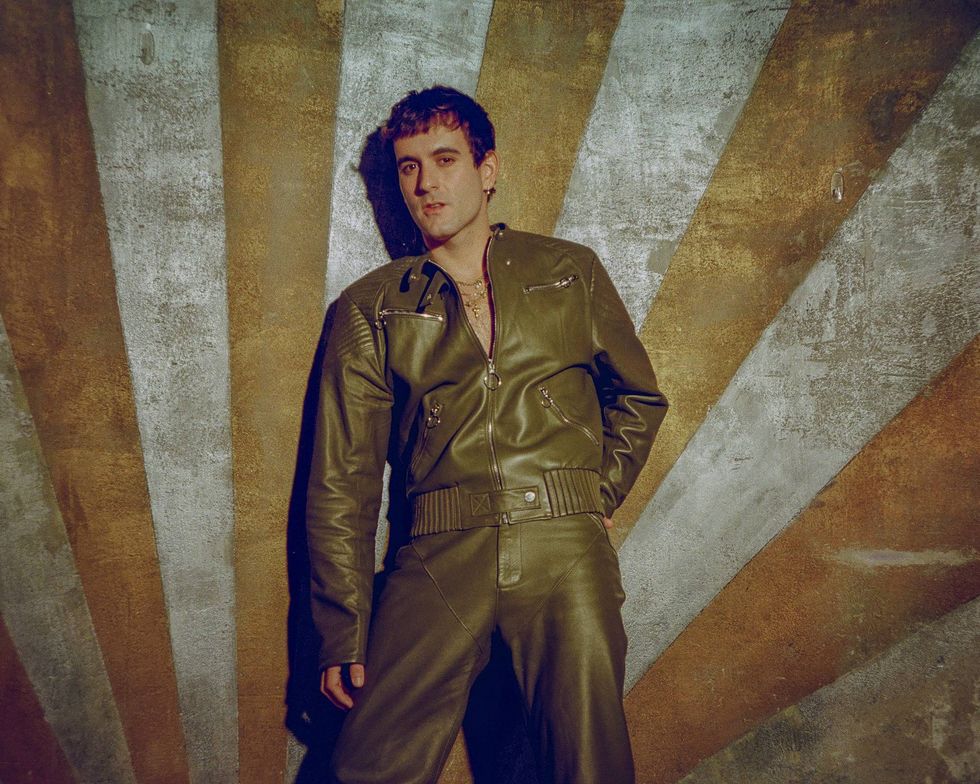
Full look: Palomo
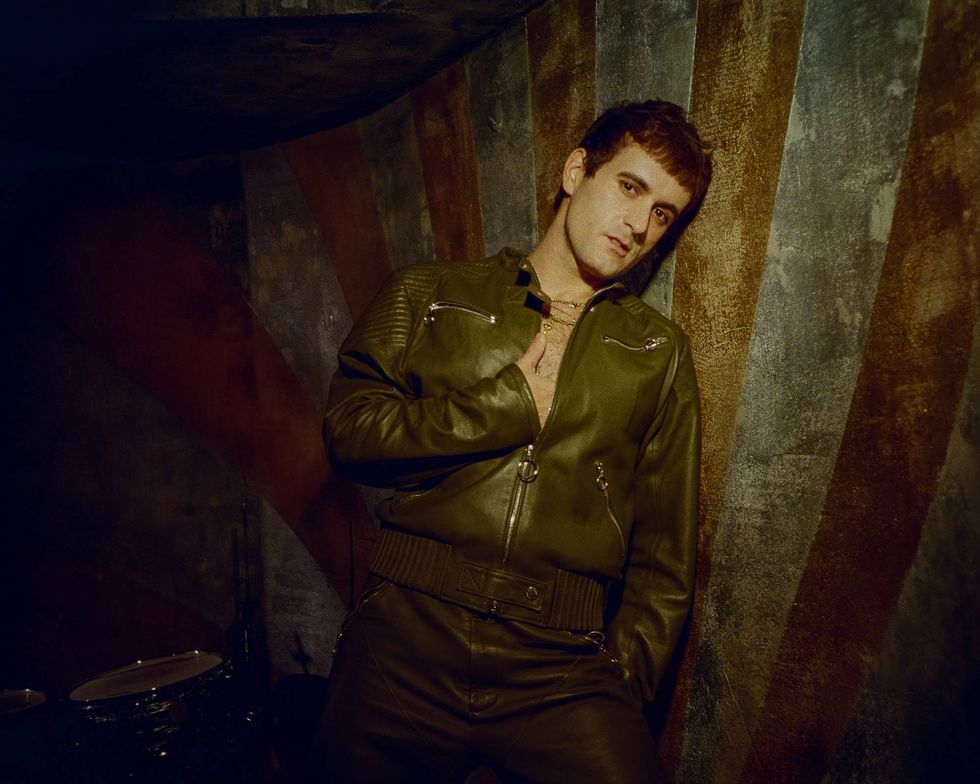
What are some of the contradictions you lean into as a person or designer?
There’s always been this dialogue inside me: what’s nice, what’s proper, what am I meant to be doing in fashion, and what am I not even allowed to say. My two different realities, what you show in public and when you are inside your house, the two different dualities that live within us.
I’m really interested in people’s secrets: what are they like when they’re not seen, and the way that we all escape. What makes us be excited about life is having those moments when you escape from your own reality and become someone else.
The good side and the bad side living together, not being ashamed from one another. Who you can be when you’re relaxed and in love, and who you can be when you’re eager for a crazy night out, exploring your sexuality with no limits and no inhibitions. Trying to find inspiration in the lightest places, in the most beautiful places — that’s why we leaned into such contrast with [our Cruising in the Rose Garden show]. We thought, we’re gonna create this cruising scene, but let’s imagine we’re doing this in the most beautiful garden in Versailles. It was about playing with whimsical and fetish.
And tension is the most magical word in fashion. When you’re trying to create something that’s new, you need to go through a process of tension, uncomfortableness — something that makes you feel a little bit odd. Trying to find beauty in something that’s so ugly to start with is where you find magical things and new answers.
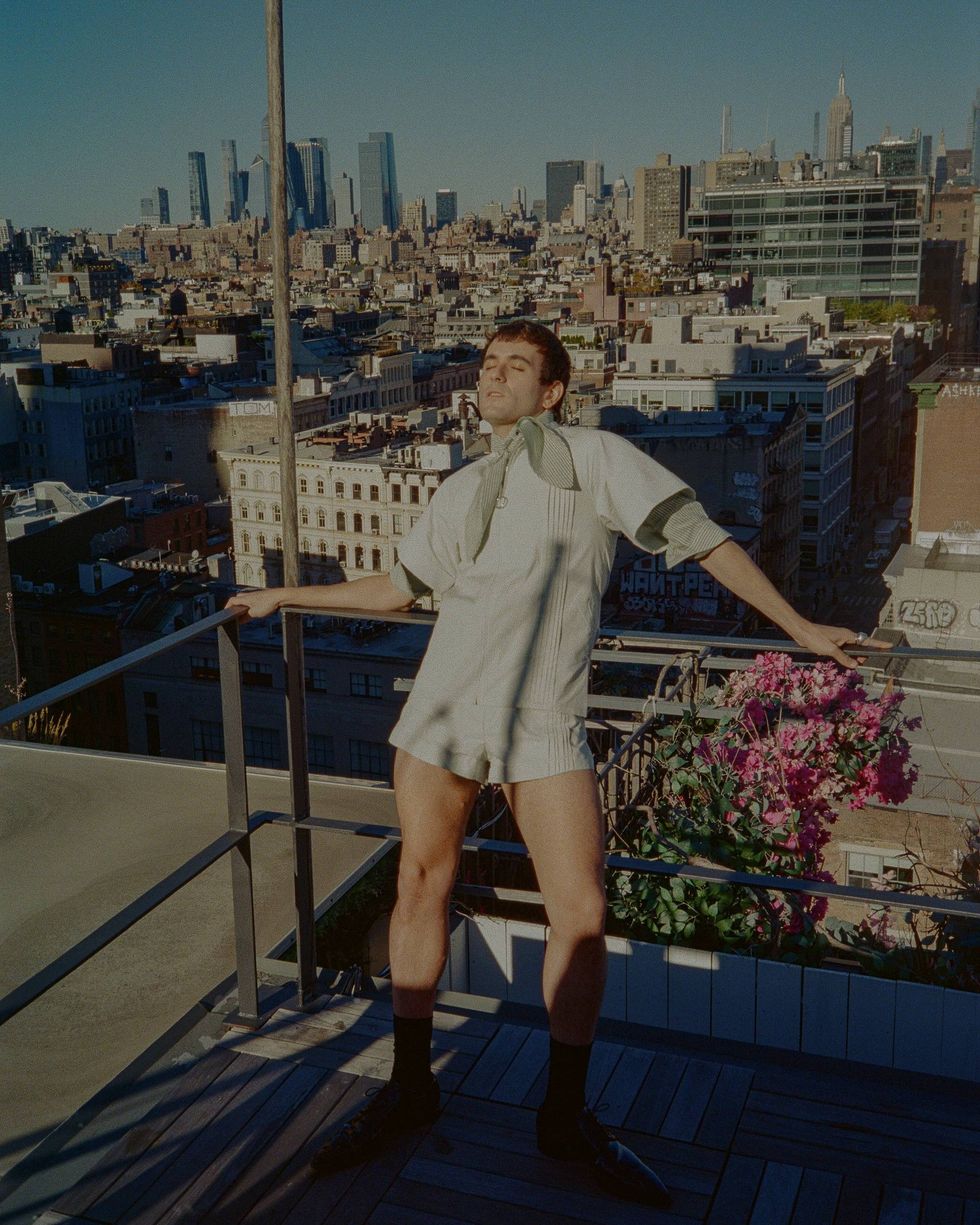
Full look: Palomo
How do you think about the Palomo customer today?
When I think of my customer now, for me, they’re someone that’s free above all things. Freedom has been my motto since I’m a kid. I’ve always allowed myself to be whomever I want. Palomo has always been the place for you to be whoever you are — to find yourself in a safe zone. It’s a brand that kind of allows you to be that person you’ve dreamt of because we’ve given a newer option, a newer scope of what menswear fashion can be like.
And it is tough these days to think that we’re trying to make people buy into glorious, beautiful clothes, whimsical parallel realities, when reality hits so hard every day. But what else can we do? Our job is to try to create those happy places where you can escape in fashion — to get people outside of their everyday, just by dressing up and thinking that the world can be beautiful.
How do you think about genderless fashion now?
I never intended to have a brand that was a genderless brand because it wasn’t a concept when I started 10 years ago. It was an answer to what I was doing. I was only trying to give men an option because we didn’t have those options — a little embroidery, a brighter color, a fun print — things historically reserved to womenswear.
I had no fear about going deep into what the codes of menswear and womenswear had been historically: feathers and dresses and transparency and sequins. The aesthetics didn’t have a gender at all — detail, crafts, embellishment, even cut didn’t have to do with gender. But the reality is the clothes had a gender because of the body. Women have come into buy my clothes, but we always had to alter them because the arms were longer and the shoulders were wider. That’s probably one of the reasons we go into womenswear fully now.
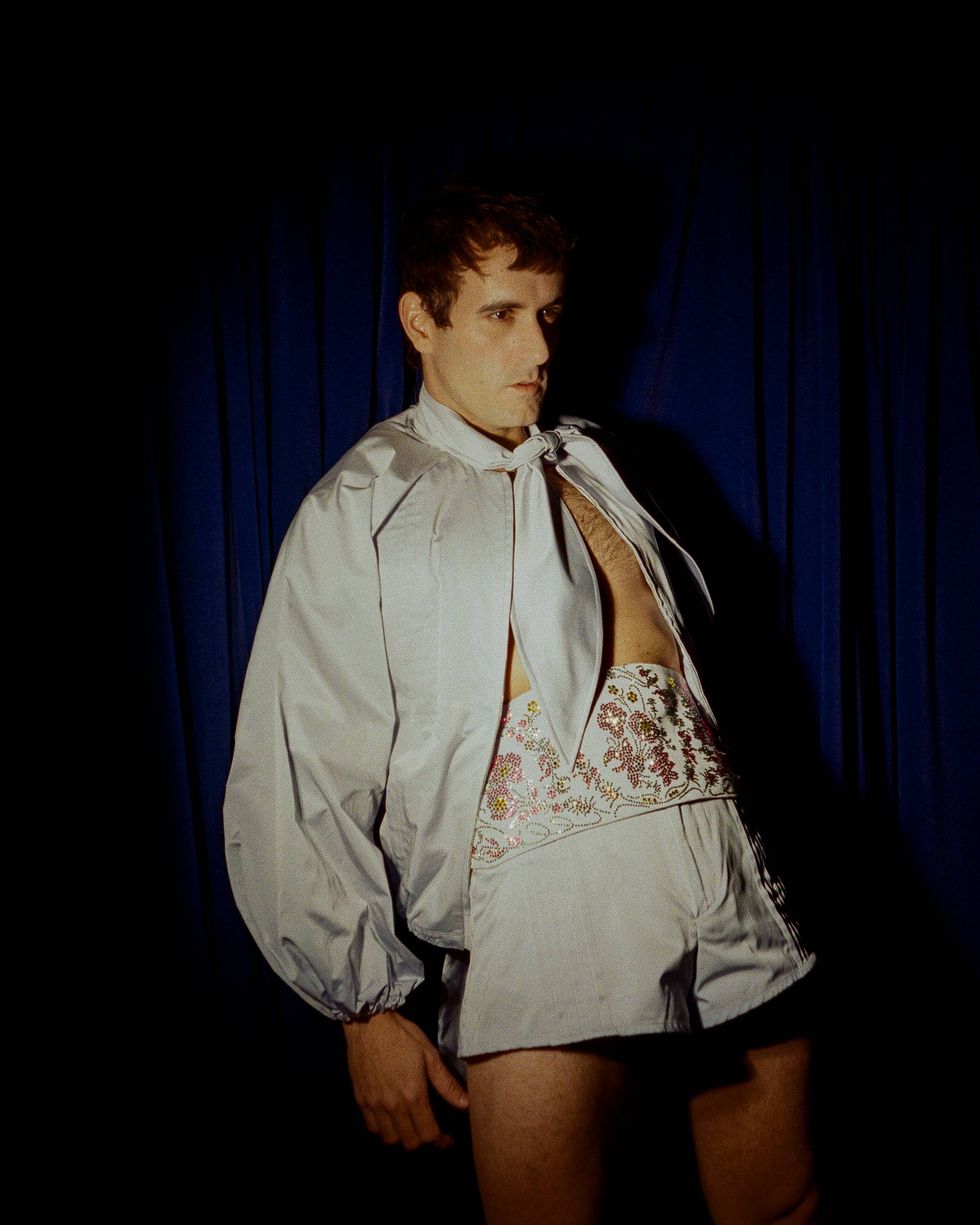
Full look: Palomo
What’s your perfect night out?
It’d be about seeing old friends, seeing new friends, seeing what the new kids are doing, meeting new people, being drunk and being wild. It’d be perfect if I managed to escape and have the rest of the night by myself. I get to that point when I’m like, it’s time for myself.
Even though I’m the most social person, I find it so rewarding that I’m able to have a lot of fun when I’m by myself too. If you stop feeling so VIP for a second, there’s another very interesting world. I like the other side of the night when it’s a bit more lonely and dark and secret. There are cute creatures in the night that give you the life of a whole collection.
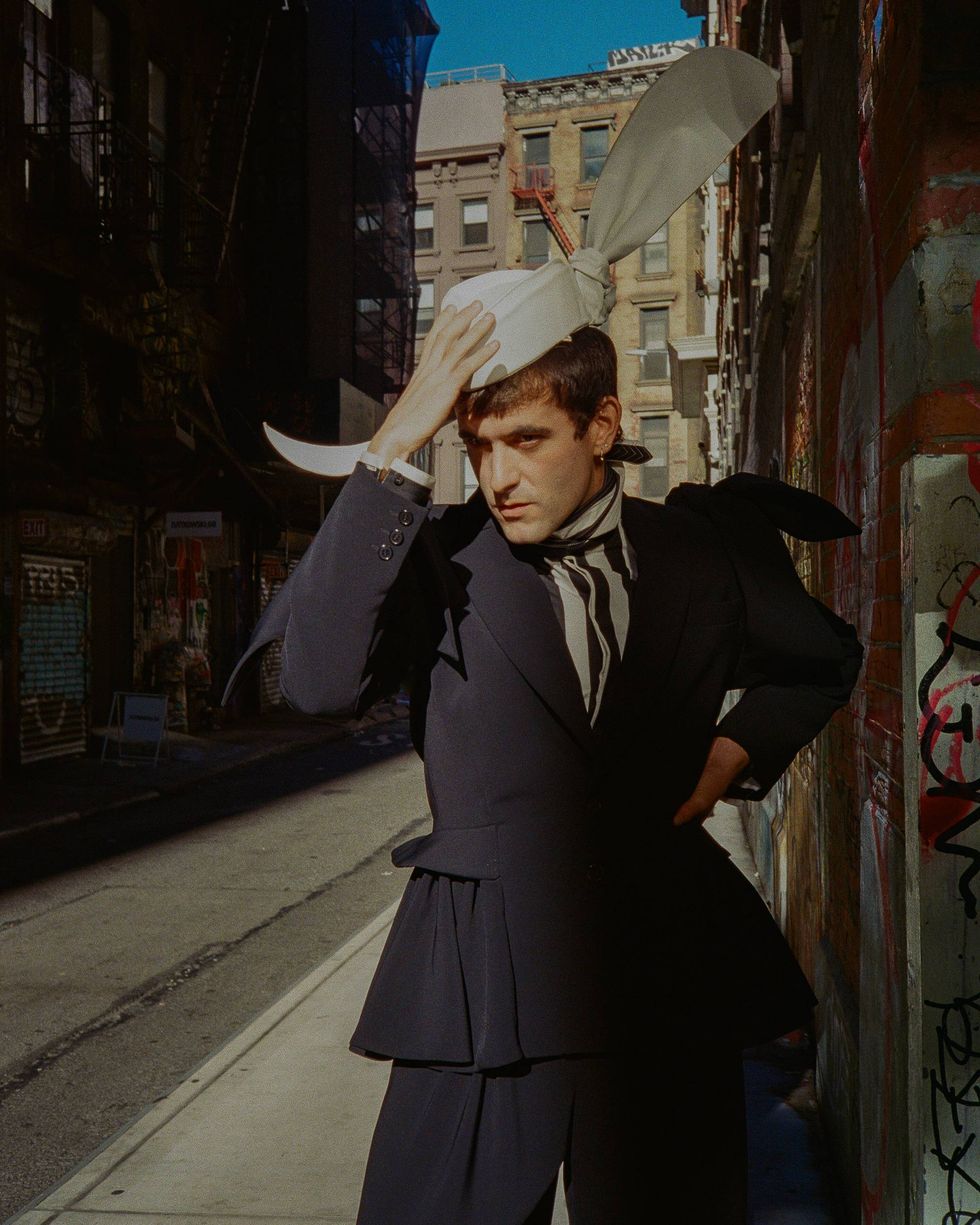
Full look: Palomo
Photography Diego Villagra Motta
Story Jay Choyce Tibbitts
Styling Angelina Cantú
Lighting Designer Peter Demas
Styling Assistants Joyce Esquenazi Mitrani
Executive Creative Producer Angelina Cantú
Chief Creative Officer Brian Calle
Location Walker Hotel Tribeca
From Your Site Articles