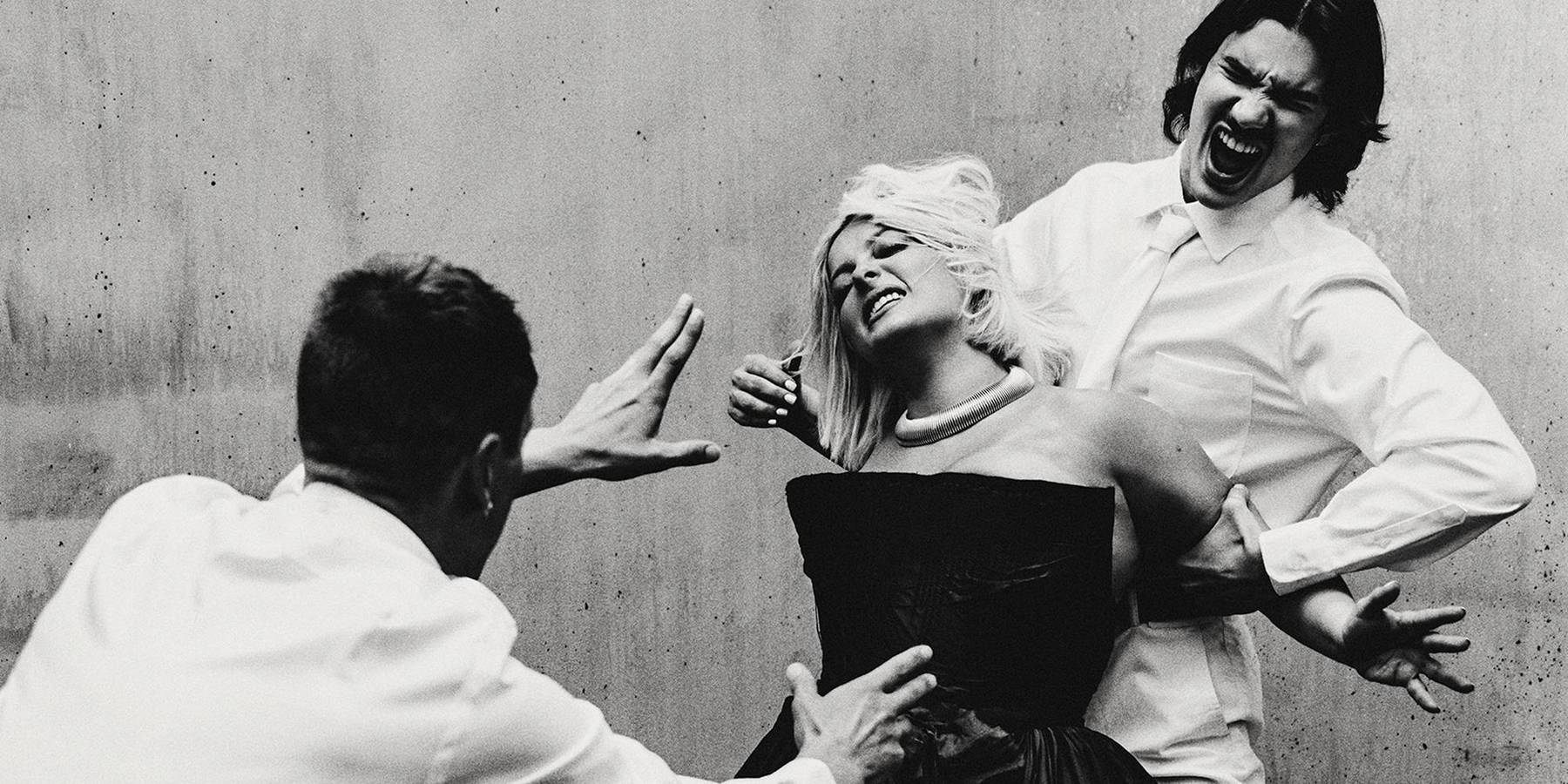
Chika wants to come home. In the video for “Float,” premiering today on PAPER, the Alabama-born rapper and singer longs for a home that is no longer physically there.
“Most of the places I loved growing up aren’t there anymore,” she says. “They’re either closed or completely different now.” It’s a relatable thing, right? Going back to your hometown and noticing how different things feel — the restaurants you remember are gone, the neighborhood looks unfamiliar, the places that once felt permanent suddenly aren’t.
Over the past several years, Chika has carved out a reputation as one of rap’s most thoughtful and technically gifted voices. The Alabama native first broke through in the late 2010s with a series of viral freestyles that showcased her razor-sharp lyricism and commanding delivery, eventually leading to her debut project INDUSTRY GAMES in 2020 and a Grammy nomination for Best New Artist. But while those early moments introduced her as a formidable rapper eager to prove her skill, the music she’s released since has increasingly turned inward, trading bravado for reflection.
That introspection deepened after the death of her father, an experience that reshaped how she thinks about home altogether. The Alabama she grew up in still exists, of course, but the version tied to childhood — the one filled with familiar faces, routines and places that once felt permanent — is harder to return to. That tension sits at the heart of her reflective EP WISH YOU WERE (T)HERE, the project “Float” arrives from, where Chika processes grief, memory and the strange realization that some of the places that shaped us only survive in fragments.
It’s also why the video for “Float” feels intentionally intimate. Instead of glossy production or elaborate sets, Chika chose to ground the visuals in the places that shaped her, including Vaughn Road Park, a neighborhood playground she spent time in growing up. Returning there to film B-roll for the video, she was struck by a small but meaningful sight: kids still playing outside, spinning on the same playground fixtures she once did.
“Those memories never die,” she says. “There’s better days ahead, but all my favorites are behind.”
Below, Chika reflects on nostalgia, slowing down artistically and why this new chapter of her career feels like a return to self.
First off, tell me about making the video for “Float.”
Going into “Float,” I knew I wanted it to feel nostalgic and authentic to my hometown and where I grew up, because the entire project is kind of like a homecoming. “Float” was the first time I got to sit down and reminisce about all the things and places I missed from where I’m from. I didn’t want the video to feel too produced or overly polished. I wanted it to feel like home footage. Just capturing real moments with the people who mean the most to me.
Your latest EP, WISH YOU WERE (T)HERE, is described as restorative. Did it feel more like therapy, or more like a confrontation with yourself?
I’d say more therapy than anything. Just returning to the studio and being able to sit down and build new things helped me pinpoint where I’m already at in life. We didn’t really have a direction for it. It was more about going in and, as we say, throwing paint and seeing what stuck. Whatever stuck would be something I subconsciously needed to get out. So it wasn’t really about confronting myself as much as reflecting on everything.
A line that stood out to me is, “I feel like I should write a book, but it’s just pictures of my face.” Are there any one-liners on the EP that stick out to you — moments where you were like, “Damn, that was good”?
There are a few. I always say when I’m writing and it’s going well, if I start laughing to myself, it’s probably a good line. One of my favorites on the project is, “My Michelangelo 2D, my Mona Lisa got angles,” which stems from talking about how you can approach any artistic medium from different perspectives and with different tools. It’s kind of encouraging anybody that they can make any kind of art with whatever they have. It’s just a matter of figuring it out. That’s one that sticks out to me a lot.
You talk about spending time in Nigeria after your father’s passing. Did that reconnect you with a part of your identity you hadn’t explored before, or shift how you think about home?
I actually didn’t get to go back. This was 2024, and I hadn’t been able to return to Nigeria. But it did shift my perspective in general, because my home is here, and this is the only place I’ve ever known my dad. There’s a little bit of selfishness in wanting him to be here at home so I can go see him more often, so it’s not a huge ordeal if I want to take a weekend and visit his final resting place. It’s not exactly an identity crisis, but it was something to process when that reality happened — the burial and everything surrounding it.
The roots of what he built here with our family are still here, but at the same time I can always go back to where he is and to his village. It’s like having two homes.
You touch on that in “Float.” This idea of returning to a home that no longer exists. Do you think that feeling comes more from geography, grief, fame, or all of it combined?
I think we’re just an amalgamation of all of our experiences. At every moment we’re grieving something that no longer exists. So I don’t think it’s really geographical. It’s more about where your heart is, which sounds corny, but it’s true. Those memories never die.
I say, “There’s better days ahead, but all my favorites are behind,” because those things have already happened. You can’t go back to them. But there’s beauty in that. Home will always exist in the memory of what it was. If you can invoke those memories in whatever you’re doing, wherever you are in life, you’ll feel at home. It becomes a personal journey. Home is yours, even if it no longer exists in a tangible sense.
Since releasing the EP, how has the reception been? You dropped INDUSTRY GAMES (2020) as your first full-length project. How do you feel about the music industry right now?
It’s a very interesting time in the industry. Nothing that any of us couldn’t have foreseen happening. There are a lot of ebbs and flows in terms of what’s on the forefront, what’s considered cutting-edge. There’s a lot of innovation happening and a lot of different ways of approaching artistry.
For me, this project feels like a more adult version of INDUSTRY GAMES. That first project was about my ambitions and everything I wanted to accomplish. WISH YOU WERE (T)HERE feels more like a return to self — looking back at the past 10 years and realizing what I’ve actually achieved. One was very green and hungry, just wanting to achieve everything. This one is more like: okay, we’ve checked some things off the bucket list. Now let’s take a step back and take inventory of who I am as a person and where I’m at in life.
You’re 28, right?
I’ll be 29 next month.
Same here. I’m 29. So we’re both in our Saturn return era. Do you believe in that? Have you felt it?
I do, and I have. I know it’s a little “woo-woo,” but that doesn’t mean it isn’t true. I’ve really felt it. I started feeling it around 27, when I was like, not only is my brain finally fully developed, but every karmic thing — good, bad or indifferent — started spinning back around in a way that made me process who I am and what I actually have in my toolbox.
It’s like waking up and realizing you’re the first-person player in a game. Now that I’ve gone through all of this, I’m almost 29 and it’s hitting me that everything from here on out, I have to use these tools. A huge part of that is reflection. I think that’s why this project ended up coming out the way that it did. I needed to sit down and really think about the past few years and finally grasp parts of myself that I probably hadn’t looked at in a very long time.
Do you feel like your writing style, or even your delivery and flow, changed on this project compared to your earlier work?
Yes. I slowed down. Earlier projects were more about exhibiting skill and showing that I could compete. It was still realistic music for me and true expressions of who I was, but it had a lot more energy behind it — like, “Look what I can do.”
With this one, I kind of returned to my Southern roots. It’s more laid back, like sitting on the porch, rocking back and forth, drinking lemonade. It’s more conversational. It’s less about exhibition and more about just talking. Not to say I won’t return to rapid-fire flows or anything like that, but this project definitely feels like sitting on the porch and letting things breathe.
You got a lot of attention early on with your freestyles and showing you could really rap. It’s interesting now to hear this slower pace — especially as you talk about going home to Alabama. Who were your idols growing up, whether in rap or outside of it?
This question always makes me blank out. Every time someone asks me, I forget everybody, and then months later I’ll be doing something random — buying flowers or something — and I’ll suddenly think, “Why didn’t I say that person?” It happens every time.
Musically, I honestly don’t have a ton of specific idols. Of course there are the classics like Michael Jackson and Stevie Wonder. In hip-hop, one of my biggest idols when I was coming up was Wale. But it’s hard for me to zero in on people and say they specifically influenced me. I just knew what I loved to listen to as a kid. I didn’t really have a picture in my mind of, “I want to do that.” I was just like, wow, they’re so good.
Then later, as I got older and started having my own dreams, it became like, okay, this is my job now. But I didn’t really have footsteps to follow. I just liked people’s music.
I’ve been listening to Michael Jackson a lot lately, especially Xscape. That album cover is so good. I randomly went down a rabbit hole with it this week.
Sometimes you just have to go down a Michael Jackson rabbit hole.
You’re working on a new EP. I know you probably can’t say too much yet, but can you tease anything? What’s the vibe — colors, symbolism, themes?
I’d say it’s earthy. It’s fresh. It’s giving linens and daisies. Just very fresh. That’s the vibe I’m going for. We closed out, or I guess opened a new chapter, with WISH YOU WERE (T)HERE, which came out in November. We’re still pushing that, but this next one feels like a clean slate. Fresh eyes and ears on everything.
When people look back at this period of your career — this return, if that’s the right word — what do you hope they say it represents?
I don’t know if I have a specific hope for what people say about it, but I hope what they feel from it is growth. Even saying that sounds generic, but the real thing is that we’ve all been blessed to go on this journey together at the same time. That means we’re bound to see each other change.
For my fans, I hope they see this return and this approach to my art as a love letter to them — for sticking with me and being here through every era. And even for more casual listeners, I hope they hear it and think, “Oh, I haven’t heard from her in a minute, I’m glad to know what she’s been up to.” I hope it makes people want to keep their eyes and ears open for what’s next. This chapter is really about reestablishing myself and coming back stronger and better than I have before.
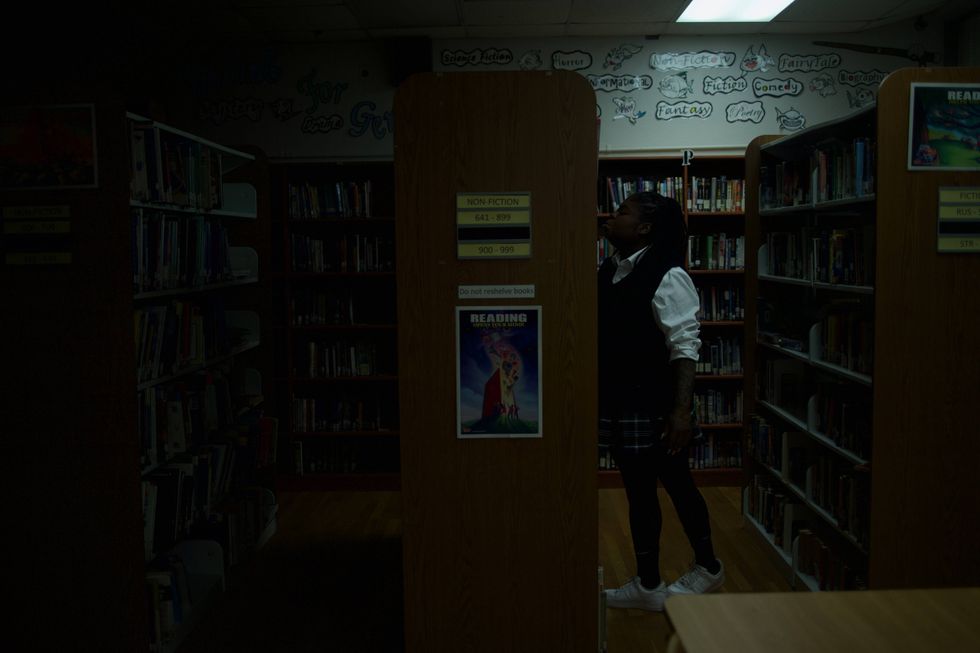
Since we’re premiering the video for “Float,” are there any spots in Alabama that were special to you growing up? Favorite places, food spots, things you did for fun?
It’s funny because “Float” actually touches on this. Going back home, I realized most of the places I loved growing up aren’t there anymore. All of my favorite little spots are either closed or they’re completely different establishments now, so I can’t even really recommend them.
But the video for “Float” does start with a couple shots from my childhood neighborhood park called Vaughn Road Park. I went out there with a couple friends one afternoon and we got some B-roll. It was really cool seeing so many kids outside playing. I feel like I was part of one of the last generations that spent that much time outside, before the internet really took over.
When I still lived there, it felt like nobody was going to the park anymore. So seeing kids enjoying those same park fixtures we had growing up was really special. I remember being small enough to ride those little spinning things. Now as an adult I’d probably fall off and be unconscious for three days. But that park is really meaningful to me.
Stopping by, even briefly, it was nice to see that the generation coming up is still prioritizing connection and outdoor play with one another.
It must’ve felt good seeing that. People always say the new generation doesn’t go outside anymore.
Exactly. People think it’s all screens now.
Maybe it’ll swing back the other way.
I hope so. I really do.
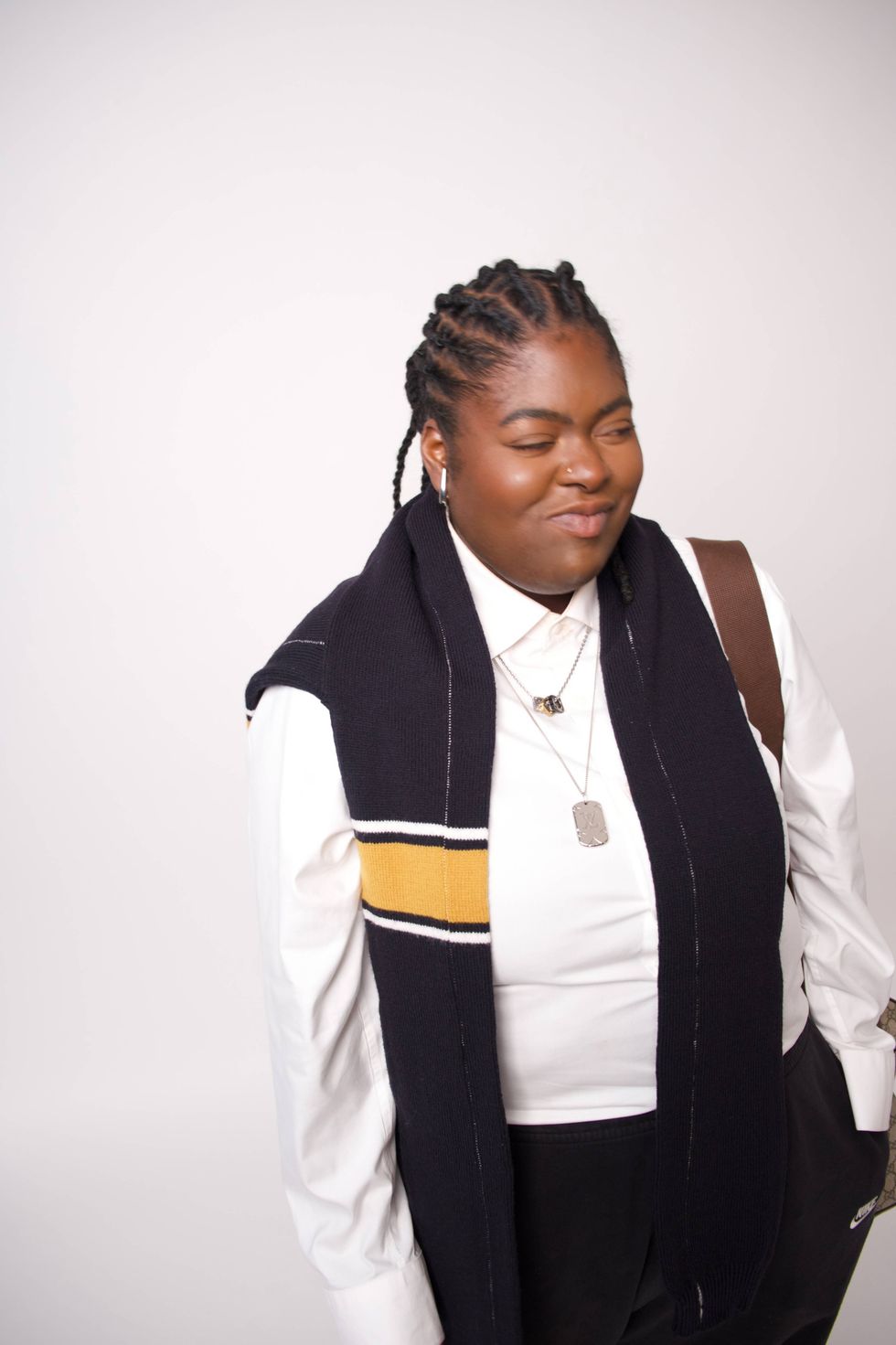
Photography by: Aaron Provens and Brandon Evans