Last Christmas, I rummaged through the cabinets in my parent’s new kitchen, looking for something or other but mostly being nosy. Inside were the same ceramic bowls and Pampered Chef paraphernalia from my childhood; the frosty, textured 50s glasses my mother loves so much; and a four-pack of seltzers touting whichever Delta numerical offers federally legal THC these days.
A far cry from the time I was in high school and my sister caused an entire South Carolina Cracker Barrel to freeze in time with the revelation that she heard one of my friends smoked.
Elsewhere, in that parallel reality we know as the Bravoverse (the metric by which I view society), cannabis has similarly settled into a comfortable presence. Kyle Richards held a THC-infused dinner none of her castmates participated in. Wendy Osefo and her partner-in-literal-crime Eddie launched cannabis brand Happy Eddie largely on The Real Housewives of Potomac, closely followed by castmate Stacey Rusch launching her own venture Shayo. Meredith Marks countered her alleged pill problem with the revelation that she will indulge in “an occasional gummy.”
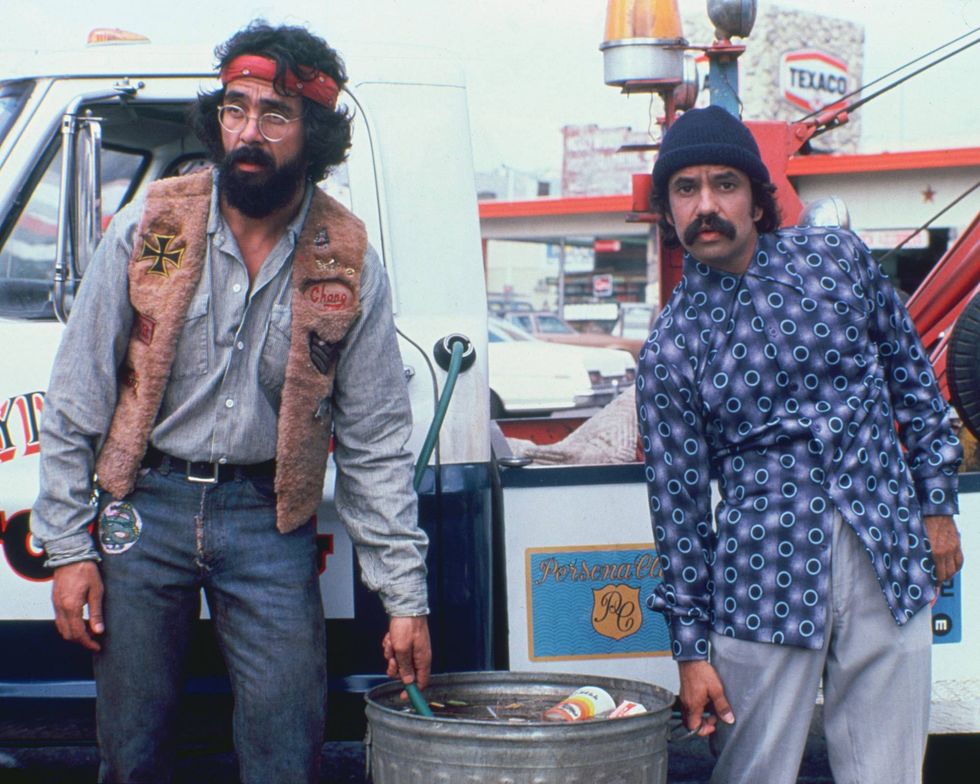
Cheech and Chong’s America, it seems, is a fallen empire.
Over the last decade or so, marijuana has gradually infiltrated mainstream culture, with 24 states declaring it legal for recreational use (in addition to 17 others authorizing it for medical use.) With each new state okaying the plant, its taboo lessens. What was once a countercultural signifier, the stuff of Baja hoodies and Odd Future, is now a widely-used mechanism for escaping whatever fresh hell awaits us each day.
In California, where the Hollywood that peddled “stoner comedies” still reigns supreme, purchasing weed is no harder than grocery shopping or ordering takeout. There’s still the choice paralysis — which of the several dispensaries within walking distance to hit, which deals make this brand worth purchasing over the other — but otherwise little friction and absolutely no risk. (All of which is, of course, a worthwhile and necessary development after years of criminalization and stereotyping.).
But where does all this progress leave marijuana’s countercultural oeuvre? Namely, what do we do with the stoner comedy?
The Wrong Girls, a new comedy starring Kristen Stewart and Alia Shawkat, offers a compelling hypothesis. Along the lines of forebearers like Cheech and Chong’s Up in Smoke or Harold & Kumar Go To White Castle, the film centers on a pair of best friends, Frankie (Stewart) and Molly (Shawkat), whose connection is inextricable from the weed smoked within it. They’re gig workers, living paycheck to paycheck, with a mass of overdue rent they can’t smoke out their landlord to avoid paying anymore. (This time, they’re women, which is somehow still a radical concept in Hollywood — some things never change!)
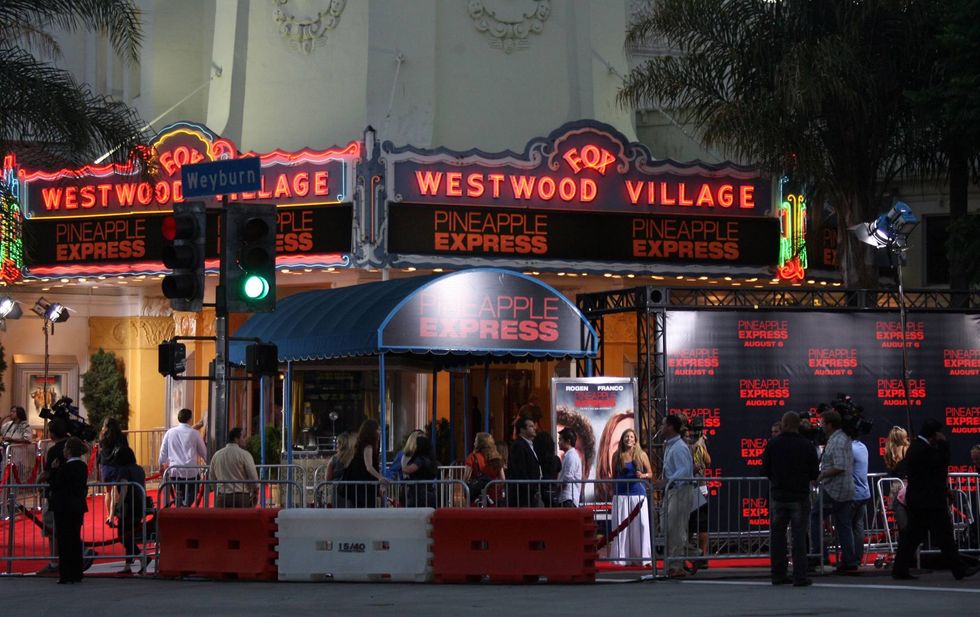
But those movies, along with films like Gregg Araki’s seminal Smiley Face, derived most (if not all) their narrative tension from marijuana’s then-illegality. Sometimes that meant its most literal end, as in the green van made of the plant Cheech & Chong smuggle across the border, or the crime-drama trappings of Pineapple Express. Other times, the tension was less immediate: the uncertainty of where to buy your next eighth, for instance, or the elemental terror of coming face-to-face with a cop while your mind is on Chromatica. None of which is an option anymore, except maybe still the cop thing.
“Fear isn’t playing as large of a role,” says The Wrong Girls writer-director Dylan Meyer of this new set of rules. “[Weed] has now been relegated to an annoyance for squares versus, you know, an actual issue.”
Her film smartly treats cannabis as somewhat of a given, like oxygen or the Jonas Brothers being on tour. Frankie and Molly are, like those before them, constantly stoned — “behind the plot,” Meyer says — but with a distinctly modern Californian malaise where weed’s omnipresence becomes liberating. Early in the film, Frankie drops off a cheese sculpture (don’t ask) at a McMansion owned by Tony Hale’s Martin Flynn. As he’s signing off on the delivery mid-phone conversation, she absently starts smoking.
“Are you literally smoking a lit joint right now?” he asks, breaking momentarily from the flow of his phone call. At which point she flicks it away and we move on.
Rather than cannabis being the film’s plot engine and its general text, as it is in so many predecessors, here it operates as an ever-present context for the film. “I think weed gives you a different narrative tension now,” says Meyer. “It makes things more difficult, more overwhelming, more surprising…it’s a naturally cinematic ingredient.”
This same tension is, notably, a throughline in reigning Best Picture One Battle After Another. Paul Thomas Anderson builds large stretches of his film around Bob’s (Leonardo DiCaprio) resolute post-revolutionary stonerism, mining comedy out of his ineptitude in a moment of crisis. It’s also present in my favorite line in Beau is Afraid, when a group of teenagers makes Joaquin Phoenix’s Beau smoke a joint they tell him has “three things in it.”
Not that The Wrong Girls is either of those films, or even that they’re necessarily stoner comedies (though you could make a case for Battle). Its DNA is closest to last year’s Keke Palmer/SZA romp One of Them Days, which captures all the same economic precarity and female friendship, albeit without the bong rips. Mixed, that is, with a healthy sprinkle of Romy and Michele’s oddball sensibility.
Yet the film is also deeply indebted to cannabis, with THC even developing its own plot significance late in the film. There is no version of the film that exists without it, within its narrative but especially when it comes to its psychedelic, Deadhead-y visual language. The film’s marketing, too, has been heavily weed-centric, with some apparent Wrong Girls product I’m meant to receive in the coming days.
The question of the stoner comedy’s future, then, is more of a question of what the stoner comedy even is. There was a time when the genre was something objectively knowable, delineated mostly by the conflicts brought on by illegality that don’t exist anymore. The Wrong Girls taps into a more first-principles notion, one that hinges on the very ethos of stonerdom.
In Meyer's mind, a key distinguisher is channeling “something that feels sort of anarchic, on the loose…we’ve gotten increasingly glossy and slick in our cinema.” The same could be said for our weed, which is just as private equity-ified as anything else now, ingrained with a soft Instagram-friendly wellness culture aesthetic.
If the act of smoking weed is no longer counterculture, maybe there’s a way the experience and the culture still can be. There’s something inherently rebellious about the act, still, of actively removing one’s consciousness from the tethers of traditional time and space. Lord knows there’s enough out there in the world for us to need it — and enough culture to which we yearn to be counter.
And even with the edge sanded off, there’s an unassailable sense of dumb joy that will always accompany getting high with your fellow degenerates. No amount of optimization, branding, or existential purgatory will kill the singular experience of getting together with your girls, passing around the blunt, and putting on Family Guy.
Or, perhaps soon, The Wrong Girls.
Images via Getty