There’s No Place Like The Pynk: The Lasting Legacy of Starz's P-Valley
Story by Taylor Crumpton / Photography by Eva Zar represented by Dana Eudy at Atrbute

To understand P-Valley, you must understand Mississippi, the Blackest state in America. Unlike Georgia, which lives in the minds of millions of Americans as the birthplace of the civil rights movement, Mississippi is saddled with the legacy of the murders that birthed the movement. Even now, the murders of Nolan Wells and Kohen Wiley bring the state’s history of anti-Black violence back into the American consciousness. This conversation is nestled within the acclaim of Sinners, the Academy Award-winning film that informed the world about the Black ingenuity and genius of the artistic, cultural, and musical traditions that came from the Mississippi Delta, the same region where the STARZ drama, premiering December 4, takes place. When STARZ greenlit season one of P-Valley in 2018, it was before the release of universally acclaimed Hustlers or Academy-award winner Anora. The network’s decision inherently solidified itself as a pioneer in the television and film industry. STARZ is the home and champion of a groundbreaking series that respects strip club culture and recognizes the strippers who work there as the economic engines that support numerous economies throughout the South and greater United States. Although the town of Chucalissa is fictional, the history that informs how Katori Hall writes about The Pynk, its owner, and the dancers who work there is tied to the state’s fight for freedom and liberation from the systemic violence that wants to erase them.
When André 3000 said “The South got something to say” in 1995 at The Source Awards, he did not have the creator and showrunner of P-Valley in mind, but Hall, a Pulitzer Prize-winning playwright, has taken it on as her personal mission statement. Like the young Atlanta rapper, who was frustrated at the blatant disrespect of Southern hip hop by the East Coast and West Coast, the Mississippi playwright wanted to create a show to mirror the funny, intelligent, complicated, and nuanced people in her family. “It’s a love letter to a place that has made me the writer that I am,” she says. “My grandmother died during season two. Going down there and putting her white casket in the soil of Coldwater, Mississippi, it’s a reminder that this is the place that created me and this is the place where my body is going to be laid to rest.” She goes on to explain that she is going to sleep very well in her grave, knowing that she held space and gave the South a blessed opportunity to have something to say on television again.
“What’s interesting about P-Valley specifically is that it has become an encyclopedia of Black lexicon. We are pulling words from the 1990s, like scrilla,” Hall says. “I saw there was a fight online, where a young girl from Memphis said we don’t say scrilla. Then, an auntie rolled in on her and said we used to say scrilla. The fact that P-Valley is bringing it back, now y’all youngins get to see the beauty of scrilla too, and put it on your tongues.”
Hall’s decision to incorporate Southern vernacular and dialect into her work is intentional. It is a way to counteract the negative assumption and stereotype that Black people in the South talk dumb and country, in a similar way to a slave. Yet, Hall sees it as a form of African retention, a form of cultural preservation where “our Africanness has stayed on our tongue” and “our identity has stayed,” despite efforts to erase and sever roots to the African continent. An example of this is Uncle Clifford’s rules, which are written in the same “slanguage.” This slang does not undermine her fierce business acumen as the proprietor of The Pynk but solidifies her position as the town’s griot, a title bestowed upon individuals who are responsible for the preservation of the history and culture of their people and comes from West Africa. This hereditary position was passed down from Ernestine Sayles to Uncle Clifford when she took over Ernestine’s Juke Joint and transformed it into The Pynk.
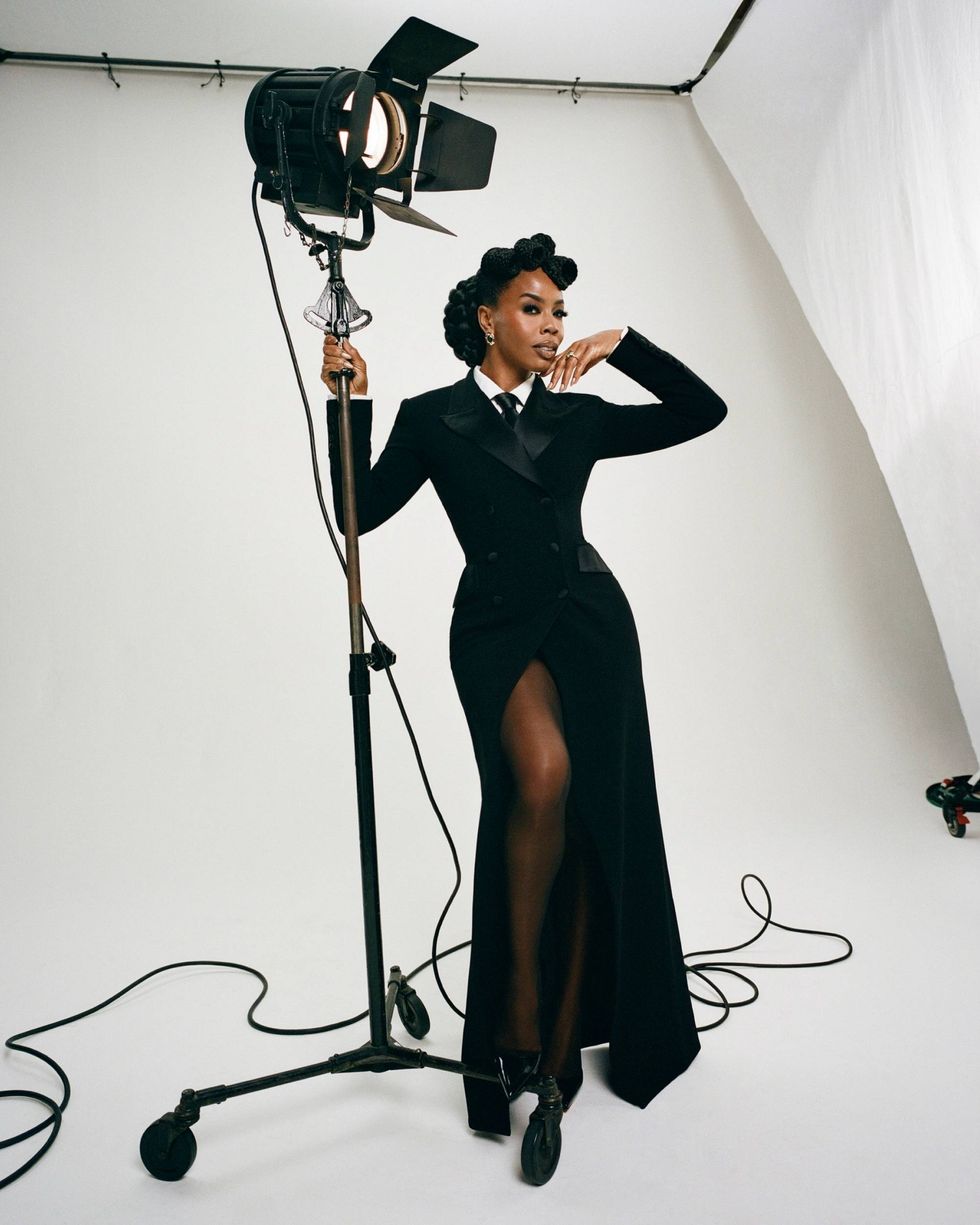
Dress, Tie, and Shirt: Sergio Hudson Stockings: Wolford Rings: Tzuri Earrings: Ettika Shoes: Christian Louboutin
Throughout the South, from the Gullah Geechee people in the Carolinas to the Black Seminoles in Florida, Black people have found innovative ways to maintain and preserve their cultural and diasporic heritage. Nicco Annan, who plays Uncle Clifford, recalls a moment from season two in which Ugandan actors spoke in Luganda, a Bantu language, and the impact it had on his family members back home in Ghana. “They love and identify with the international appeal of the show. The design of the show. The way that the world looks,” he says.
African folklore informed how Annan approached his portrayal of Uncle Clifford, the queer, non-binary mother hen that owns and operates the strip club. In his father’s home country of Ghana, he attributes the country’s homophobia to a belief of “colonial acceptance” or “indoctrination” that citizens have held onto from colonial rule. “When I think about the orishas. When I think about Yoruba traditions, they are images of these male and female energies, and how they are intertwined,” he says. He brings up Olokun, an orisa in the Ifá/Òrìṣà tradition, regarded as the owner of the seas. In Santería and Candomblé, Olokun switches between male and female, and at times appears androgynous. The deity’s gender fluidity and expansiveness served as a source of inspiration for Annan. “I researched that deity of Olokun,” he says. “For me, I thought about releasing the kraken. Releasing the beast.”
Before filming started for season three of the critically acclaimed series, Annan made a special request of Hall, his collaborator of over ten years. He wanted to speak to the writers in the writers room. Before she granted this request of his, she asked for the reason behind his request. “Girl!” he says. “If this is the last time, you know the AI people are going to try to get me. They don’t have this! Before they replace us with computers and machines, they don’t have this! They already got my voice. They already got my image. But I will ask that y’all write like never before.” In his words, the bold declaration that reverberated throughout the writers room was part of releasing the kraken and giving himself the permission to be as raw as he could be for the final season.
Annan has played Uncle Clifford since the character’s inception in Pussy Valley, the 2015 Off-Broadway play the Starz drama is based on. In addition to the diasporic inspirations that he brought to the character, Uncle Clifford is an amalgamation of Hall’s mother, father, and her “real-life Uncle Clifford,” he says. “Being able to spend time with them, it awakened the language in another language. It awakened the rhythm. The affirmations. The way that we talk, the euphemisms, the colorful poetic language.” He evokes a moment that he shared with Hall from season one in which Uncle Clifford files off her nails and takes off her wig. It’s the first time the character is stripped nude and void of the regalia that makes Uncle Clifford stand out. The decision baffled him because he was unprepared to show his own hair on camera. It was his assumption that a decision such as that would be saved for later on in the series.
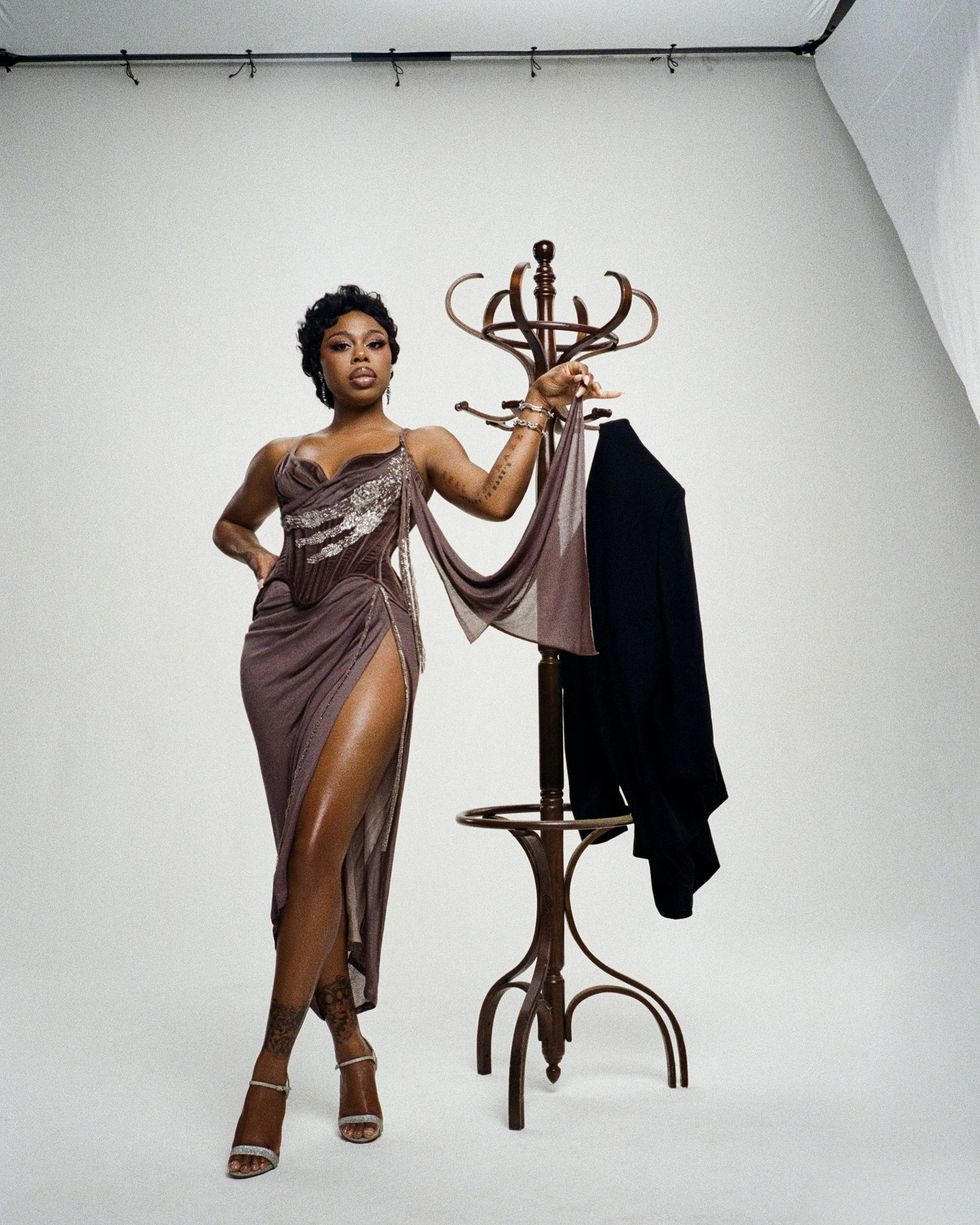
Corset and skirt: Wiederhoeft Shoes: Casadei Rings: Swarovski Bracelets: Nickho Rey, Eternate Earrings: Cavali
“I was in her office. I let out some tears…I knew that when my tears were coming, it was coming from a place of gratitude of being able to work with a collaborator that is so bold and thoughtful for all her characters,” he says. “I’ve been able to work with this woman for a very long time. We have a relationship. We have developed this relationship as collaborators and friends over the years. Meeting her family and all that stuff. I’m going to tell you one thing, she loves her character more because she has been with them more, and she knows how they will last forever.”
One of the first things that Katori Hall said to the cast of P-Valley was that “everyone’s story deserves to be told”, says Brandee Evans. She plays Mercedes Woodbine, the veteran dancer who left The Pynk to care for her daughter and pursue her own entrepreneurial pursuits to open up a dance studio. Over the course of three seasons, Evans has depicted the story of Mercedes as the fighter, Mercedes as the mother, and Mercedes as the human. “I think a lot of people look at ladies that do pole dancing, stripping or nightlife divas as a bad thing. Many times, it’s just a means to an end. We’re trying to get somewhere else,” says Evans. Mercedes’ goal has always been to transition out of The Pynk, in the hope of teaching dance to the girls of Chucalissa and taking care of her daughter, an earnest attempt to rectify the generational harm and trauma that Pastor Patrice Woodbine placed upon her as a young girl. “Everything is a fight for her. At The Pynk when she’s on that stage and has that pulpit, she has that moment for her to give back to herself…It’s taking the power back when she’s hitting the stage and when she’s teaching as well.”
Using dance as a source of empowerment for young women and girls resonated with Evans, who previously taught a hip-hop and heels class. “My motto was confidence is sexy, not your dress size,” she says. Her dance background accentuates Mercedes’ presence as the de facto leader of the dancers at the club. “She dances differently than the other girls. You’ve got Miss Mississippi with these beautiful, elongated lines. It’s gorgeous when you watch Miss Mississippi dance. Last season, you see Mercedes watching her and enamored by her beauty.” She continues, “When Mercedes hits that stage, it’s rough. I feel like it’s healing. The trauma is coming out of her body in those performances. She’s using all of that and the pain and love on the stage that you see coming out from Mercedes.”
The similarities between Evans and Mercedes are plentiful. Both are caregivers for a beloved family member. Both are professional dancers. Both are preacher’s kids. However, Evans is nothing like her character in real life. She’s not a twerker. Her entertainment of choice is an R&B concert. And you’ll never find her in anything sheer, short, and see-through. She credits Mercedes for making her feel confident in her body. “With a show like this, you can’t hide,” she laughs. “To be around all of these other women and different body types and looking at the confidence, and if there was an insecurity, we could look at each other, and be like Girl, you good!” She adds on to that, “I feel like little Brandee was healed in certain ways as a young girl that I was insecure about my body, and so that was very helpful. Mercedes definitely changed me in that way.” In the years since the show’s premiere, Evans has encountered fans of the show who confided in her about their own experiences of being a former Mercedes who transitioned from stripping into healthcare. In those moments, Evans credits the show for helping her understand and reach out to people who are under the same stressors that impact Black maternal characters, like Miss Mississippi as well.
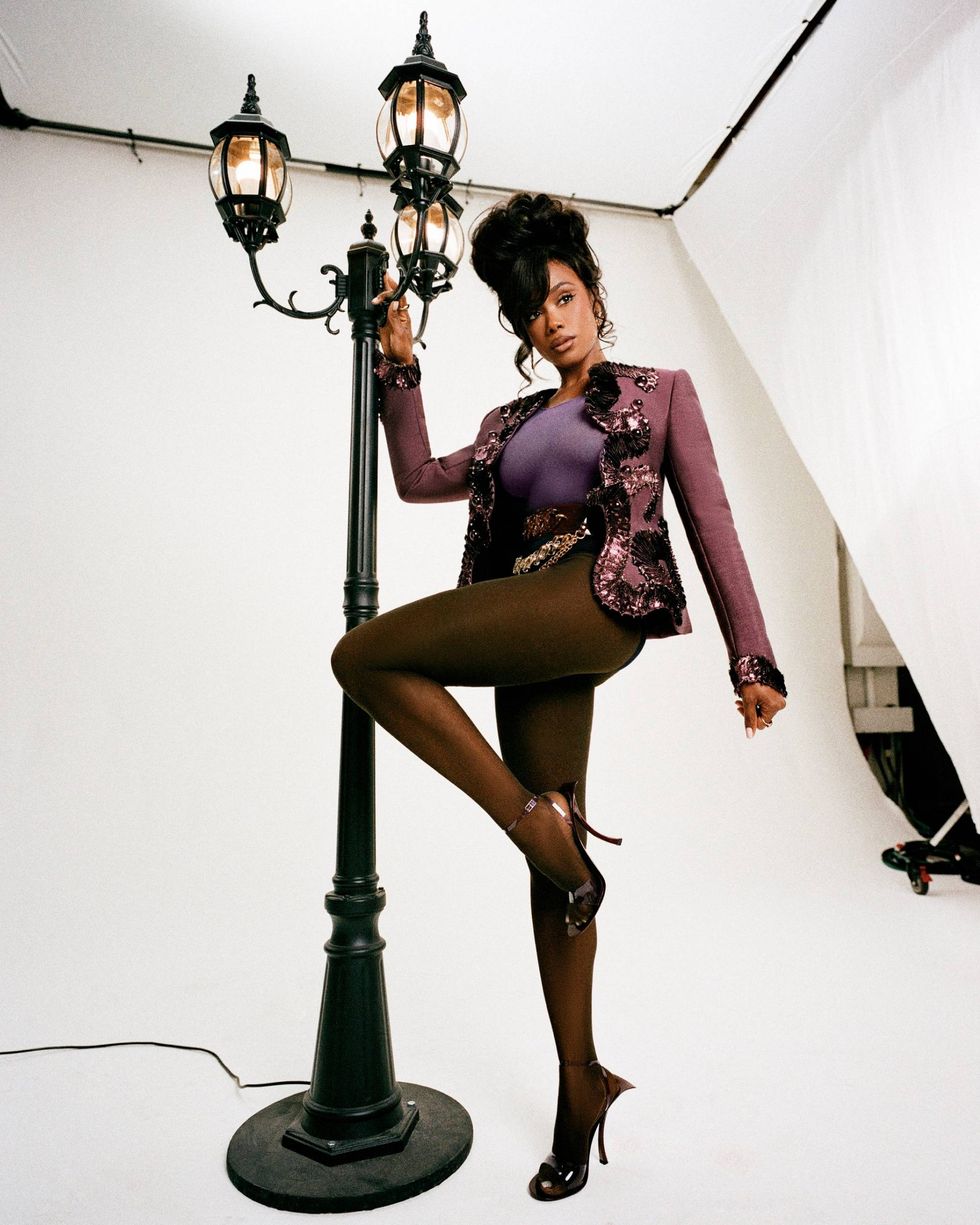
Full look: Marc Jacobs Rings: Ettika, Jennifer Fisher, Pascal Earrings: Nickho Rey
When Keyshawn, also known as Miss Mississippi, is introduced to viewers during season one, the audience is privy to not only a postpartum mother returning to work, but one in the midst of an abusive relationship with no familial support. In that season Uncle Clifford plants the seed for Miss Mississippi’s pathway to independence after cleaning and dressing her wounds before a night’s work at The Pynk: “Hey, this is your money right here. This is your strength. You let a nigga take this away from you, I don't know what you gonna do.” After that conversation, Miss Mississippi begins to soar and fight for her freedom on her own terms.
“Keyshawn uses her body and beauty in a strategic way,” says Shannon Thornton, who plays the character. “That is a place of power for her. She is very aware that she’s beautiful. She’s very aware of the effect she has on people, and the magic she has on stage, and the spell that she casts on people, and she uses that to her advantage.”
She uses her sexuality to convince Derrick, her abusive partner, to let her go on tour with Lil’ Murda. She sets up a meeting with Lil’ Murda to craft a fake relationship that financially benefits them and protects his real, secret relationship with Uncle Clifford. She comes out with her own line of tees, waist trainers, wigs, and eyelashes. In fact, her balletic, poetic style of dancing is a metaphor for the way in which she navigates an aggressive, violent, male-dominated world. “Keyshawn is a hustler and she will make a way out of no way,” she says.
One of the few adversaries that she has is the colorism that creates an inherent divide between her siblings, and the internalization of that on her character. “When she tries on a blonde wig in season two, episode five, she says she doesn’t know if this goes with her skin. Being bullied in high school, and one of her classmates says she looks burnt. Also, Keyshawn’s half-sisters are both lighter skinned than she is. I remember viewers saying that it didn’t feel realistic because they felt I was too pretty to tell this story, and that was really interesting because in my personal experience, I don’t find that to be true.” The other adversary is her abusive partner who utilized Child Protective Services as a form of DARVO (Deny, Attack, Reverse Victim and Offender), which resulted in her arrest and removal from her children. Although fictionalized, there is a growing number of Black mothers in mass incarceration, and the majority of them are unable to meet bail, which is the situation where viewers met Miss Mississippi at the beginning of season three.
Uncle Clifford, Mercedes, and Mississippi are at a crossroads. The rules they once abided by, which kept them and The Pynk a safe haven for people at the margins, are now under duress with the introduction of Roulette, a new, rebellious dancer at the strip club, played by Gail Bean. In the finale of season two, Roulette, who has broken Uncle Clifford’s sacred rule of the promotion and facilitation of sex work, has decided to move forward and have dancers from the club work for her.
“What type of person moves into that space? How do you protect people that you are soliciting for that type of work? How do you keep your workplace environment safe? How do you keep your girls safe but top dollar?” says Gail Bean.
The conversation regarding the morality and criminality of sex work is not new, but in the context of P-Valley and in the history of the profession, it is one of the few fields where women, queer and trans folk are able to be in control of their bodies and the labor that comes from them.
“In the show, we see women take the power and the ownership of their own bodies, and it being their choice. I can choose for something to be consensual. I can choose if I want something to be transactional. I love how in season three, the protection of what it looks like to have autonomy over your own body. What it looks like to not be judged, but to decide if I want to be promiscuous, and there be no judgment, but someone encouraging and championing if that should be your choice,” Bean says.
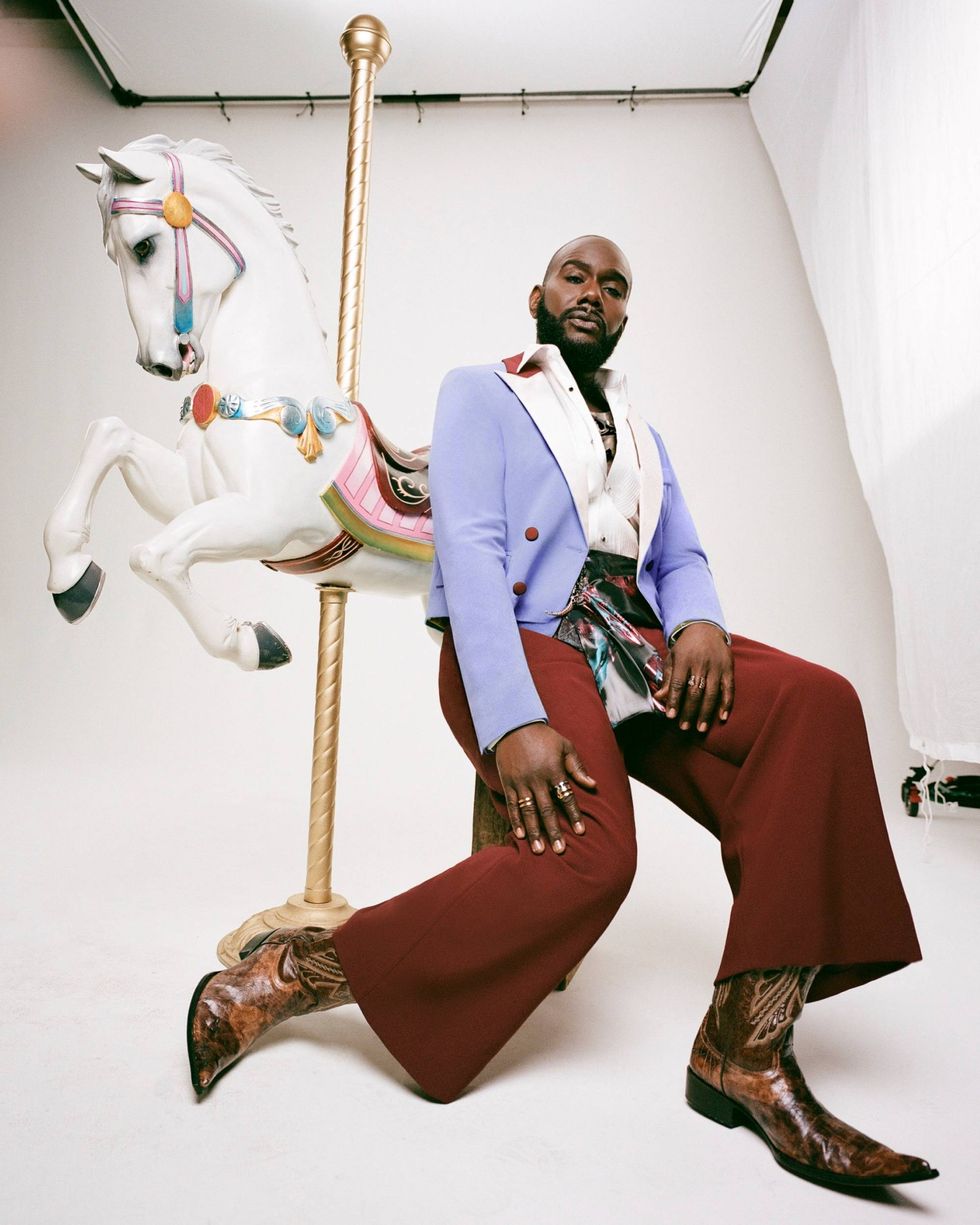
Suit: BruceGlen Tuxedo Shirt: Ron Thompson Floral Metal Bib Necklace: PR SOLO Boots: Laredo Cummerbund: Bibiré Swarovski Alligator Brooch: Suit Fellas Diamond Ring: The Archive Showroom
Before taking on the role of Roulette, Bean was drawn to Hall because of her positionality as a Black woman and a playwright. When she read the pilot and then watched it on Starz, Bean was mind-blown by the complex representation of people from the South, specifically Black people. It was that representation that inspired her desire to become a part of the show because of her own family members who live in a small town in Camden County, Georgia. It is a region that Bean lovingly describes as the deep, deep, deep South. “It was homage to my family members, to my ancestors, to what I’m made of,” says Bean.
There is a love and deep-seated appreciation and reverence for Hall among the cast members. In every conversation, there is a mention of the humanity, empathy, and depth that she afforded her cast to take on these characters and push them to the barriers of their fictitious existence. There is also the somber reality that the Black-led television shows STARZ continues to champion are seen less and less on television screens.Yet, there is no sadness to be shared among the cast, but reverence for the work they have done not only for Black people in the South, but for everyone who found a home in P-Valley.
When I asked Hall what she was most excited for fans to see in season three, she said that we love them.
“We know it’s been a long wait. We understand the frustration, but it’s such a beautiful letter to Black folks, femme folks, queer folks, the marginalized, and the majestic,” she says. “We are truly majestic. I do think this last season stamps that on our legacy and the fact that we are here, the fact that we are surviving through it all. The resilience of being a Black person in this country.” There is no love without revolution, as Annan describes the end of P-Valley as that. He draws a parallel between the Black art of the 1930s and 1940s, the music and fashion of the 1990s, and the Black cultural productions of the 2020s. “I feel like season three for me is a shot of revolution. This is how we made it over. This is how you can make it over. It’s an inspiration to that.” The revolution will not be televised, but you can make it at The Pynk.
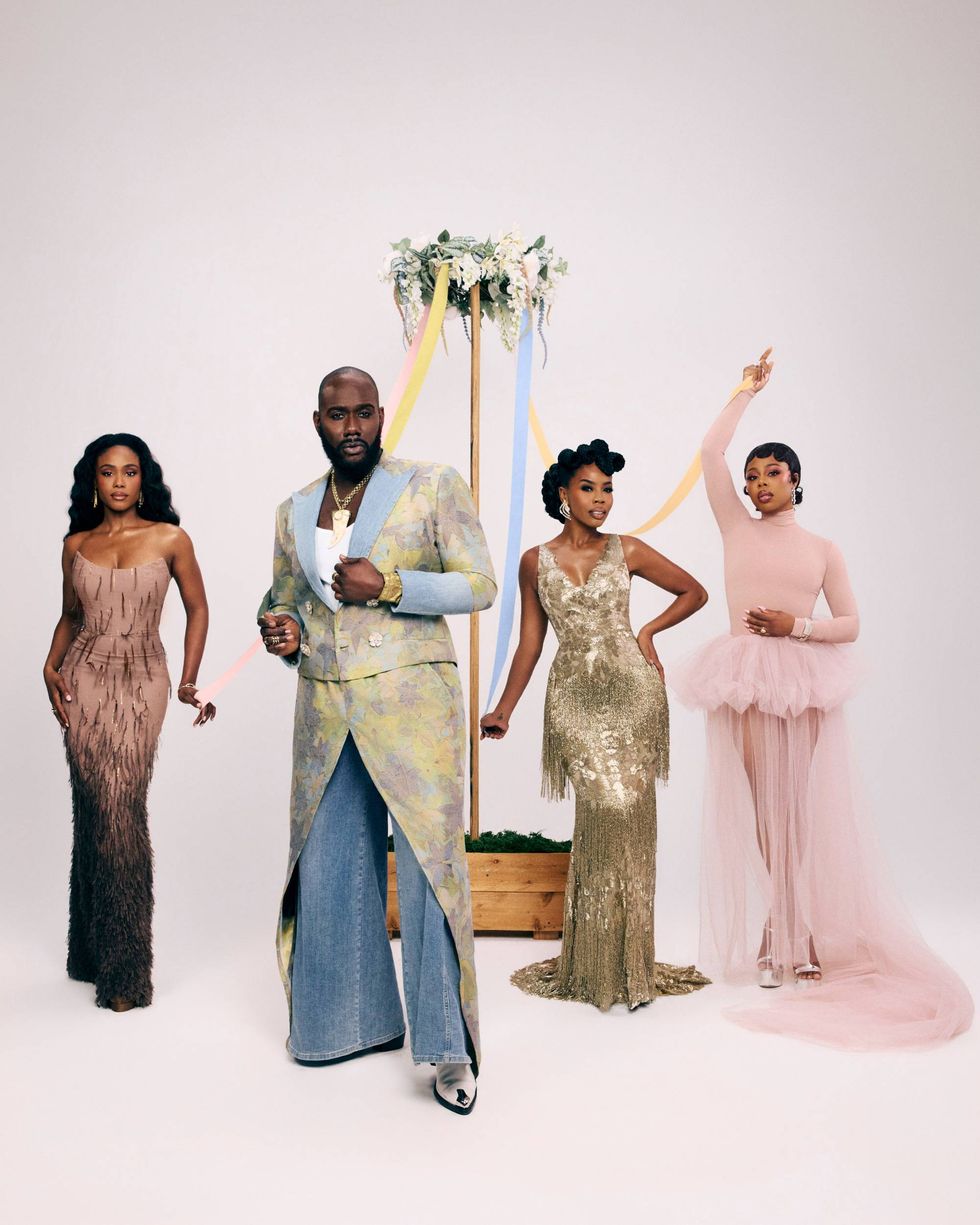
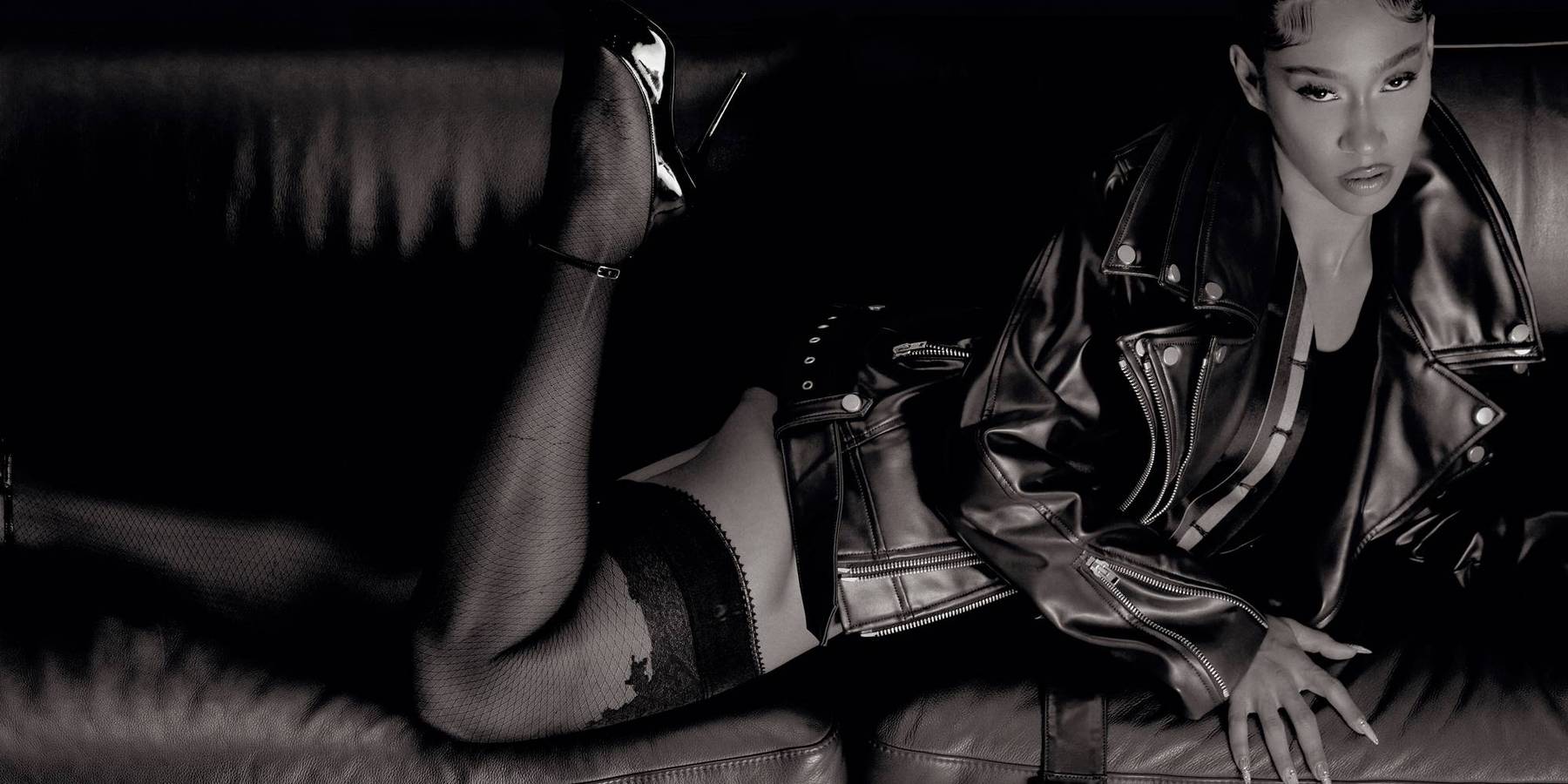
GAIL Top and Skirt: Aknvas Shoes Ruthie Davis Rings: Vizcarra, Tzuri Bracelet: Swarovski Earrings: Tzuri
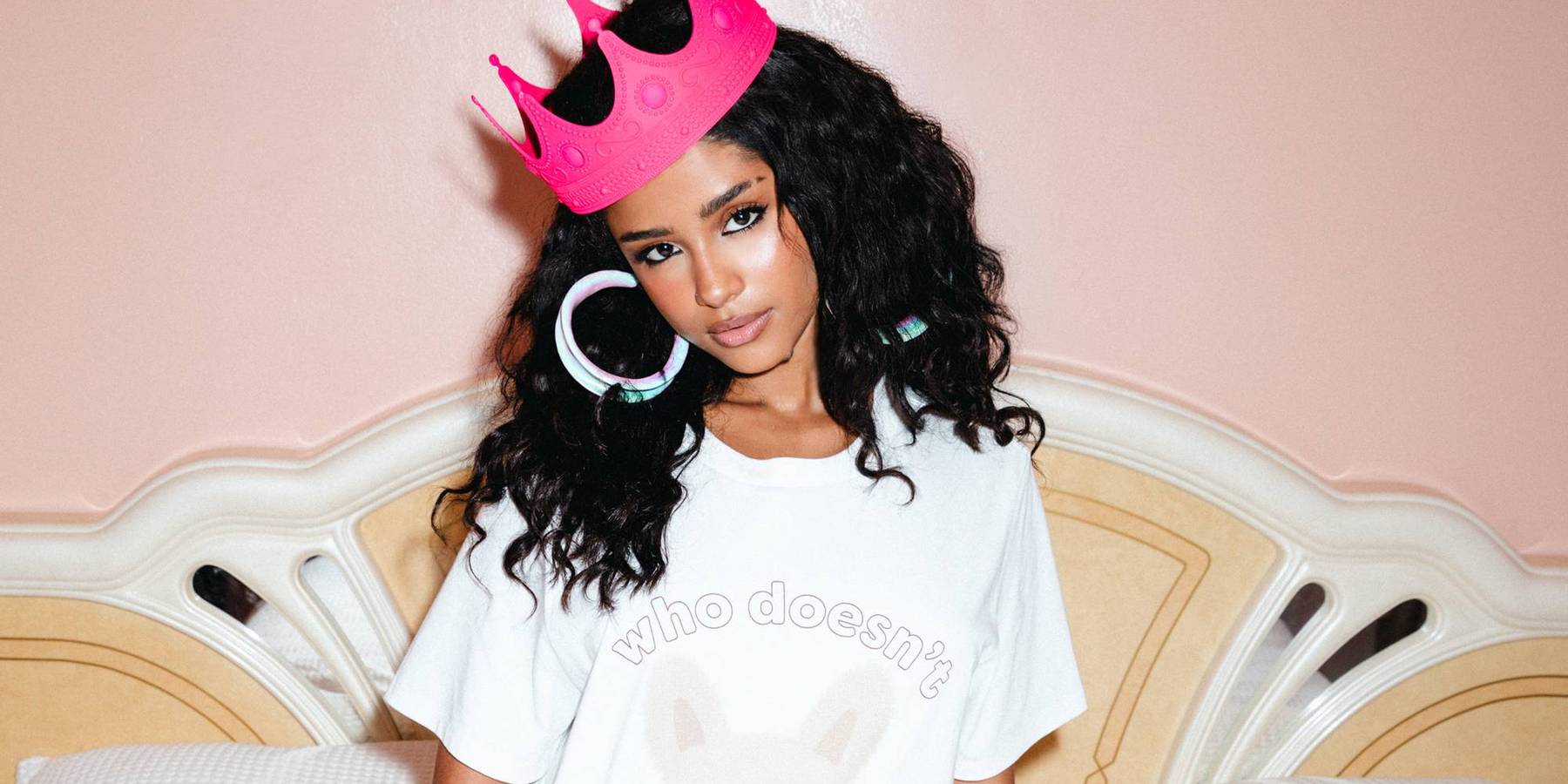
BRANDEE Dress: Christian Sirriano Shoes: Casadei Rings: Tzuri Earrings: Vizcarra
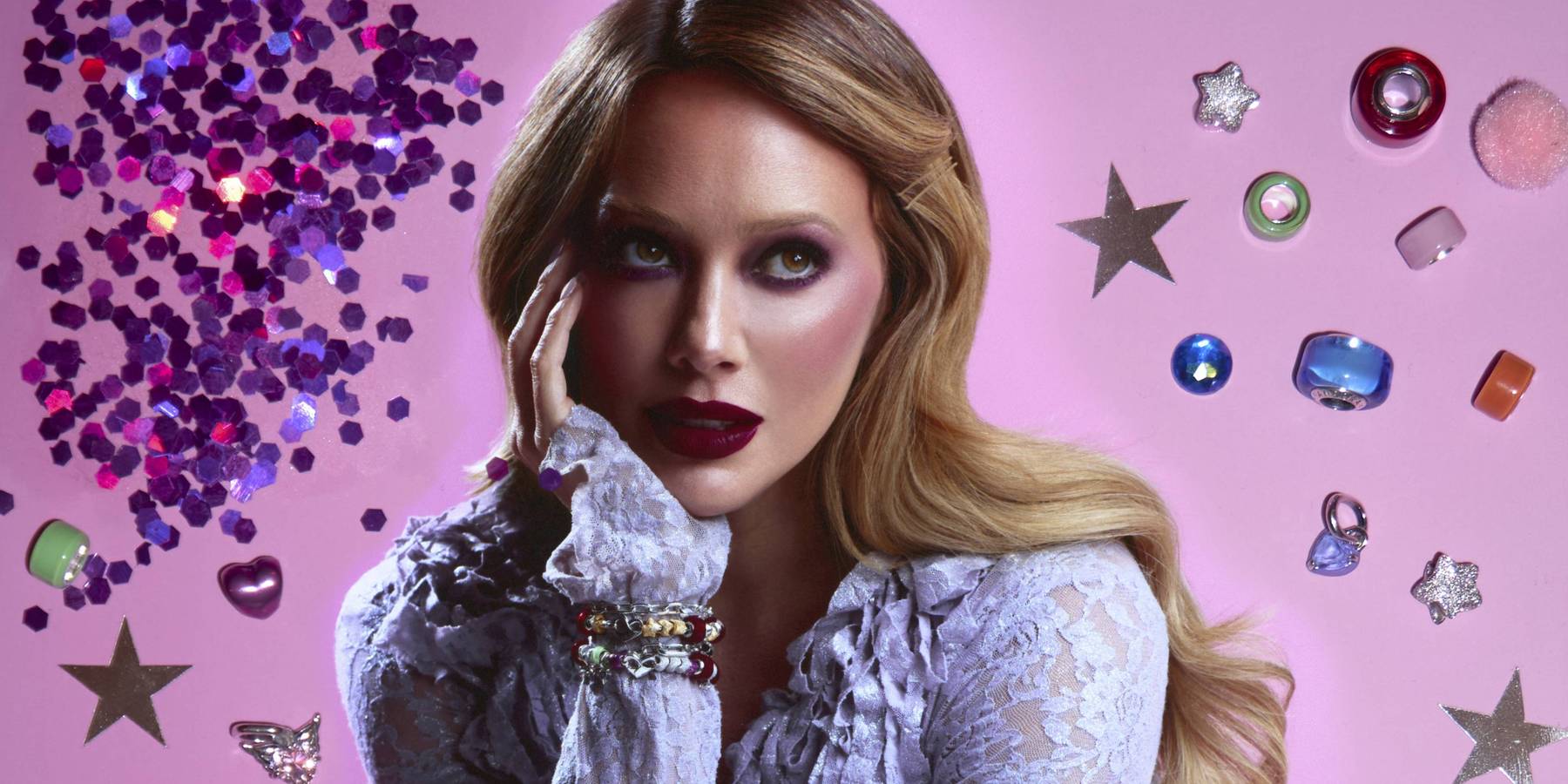
SHANNON Dress: Markarian Shoes: Jimmy Choo Rings: Tzuri Bracelet: Ettika Earrings: Nicole Romano
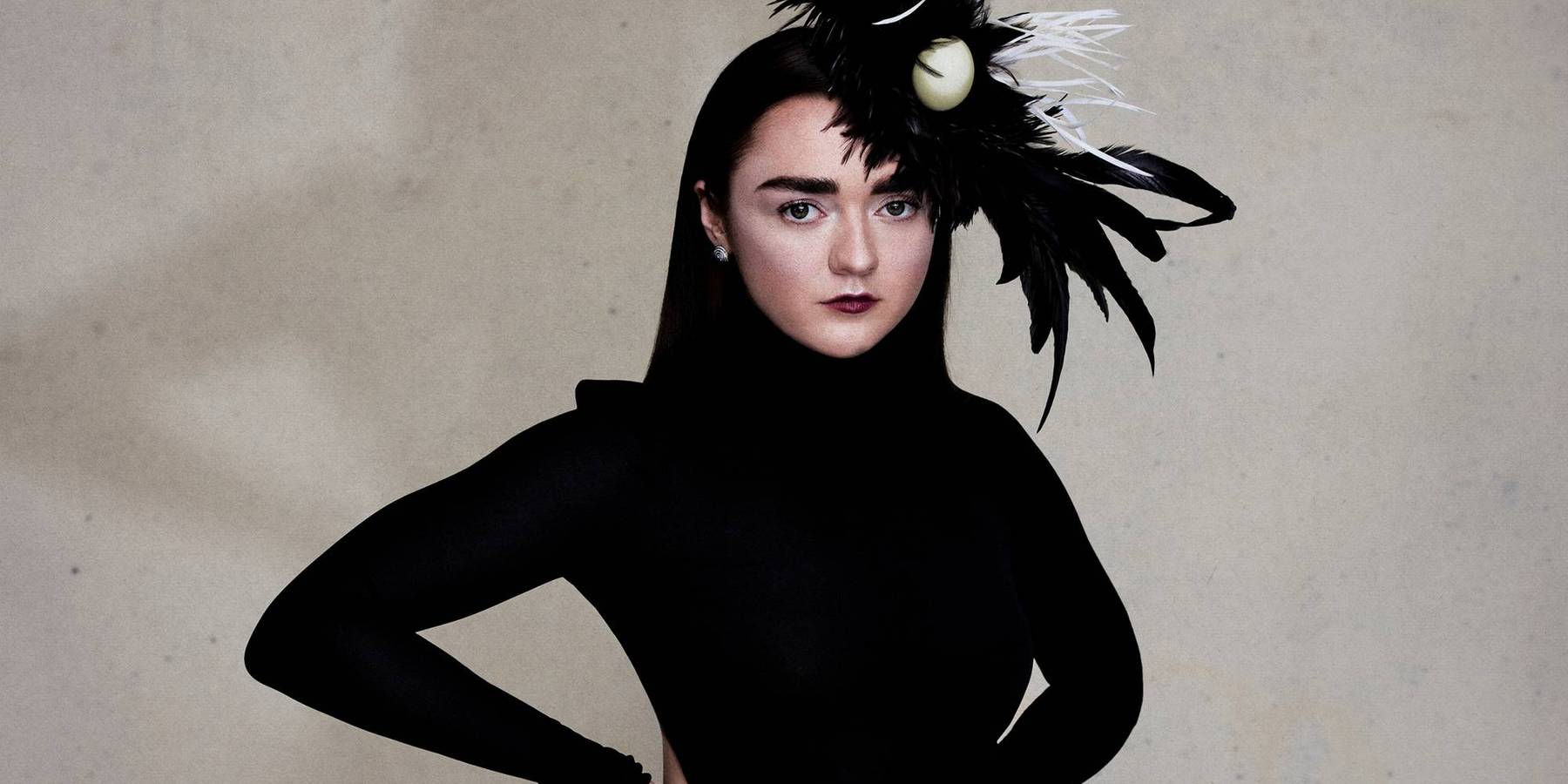
NICCO ANNAN Custom Suit: LEGADOÉ, made by Tesa Diaz Tank Top: Suitsupply Shoes: Alexander McQueen Silver & Gold Bands: AROCK Cuff and Necklace: PR SOLO Stack Full Finger Ring: The Archive Showroom
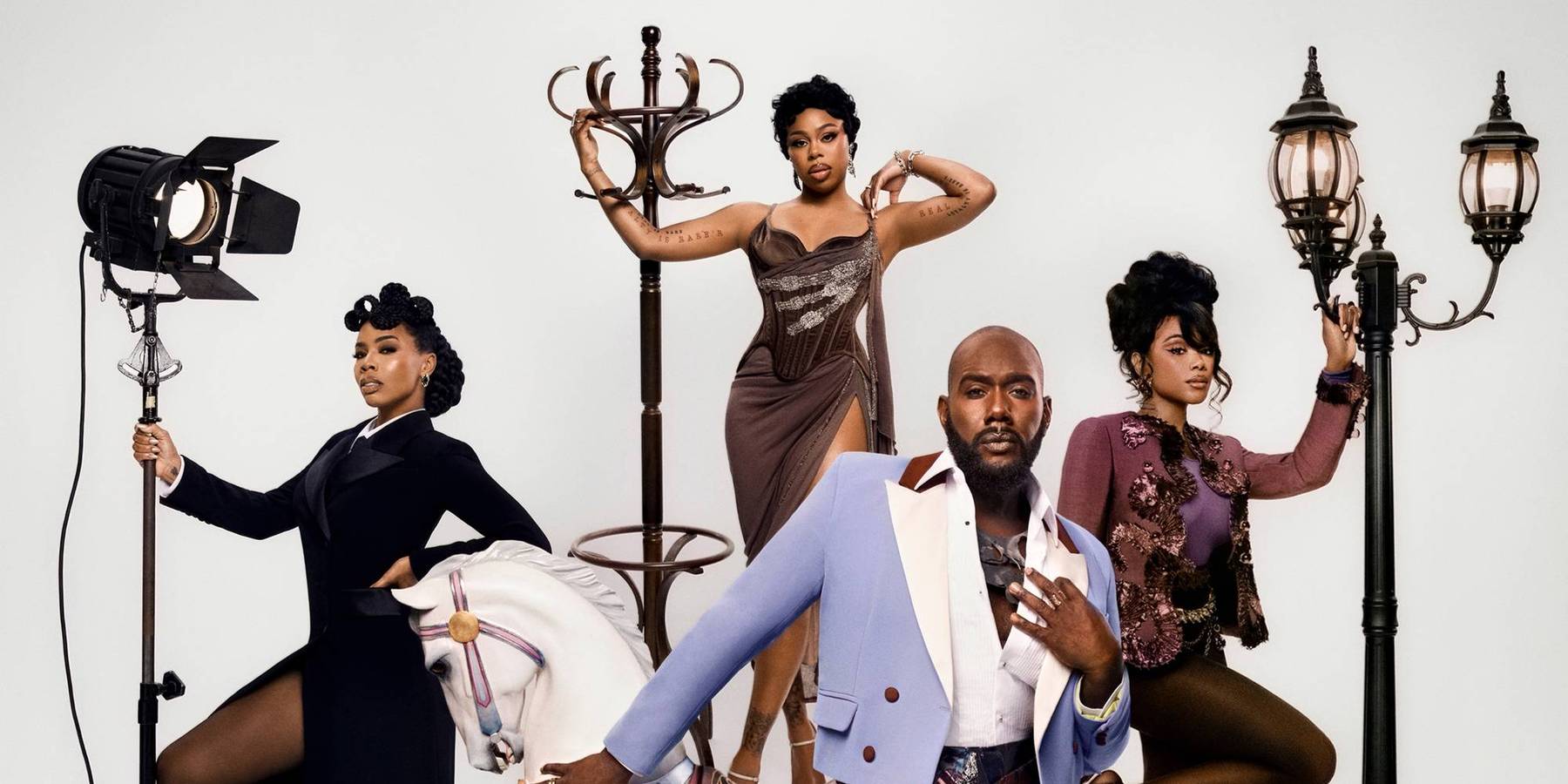
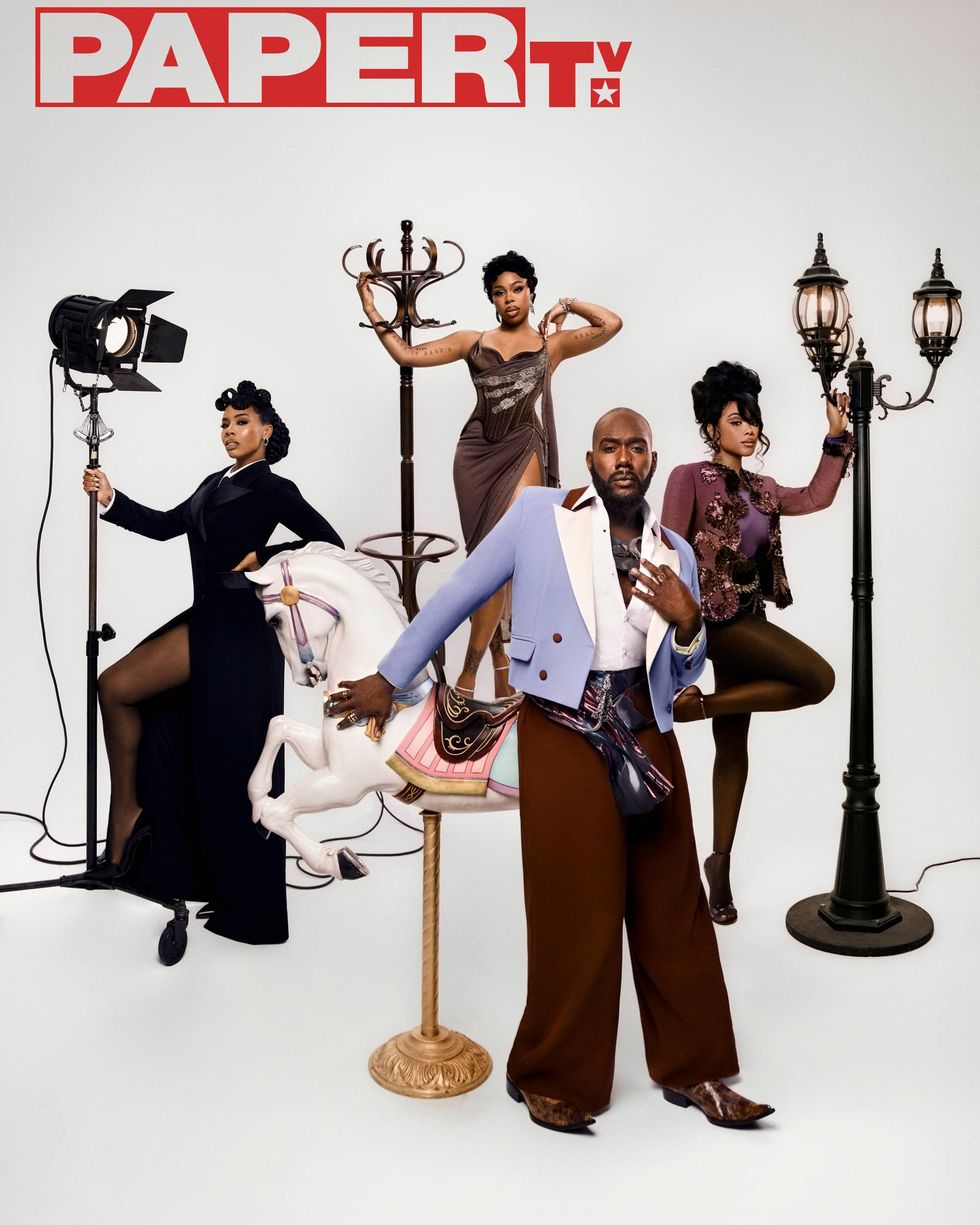
Talent: Nicco Annan, Brandee Evans, Gail Bean, Shannon Thornton
Story: Taylor Crumpton
Photography by: Eva Zar represented by Dana Eudy at Atrbute
PAPER’s stylist: Posh McKoyNicco’s
Personal Stylist: Fern Legadoe
Makeup Artist: Cherish Brooke Hill, Kenya Alexis, Ronald Watkins
Hair Artist: Coree Moreno, Kee Taylor, Sasha Curry
Groomer: Cherish Brooke Hill
Nail Artist: Rachel Sun
Set Designer: Paul Barysas
Prop Maker: Audrey Moss
1st Photo Assistant: Joshua Cullen
Lighting: Brian Carter
Digital Technician: Giuseppe Rinaldi
Videographer: Ginger Port
Stylist Assistant: Tyler Humphrey, Ashley K. Allen, Jeremy Dormoy
Nicco’s Stylist Assistant: Clare Sofer
Eva Zar’s Personal Producer: Alyssa Sonn
Retouching: Nataly Trach
Executive Producer: Sloan Abihaidar
Jr. Producer: Melina Brown
CREATIVE & EDITORIAL
Head of Creative: Brian Calle
Editor-in-Chief: Jordan Bradfield
Fashion Director: Angelina Cantú
Editorial Director: Mickey Boardman
Digital Director: César Alvarez
Digital Director, PAPER Español: Ricardo Diaz
Social Editor: Alaska Riley
Jr. Creative Director: Peter Demas
Editorial Manager: Tamara Amhaz
LEADERSHIP & PARTNERSHIPS
President: Jason Ve
VP of Brand Partnerships: Jamie Granoff
Director, Brand Partnerships: Araceli Franco
Director, Brand Partnerships: Sabrina Phillips
Senior Creative Strategist: Aires Amor
Senior Creative Strategist: Jordyn Albritton
PRODUCTION
Chief Operation Officer: Erin Domash
Executive Producer: Aya Sloan
Jr. Producer: Melina Brown
Print Design: Composite Co.
Jr. Graphic Designer: Aviance Whitman
Jr. Graphic Designer: Gabe Walsh