What Happened to the Lifestyle Film?
by Bea IsaacsonApr 30, 2026

What was the first movie that made you excited to be an adult? When your imagination stretched beyond the strict parameters of childhood experiences and family observations?
In the movies, to be a grown-up was, suddenly, not just a matter of being out of school, but a time to have a job better than school; wear clothes from magazines, not malls; party with cool friends, friends of the future, in glittering city apartments. Also, to be totally gorgeous and desired sexually and romantically all the time.
Like most women of my generation, if not seemingly every generation since, it was How to Lose a Guy in 10 Days. I mean, come on. Kate Hudson looked so perfect and her whole world mirrored her golden beauty with pulsing radiance. It’s why the scenes without male lead Matthew McConaughey are just as thrilling to watch, a stunning sequence of glamorous bars with besties from work and hailing a Manhattan yellow cab in stilettos.
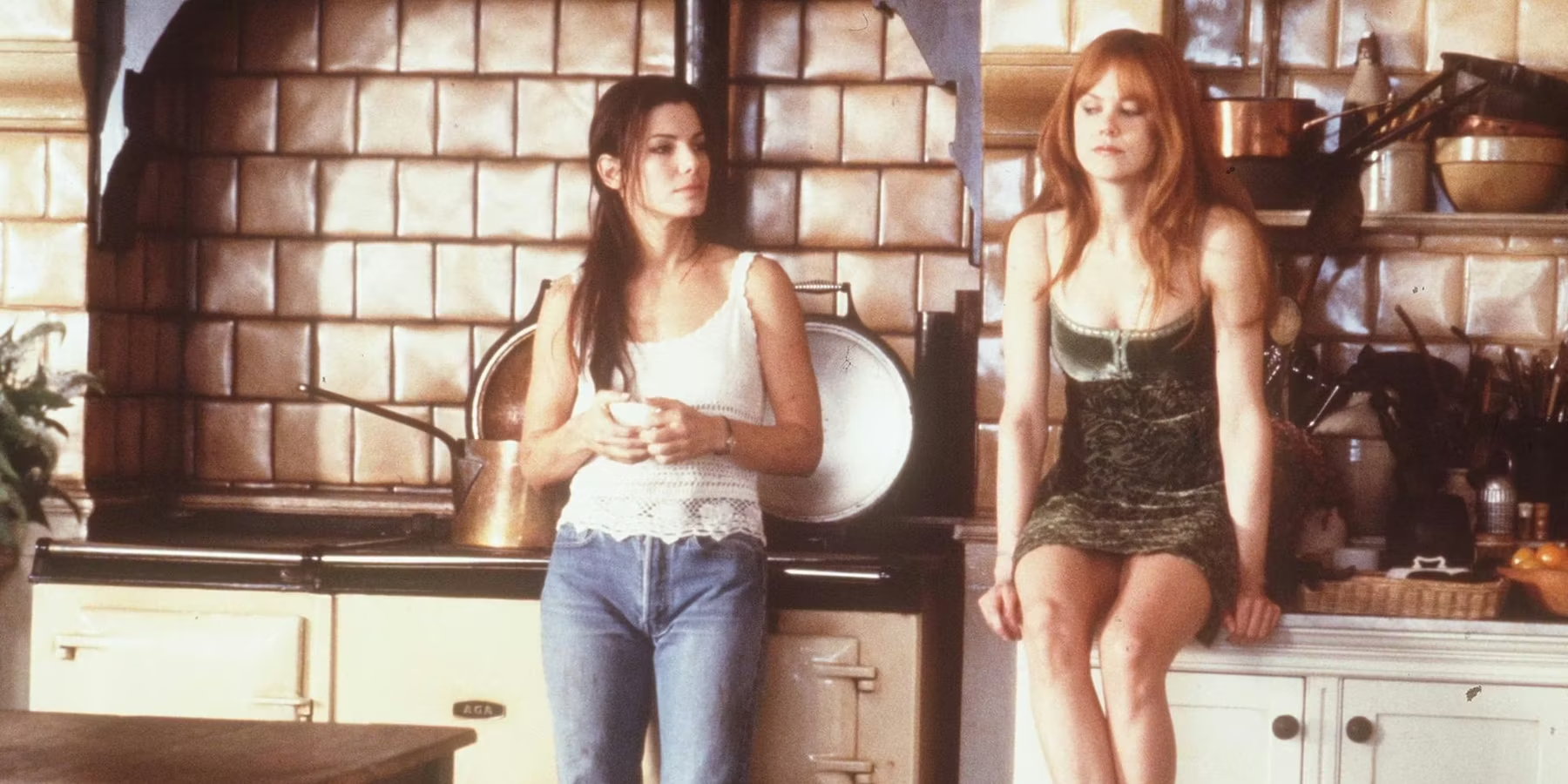
It’s Cameron Diaz throwing back cocktails with Lake Bell in What Happens in Vegas; it’s Mila Kunis and her sun-soaked bohemian apartment in Friends with Benefits; it’s Meg Ryan with the most perfect wardrobe ever, a total ‘80s pin-up in Levi jeans and fluffy cable sweaters. Queen Latifah fabulously blowing her life-savings in Last Holiday and the kitchen interiors of Diane Keaton films or Practical Magic.
Olivia Munn recently wrote that life happens on a Tuesday, too.
These Lifestyle Films, a sub-genre within the rom-com scene, pose the question: well, what if your entire life was a Summer Friday? It’s total women’s wish fulfillment, packaged in a 90 minute film with a brilliant pop-rock soundtrack. Hollywood even got meta with it in 13 Going on 30. Here was an All-American pre-teen out of suburbia who just couldn’t wait to be an adult in the city, with hair as glossy as the magazine she’d write for. “Sexy man, girls’ sleepovers,” my friend commented on it. “Wow.” But Amy, I said. You live a sexy man, girls’ sleepover life now. “Lacking a bit of glamour,” she replied.
Starting in the eighties with Nora Ephron’s depictions of love and lust in New York City, and sprawling across the nineties and noughties, these films understood that for the modern woman, it wasn’t enough just to sell the allure of a successful heterosexual relationship. Former Cosmopolitan editor Helen Gurley Brown’s 1982 book, Having It All: Love, Success, Sex and Money, first proposed the idea that the modern woman could enjoy an exciting professional career, a thriving social life, and, of course, a great romance.


It soon became not just a third wave feminist manifesto, but the cosmopolitan zeitgeist, as propelled by shows Sex And The City and the far tamer, but still utterly aspirational, Friends. Women were as in love with the idea of having it all as they were with the idea of an otherworldly meet-cute, a main character defining plotline, a happily ever after. These Lifestyle Movies were not just selling dreams to girls, but representing a philosophy to upwardly mobile women who were pioneering their gender’s freedom of hard-earned independence, without having to sacrifice girlish dreams of a dashing knight in shining Armani.
Well, one thing to say about this side of 2016 is at least that sequel posters of infinite Marvel runs no longer line our cinema walls. Thanks, A24! And yet, despite this clear return to original source material, much has already been said on the noticeable decline of the romcom. Yes, we’re still getting romance in the buckets — ‘Wuthering Heights’, The Drama — and we’re still getting some slithers of the formula in the form of beach novels repurposed for the small screen, like Netflix’s People We Meet on Vacation. What we markedly do not have, however, is the original concept Lifestyle Film. It’s basically bordering on extinction. One day, fashion designer Reese Witherspoon is being proposed to by hot politician Patrick Dempsey in an empty Tiffany’s. The next, Zendaya is telling Robert Pattinson how she used to plot to murder kids in schools.
The Drama was so close to being a Lifestyle Film, in the way that I like to stop watching Titanic just after Jack and Rose fuck in the car so the film remains exclusively a tragedy-free period romance. A great, organic meet-cute; creative-adjacent careers; a light-filled and spacious apartment. The film only deviates from the Lifestyle script at the very opus of what perhaps best symbolises the micro-genre: the dinner party. Naturally, Richard Curtis takes the reins here. Notting Hill’s magic isn’t a global superstar stepping into your workplace. It’s having a solid friendship group, a space big enough to host, nice enough to want to host. This isn’t romance, but it is romantic.
In 2025’s The Materialists, which boasts the kind of line-up that nods to Lifestyle Films gone by — romcom veteran Chris Evans, contemporary pin-ups Dakota Johnson and Pedro Pascal — Johnson’s character actually runs around telling people its biological to marry for wealth, thus breaking one of the cardinal romcom rules: like a WASPy family at Thanksgiving, characters must never discuss finances, politics, or religion.
For yes, in most Lifestyle Films, women end up with the male lead that is wealthy, often generationally. But they’re always really nice and the woman falls for them either before she knows his wealth, or it’s just not relevant beyond a need to explain rich aesthetics. Pascal’s character flashes all the key notes of the Lifestyle Films, whether it’s his family wedding, his penthouse or his gifts for Johnson, but it’s all wrapped up within Johnson’s character’s near-obsessive relationship with wealth. Which is, obviously, not very Lifestyle.
Sure, Johnson ends up with ‘poor’ (aspiring actor living in Manhattan) Evans over Pascal, which is romantic, I guess. But Pascal, it turns out, had surgery to be taller. I don’t think you could have paid Ashton Kutcher’s agent enough money to take on that plotline. I felt like indignant Lorde when watching it, frowning at my airplane economy seat television, shocked at the radical relay of true experiences. Baby, what was that?!


Other recent romcom attempts are Anyone But You, in which Sydney Sweeney’s chemistry with Glen Powell mirrors that of an arranged marriage, and Oh, hi, which is for sure a cool concept. But apart from chaining Logan Lerman to a bed frame in remote Upstate New York, which yes, admittedly, is many a woman’s dream lifestyle, there is none of the halcyon glitz that so characterises Lifestyle Films. Lacking a bit of glamour, as my friend Amy would say. Romantic comedies today, simply, are either too committed to realism, or too left-field to be aspirational. And there’s never enough Alanis Morissette featured in the soundtrack.
Perhaps studio executives think it’s not an appropriate time for Lifestyle Films. Society feels significantly darker than twenty years ago, and the world theater consistently appears as if it cannot get worse. Until it proves, as we grimly observe through the news and on our phones, that it can. Maybe now is not the time to watch Zendaya and Robert Pattinson just have simple romantic meet-cutes in nice apartments with aspirational jobs without any sinister hijinks or Haim sister cameos.
Or maybe, more so than ever, now is the time. Gurley Brown’s “women can have it all” battle cry was revolutionary at the dawn of third wave feminism, when that generation’s crop of young and ambitious women were embracing the freedoms of shifting political, social, and economic conditions in their favour. Their daydreaming daughters today have similar ideas in a landscape increasingly antagonistic to them. Misogyny in almost all avenues, from how men perceive us, to the very laws that protect our rights in the first place, is on the rise. International economic anxieties, so different from the era Gurley Brown wrote in, is not just impacting the individual’s finances of luxury wardrobes and breathtaking apartments, but the very industries Lifestyle Films center their women in.
We know now is the time, because we keep on reverting back to these films as a source of not just escapist inspiration, but a stubborn reminder of what we deserve. In a dating app culture, we still desire meet-cutes in book shops and hotel bars. In a precarious job market, we still aspire for dream careers we’re drowning in student debt for. In an oft-reported culture of structureless loneliness, we remain seeking quirky roommates, work besties, quips with the cafe barista. One purpose of art is to reflect the times we live in. Thank god it’s not the only purpose.
For if aestheticism pioneers the notion of art for art’s sake, what about entertainment for entertainment’s sake? Within the music industry, the general public rewards artists that lead the charge for an unapologetic embracement of joie di vivre: we’re moshing to Geese, dancing to Addison, partying to Charli. I think we’d also like to buy a ticket and sit in a cinema and watch Damson Idris and Odessa A’zion play former high school enemies that are reunited when one moves into an apartment beside the other, or whatever the random generator of romcom fates decides. There’s a reason why The Summer I Turned Pretty and Emily in Paris are renewed, year after year. Hey Mr Arnstein, here I am. And I’d like to pitch Odessa in a Rent-Controlled Brownstone.
Images via Getty