The Eternal Curse of 'Bye Sister'
BY
Joan Summers | Jan 09, 2026
Everything considered, even with the world ending, it’s not so bad to be an adult. Except, I just didn’t think there’d be so many tattle-tales like Ashley Tisdale and Tati Westbrook. Perhaps I should reconsider posting anything at all, lest someone write an essay in The Cut about it.
I do not know when I spotted the first of these tattle-tales as a working adult in the real world. Maybe it was on Tumblr, pre-Trump but post-high school, cat-fighting amongst each other with weaponized gossip. Maybe it was on Gawker, where the glitterati spun their in-fighting into blogs and book deals and more blogs. For certain, the very first I remember were the influencers. In the mid-decade, the word was mostly a pejorative for upstart bloggers and Instagram obsessives. But despite the balking of the aforementioned glitterati and derisive Twitter users, the social capital of influencers expanded, as did the new language of the internet finally coalesce around them.
At last, here were a broad swathe of individuals untethered from the aughts obsession with “online etiquette” and safety, colonizing the frontiers of our collective post-social media digital lives.
This new social hierarchy had vastly different priorities than their predecessors — especially the Hollywood hang-abouts they’d soon eclipse. Following down the path first trodden by Myspace celebrities and "scene queens," they prioritized realness, authenticity, living out loud a self determined truth. Granted, “truth” was the operative word, as what they really grasped at was a reality they could construct for themselves and then overlay on top of ours. In a way, that became a sort of truth, just like Baudrillard imagined for them.
In the shadows of the scene queens, they sought to embody the archetypal role of their aesthetic fixation. They were "beauty gurus" and "mommy bloggers" and “fashion girls.” They were influencers, ruling over a kingdom of consumer iconography and affiliate links. The views grew, the advertisers followed, and soon the entire internet had changed all over again. Selling makeup on Youtube became a new bullet point in the list of things kindergarteners wanted to do when they grew up, as did Instagramming photos of hotel lobbies and hawking hair vitamins.
The way in which it is spoken of in hindsight might seem hyperbolic, but the culture itself trended towards total hyperbole.
As their world revolved around the production of and capitalizing on of the self, the human relationships between them changed accordingly. It’s an adage that has become almost passé about the “new” Los Angeles: influencers and their ilk only think in terms of what can be done for others in exchange for what can be done for them. Intimacy and friendship became commodities, not in the way backdoor deals that ran Hollywood were snarked about in tabloid columns and Vanity Fair exposés. Relationships were quite literally bought and sold on camera as part of the branding, integral to the production of “influence” amongst themselves and their audiences. Collaborations became key, with small colonies forming between similarly branded individuals. Youtube channel appearances, sponsored events at Coachella, palettes, brush sets, gummies, limited merch drops.
This was the language of friendship: a literal marketplace of human connection. It’s almost quaint now, to think that anyone ever bought an eyeshadow palette with Shane Dawson’s name on it.
But physical, tangible things were not all that was for sale. Stories and secrets, the byproducts of human connection, carried a similar price tag. Soon, a underclass of gossips burgeoned up around this newfound cabal of social capitalists. Did you see what she said about the Hype House? Did you hear what they did on Jeffree Star’s channel? Did you see the mold scandal in her comments section? As entrepreneurs peddling themselves on the free market, influencers responded accordingly, offering up receipts and apologies and takedowns for themselves and each other in an effort to position themselves accordingly. After all, scandal could uplift a brand or tear it down just as quickly.
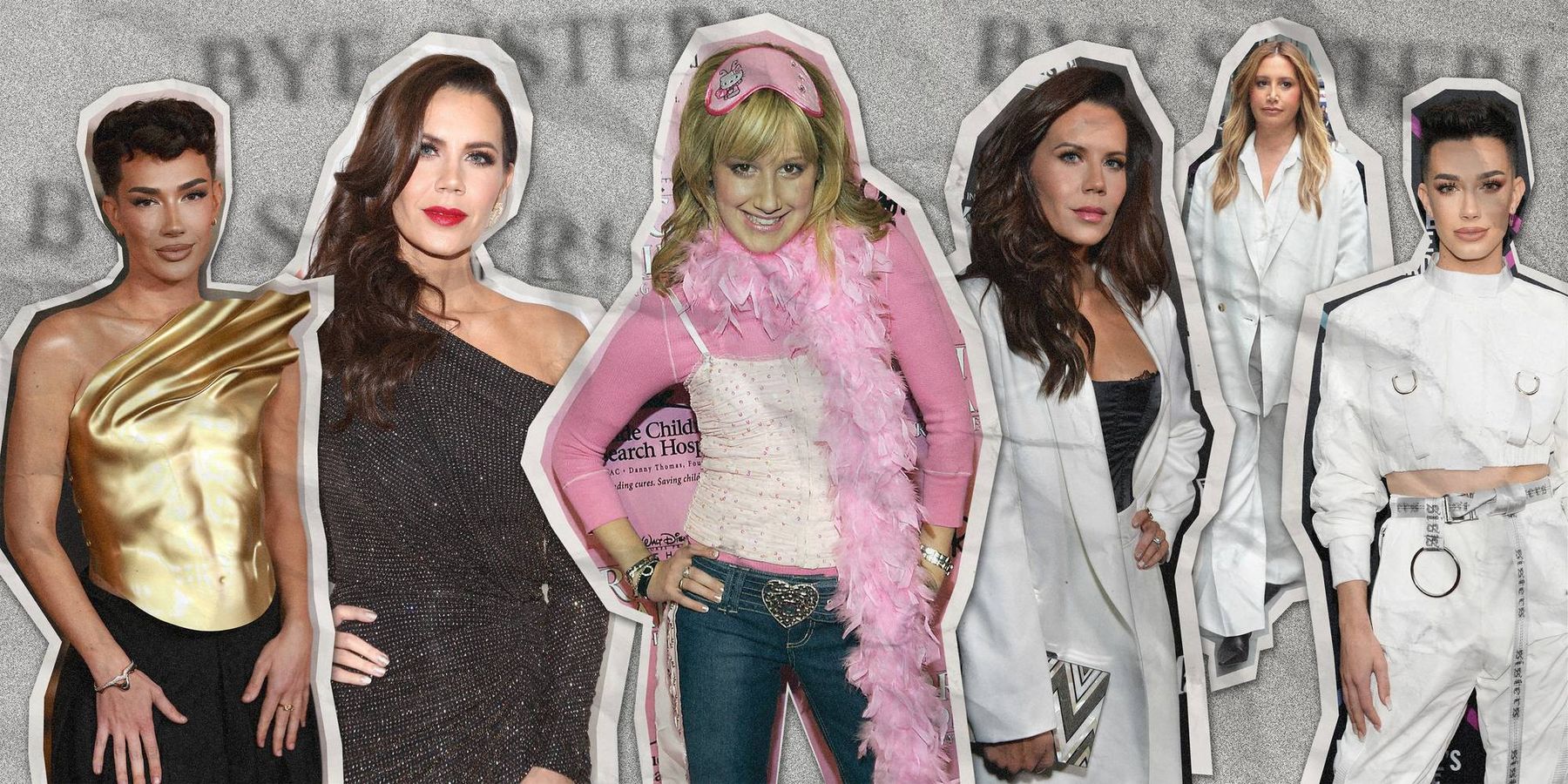
Among such incidents, none is more reverently spoken of than Tati Westbrook’s now-canon “BYE SISTER” video, in which she loudly told the internet that James Charles “did it at my birthday dinner.”
The details of their feud have become almost irrelevant to the “Dramageddon” that followed. None now live who care very much about SugarBearPRO Hair vitamins and Halo Beauty. Instead, social media remembers what Heather Gay later memorialized as the "Receipts, proof, timeline, screenshots.”
Seeing as people had become brands, and brands to each other, the entire influencer ecosystem was shifted on its axis. Every single individual became graded on a scale of their proximity to the drama, with seemingly inconsequential players drudging up niche interpersonal experiences to prove the “side” they as a self-marketed product existed on. Westbrook and Charles were exiled; their reputations never recovered from the aftershocks. Jeffree Starr fucked off to a ranch in Wyoming and nobody knows where Dawson went, which is for the best. Memes are eternal, but not brands, not people.
I speak of the moment mythologically because it is, in many ways, a modern American myth. Two people who, at one time, were amongst the most influential influencers, brought low by screenshots of text messages blasted across Youtube videos and the nightly news. Nobody had ever seen anything like it. How quaint, again, to remember a world where such things weren’t commonplace.
Over the course of my life, “experts” and “the news” have touted the adverse effects of violent movies and video games on the impressionable minds of children. As a young person in the aughts, when such things were routine subjects, I found it almost laughable. Sonic the Hedgehog isn’t going to make me punch someone in the face. I do not laugh now, when I think about the young and old people alike glued to their phones, to the truth invented by social media and its many adherents. The difference between a Fast and Furious sequel and Tati Westbrook is that one of them is very much a real, living, breathing person. She could tell one what to think, what to buy, who to follow and engage with. They met her husband, and her animals, and they heard about her life story. They even got to read her text messages with a sexually charged 20 year old who took a brand deal with a competitor supplement wholesaler.
Traditional entertainment had been entirely supplanted by the once private lives of everyday people turned into “content.” They trapped themselves in The Sims like simulations for their own and other’s benefit.
When writing about the internet, it can be laughably easy to slip into a mode of thinking where real life is confused with digital life. These days, the line has never felt so thin, so precarious. But it is undeniable that in the wake of “BYE SISTER” and the dozens and dozens of copycat scandals that followed, a new way of communicating online developed. The social ecosystem amongst influencers, in which social capital and actual capital were indistinguishable, became the universal playbook of the internet. Over the following six years, Instagram and its successor TikTok grew inundated with everyday people posting through interpersonal strife, hurried along by the viral success of others before them. Algorithms were shaped accordingly, prioritizing interpersonal conflict. Negative engagement boosted metrics, meaning there was now an incentive to tell thousands of people your neighbor’s government name over a dispute involving lawn ornaments.
Hollywood, which briefly appeared earlier as a bystander to the brief success of the “beauty guru,” was not immune to the changes. On Instagram and social media, numerous former celebrities pivoted to influencing when the acting gigs dried up, or they wanted a lifestyle change. Among them were former child stars like Ashley Tisdale, who now goes by Ashley French. Around her were other moms and former child actors, frequently in photos, branded around their millennial-core “mommy group.” Other notable faces included Hilary Duff, Meghan Trainor, Mandy Moore — women who have all espoused the virtues of each other in glossy profiles in glossy magazines, or in Instagram captions waxing poetic about “girls trips.”
I would not describe Ashley French or Meghan Trainor as “A-Listers,” but I’d think that Hilary Duff and Mandy Moore provided enough fame and cover for the group to not talk about each other in the press. Unlike influencers, who peddle secrets like affiliate links, pre-social media celebrities still largely adhere to the unspoken rules about tabloids and gossip. Sure, they all talk to us in the press, but nobody ever puts a name to a source. That would be embarrassing. That would break the code.
French, having crossed the picket line, is apparently beholden to neither, nor the expectations of women her age she formerly called friends. In a lukewarm essay in The Cut in which she mostly comes out as someone incapable of reading social cues, she blasts a former “mom group” she’s “broken up with.” In it, she writes: “You deserve to go through motherhood with people who actually, you know, like you. And if you have to wonder if they do, here’s the hard-earned lesson I hope you’ll take to heart: It’s not the right group for you. Even if it looks like they’re having the best time on Instagram.”
A key difference with “BYE SISTER” is the absence of a precipitating brand deal. But it is impossible to extricate Tisdale’s feelings about feeling left out over Instagram Stories she wasn't around to be photographed in and her pivot to blog writer. The seen-but-unseen mommy group exists in tandem with her multitudinous “mommy blogging,” including on the very subject of that same mom group.
She might not make the distinction between actual friendship and social capital and even earned capital, but she doesn’t really have to.
@meghantrainor ☕️☕️☕️ #stilldontcare
Predictably, the internet descended on her own Instagram, pointing out that the only “mom group” she was ever pictured with was the one written about in People and Us Weekly every few months. This is despite the now-useless protestations of her reps, who told TMZ there was an entirely separate mommy group nobody was aware of. Hilary Duff’s husband, Matthew Koma, responded with a parody essay on Instagram stories, writing: “When You're The Most Self Obsessed Tone Deaf Person On Earth, Other Moms Tend To Shift Focus To Their Actual Toddlers: A Mom Group Tell All Through A Father's Eyes." Meghan Trainor also weighed in, posting a TikTok video with an overlay that read: “me finding out about the apparent mom group drama.”
In 2026, being Lizzie Maguire and a formerly famous rom-com actress doesn’t protect one from being the victim of a “BYE SISTER” incident. Who could have guessed? If anything has changed since that infamous video, it’s that “receipts” and “timelines” aren’t even needed anymore. Vaguely gesture at drama, offer up your friends on a Temu silver platter, and the internet will do all the heavy lifting with the knives and with the carving — even if the cutlery is plastic.
At least James Charles was brave enough to put himself out there creatively. At least Tati Westbrook had the work ethic to look at a camera directly and say “sucking dick and cock.”
Images via Getty / Graphic Design by Jewel Baek