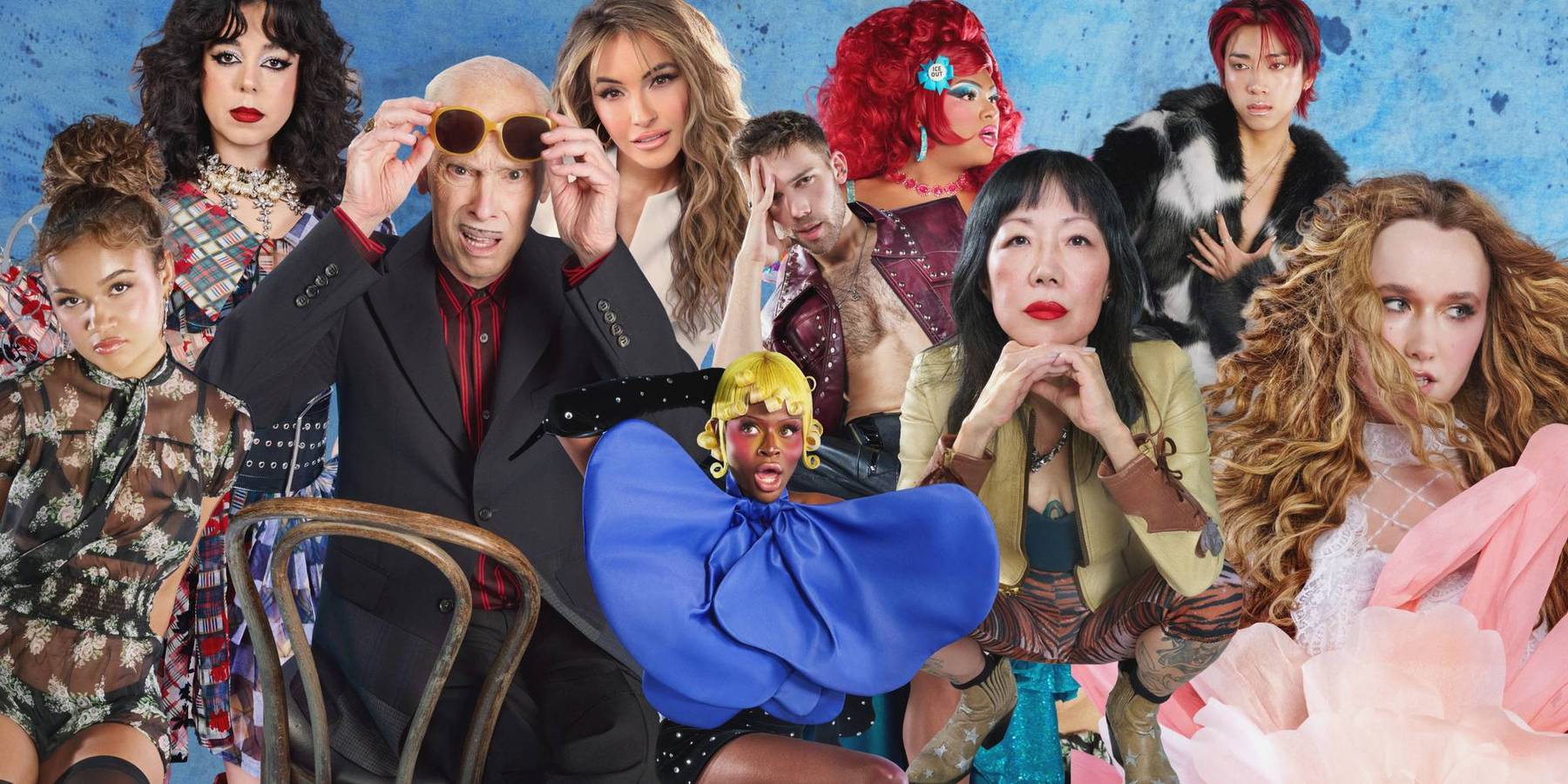
2025 Was the Year of the Villain (Again)
Dec 29, 2025
Surprise of all surprises, Disney is releasing another villain spin-off.
Earlier in December, the company announced that it would be returning to the live-action world of Beauty and the Beast by means of a film centering the origins of the story’s protagonist, the airhead hunter Gaston. It seems to be an adaptation in a similar vein to 2014’s Maleficent or the 2021 movie Cruella, in which Emma Stone swayed us into believing dog-killer Cruella De Vil would be someone who’d seriously mess with Vivienne Westwood –- a movie that received an Academy Award, cultural praise and a greenlight for a sequel.
The cultural impact of Wicked, which exemplifies Universal’s take on the misunderstood rebel archetype, also cannot be understated.
These conventions play a desirable role not only in fictional media, but also how audiences characterize figures in reality TV. “Reality,” in these cases, is a strong word to begin with; we’re aware of how characters are intentionally created and archetypes are filled. To join in on these shows as a viewer is to give into the self-indulgent, voyeuristic joy of watching strangers engage in manufactured squabbles in front of a camera. To be an actual contestant, however, is to risk enduring the “Villain Edit” in the eyes of millions of viewers.
The term originates within the world of reality TV culture, and refers to the act of stitching select footage and scenes together in post-production to establish a clear antagonist. It feels ridiculous to liken an average Joe or instagram model plucked from obscurity to the likes of the Joker or Harley Quinn, but the abilities of producers and editors alike to coax character arcs from hours of footage can make a maniac out of anyone. Of course, one can’t count out actual behavior in the making of these narratives. How much of the lies, lowbrow crime and cheating could have been Frankeinstein-ed into Jax Taylor throughout his eight seasons on Vanderpump Rules?
As viewers, an over-the-shoulder view of reality show chaos renders us co-conspirators to these villains, deliciously in on their plans. When thinking back on my stint watching Survivor, I most vividly remember watching antics like Tony Vlachos’ spy shacks or Sandra Diaz-Twine’s manipulative me-first mentality unfurl across episodes. Watching season one for the sake of nostalgia after the fact, where the hottest debates revolved around who wasn’t pulling their weight at camp, was disenchanting by comparison. In the OG’s defense, the inherent spice of a hidden immunity idol wasn’t included until Guatemala in season eleven, but playing the sidekick from the couch truly can be the show’s most enticing aspect.
Even when strategy isn’t meant to be a program’s focal point, our values as viewers seem to stay the same.
With months of distance from 2025’s most talked about television show, Love Island, there was no more polarizing figure than Huda Mustafa – she was a name I knew before I began watching the show. Her simultaneous affection and outrage for Jeremiah Brown, as well as the overflow of the latter for anyone who showed an iota of interest in him, fueled the July algorithm.
When placed in tandem with more lighthearted moments — queue the “I’m a mommy” audio — conversations around her were fueled by a cult of personality. In addition to having the support of many of her fellow cast members when it came to in-show voting, the flack she received online for her behavior didn’t equate to her being cast out based on fan preference, either. Rather, the show’s public polling mechanism led Jeremiah to be recoupled with bombshell Iris Kendall – likely in a ragebait-y attempt to further exacerbate her anger on live television. If not feeling immersively close as sidekicks, the Villain Edit allows viewers to embrace distance, instead: here from the drama, but thousands of miles from the mess.
Huda’s longevity on the show was never a matter of embodying the game’s intention – her relationship with overseas baller Chris ended before they even made it to the finale’s podium.
But there was something enticing about that drama that fans preferred to the champagne problems of other insecure couples or the “girl’s girl” dilemmas that plagued the season in equal parts. The chaos of an in-show persona hardly ever equates to a figure’s lifestyle or actions outside of set, and while Huda has engaged in her own share of controversy since the show’s ending, her memorability shows in the stats: While Season 7’s winner, Amaya Espinal, sits pretty at 3.4 million Instagram followers, Huda has retained 4.7 million since the season’s end. And for all her talk about being mischaracterized on the show –– she claims she “really [is] chill as fuck” in a post-season interview with Vulture — her villain arc garnered her more clout than a wholesome spin on the show ever could.
In high-pressure, high-surveillance settings like reality TV, the word “nice” is as relative as “reality.” But while “nice” players in these settings always garner pathos, more often it’s the devious characters that earn financial and cultural renown. Within the sphere of fun and fiction, it’s a far worse crime to be boring than to be bad.
Eleanor Jacobs is PAPER's 2025 Fall Intern. This will be her last piece for PAPER as an intern, so please join us in wishing her the very best in her studies in the new year. Thanks for all the fabulous writing, Eleanor! You have a bright career ahead of you.
Best wishes, Joan and the entire PAPER staff.
Image via Getty
MORE ON PAPER
popular
AMBUSH and Lexus Are Building the Future Classic Club
Story by Ella Devi // Photography by Max Tardio
Story by Ella Devi // Photography by Max Tardio
15 September
popular
Bella Poarch is Writing Her Own Story
Story by Bea Isaacson / Photography by Sophia Liv Maguire
Story by Bea Isaacson / Photography by Sophia Liv Maguire
31 August
Music
Bebe Rexha Burns Down the Asylum
Photography by Diego Bendezu / Story by Russ Martin
Photography by Diego Bendezu / Story by Russ Martin
01 July
Entertainment
'Minions & Monsters' Director Pierre Coffin Has Seen the Memes
Story by Taylor Lomax
Story by Taylor Lomax
30 June