
Entertainment
'The Pitt' Star Sepideh Moafi Sees Those Hot Takes on Dr. Al-Hashimi
by Sam Bodrojan
05 February
The Pitt is Good TV.
The medical drama, a spiritual successor to ER led by Noah Wyle himself, became a word-of-mouth sensation over the course of its first season last year off the back of its addictive, real-time structure. In 2026 alone, The Pitt has already cemented itself as one of the keystones of contemporary television, dominating the Emmys last month and premiering to double the viewership of the series premiere.
What makes The Pitt so striking, even in its sophomore year, is its refusal to chase the trends of “prestige TV.” It is unafraid to be corny, to ogle gnarly practical gore, to evoke the ersatz tonal shifts of a soap opera.
Despite this, it feels far less disposable than the average glossy six-episodes-every-three-years mystery box. The show is a cultural object of brazen sincerity, one that treats the serialized melodrama and progressive polemics that once defined television as worth studying, emulating, venerating. Its list of influences is long and obvious, but arguably its clearest predecessor is All in the Family. Like the 70s sitcom, The PItt toggles between pragmatic polemics on the hot-button issues of its day and a dogged pursuit of four-quadrant entertainment.
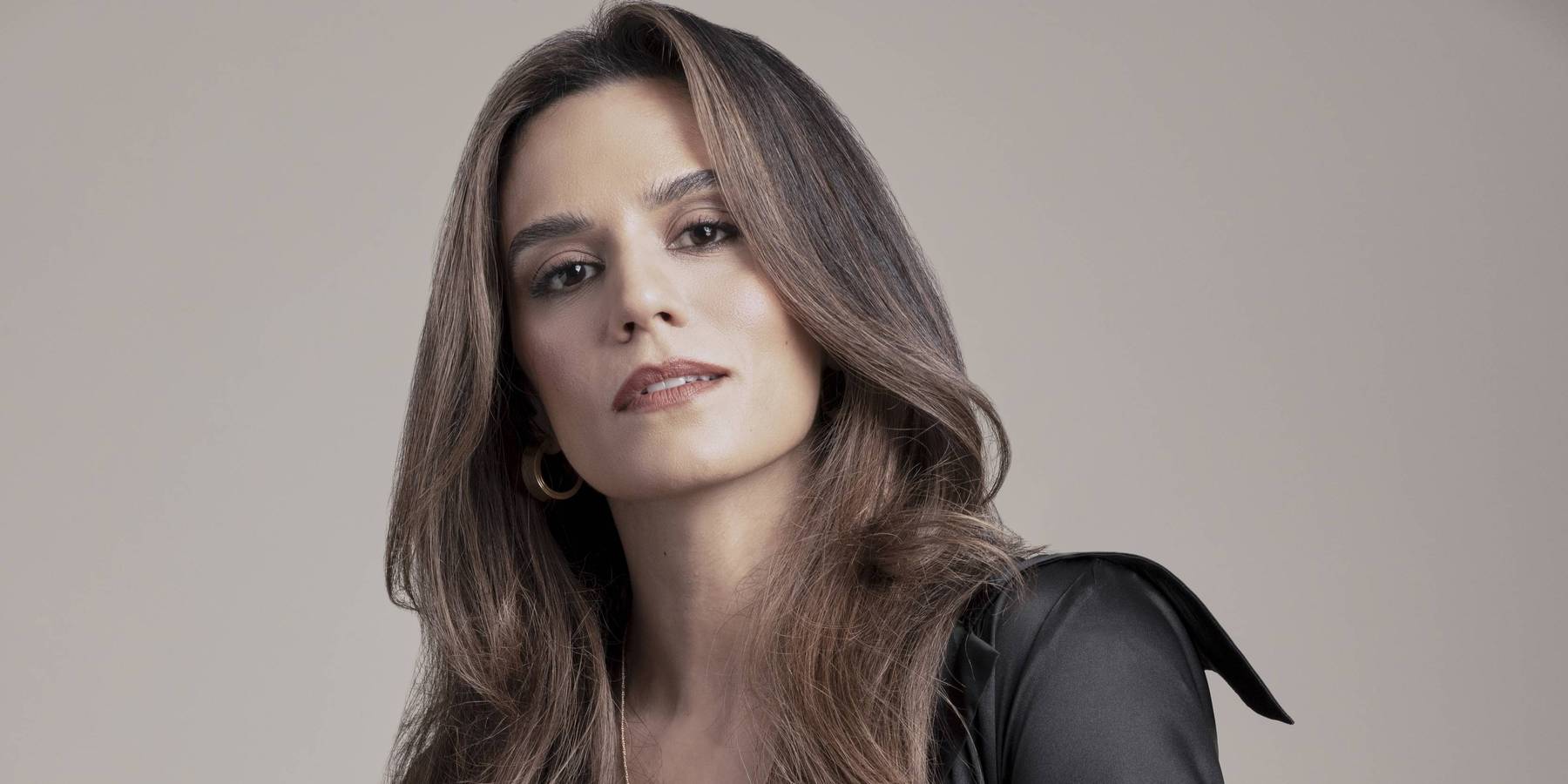
The second season’s virtuosity has made room for an expanded cast on an already sprawling ensemble. The most prominent addition is Dr. Baran Al-Hashimi, played by Sepideh Moafi. Al-Hashimi is the new attending physician in the the pit, a principled, complicated foil to Dr. Robby. She advocates for the use of Generative AI and a cumbersome “patient passport” system, but also provides crucial encouragement and guidance to her staff as Robby, one day out from his sabbatical, begins to unravel.
PAPER got the opportunity to speak with Moafi about the role, her relationship to the political moment, her evolving relationship to fandom and treating medical jargon like a libretto.
How did it feel to be filming the season while it was still airing? That was once a very common occurrence, but nowadays it’s quite rare.
I don't think I've ever worked on a show with this production pipeline - certainly not one with this much visibility and popularity. The tone and temperature of this show takes me back to my childhood, when I was watching something like Friends week-to-week. Aparently, for the first season, they started screening the episodes midway through the season, and then they'd do it weekly until they wrapped. But for us, they didn't start screening until maybe two months ago. I avoided the screenings because I didn’t want anything that could potentially distract me and take me to a place of judgement. Had they started earlier, I think it might have been helpful to watch. But I’m grateful that I waited.
I watched episode one for the first time at the premiere. It was kind of out-of-body. [HBO CEO] Casey Bloys announced the pickup for season 3 right before the screening started; it was news to everyone, from the cast to the crew to R. Scott Gemmill. It was surreal. I’ve been on a lot of shows that received industry acclaim, and I've had shows like The L Word that are, like, a cult favorite. But to have both worlds with The Pitt, where it’s universally well-received, is something I haven’t experienced before. I’m to get recognized more, which makes me a little uncomfortable.
I imagine that can be quite beautiful to witness, but also potentially overwhelming. What’s your relationship to being on a show with such an online fanbase this time around? How is it different from your time on The L World: Generation Q?
Well, the online landscape has vastly changed since The L Word, which is crazy to say. Maybe that's just my experience, but I certainly felt like I was able to compartmentalize it a little bit more than I can now. The algorithms have changed; Back then, I’d still get tagged in a lot of things, but I was able to go on my feed on Instagram or on Twitter, and I wouldn't be bombarded with content from the show. I didn't have to engage. But now, I’m seeing posts that I did not sign up to see. It’s forced me to relax my relationship a little bit more with this stuff. With Dr. Al-Hashimi, it's strange, because you don't quite know who she is yet. I'm hearing a lot of hot takes about her [laughs]. I need to have a looser relationship with it all now. It's exciting to be part of something that is slowly unfolding, where people engage in real-time. I had some paranoia about what this might feel like, and even though I have more exposure in this moment to what's happening online, I have a less visceral, fear-based reaction to it all, so that's good.
This is a bit of a silly question, but it’s something I’ve wondered when watching plenty of shows about doctors. How do you approach delivering the lines full of all this advanced medical jargon? It’s this hypnotic characteristic of performances where the can understand what it means without knowing 40% of the words.
[laughs] Look, on a certain level, you can Google anything. The roots for medical jargon is Greek and Latin, so it starts kind of making a little bit more sense. But it's not just about translating, right? It’s about the emotional context, for me, for the patient.I started in opera. At the conservatory where I studied, we would learn some of the Romance languages. But we wouldn't only sing in German, French, Italian; we’d also sing in Romanian, in Russian, Czech. I didn't understand all of these languages, so I had to build a system for myself to be able to not just translate but really perform in these languages I did not understand.
In the beginning, that’s what intimidated me the most. I knew they didn't hire me to be a doctor, they hired me to be an actor. But once we started the medical boot camp, I was like, “how am I gonna learn it all?” Then I realized, I didn’t need to know all this medical, technical language. I just need to know what's happening in the script, and I need to get as fluent in the language of the script as possible. And as soon as I'm done with it, it leaves my brain and creates room for the next thing. I feel like I have a firm handle on what I’m saying while I’m saying it, and as soon as it's over. it's gone.
One of the defining traits of The Pitt is, for lack of a more succinct term, its “wokeness.” Whether it’s tackling AI or carceral healthcare, it foregrounds these issues unapologetically. What do you think it is about the nature of the show that makes it such an effective vessel for these ideas?
I think that a hospital, by its very nature, sits at a convergence point for all these different parts of society. It is a space primed to explore deeper, more existential questions - around faith, or relationships, or the self. It should be the great equalizer, right? We all inevitably die, we are all faced with tragedy; it doesn't matter if you're a billionaire or a construction worker, you have these same problems. Where it gets a little complicated is, of course, the billionaire has certain privileges that the construction worker does not. I think that seeing these questions explored, it’s a bit refreshing. More often than not, we're bombarded with content that forces us into submission. That’s not what The Pitt is.
Is there anything you brought to the role - whether that’s in collaboration with the writer or just internally for your performance, that really excited you?
With any role, you're bringing little pieces of life that either that you've somehow imbibed and absorbed. When you get to bring you full-heartedly believe, where you don't need to work to buy into and understand, when things just kind of, like, align with your own internal compass. it's a gift. She knows she's navigating deeply flawed systems and deeply flawed structures in which maybe it's a lost cause, but she sees worth in pursuing the best anyway. There are points where I don't necessarily agree with Dr. Al-Hashimi, but at the end of the day, she is a deeply skilled, ethical woman. She functions as ballast for the team. She navigates through clarity and moral steadiness, and she grounds the room with her presence. She's not easily destabilized, and that comes from a lifetime of instability, you know? Underneath is a whole lot of life, and pain, of being othered. Being able to bring my experience of that the role felt really… “easy” isn't the right word. Maybe “in alignment.”
I know you were born in a refugee camp and do lots of activist work with the International Refugee Committee. I was wondering if you wanted to speak on how it feels to be more visible than ever as a member of the Iranian diaspora in America in 2026? How have you been navigating that?
I have this overwhelming, beautiful moment with The Pitt. I am meeting and working with all these incredible artists. But my family's story as refugees has shaped my lens for the world. My advocacy work, it's just as much a part of my life as anything else. We are not separately artists as we are humans. In this moment, there's something particularly overwhelming because of the confluence of humanitarian disasters, and the lack of any accountability - whether it has to do with Trump, or the regime in Iran, or what’s happening in Gaza. I mean, this regime forged my existence. I was born in a refugee camp, and they have been the bane of most Iranian people's existence. And so seeing this personal opportunity mixed with potential, you know, catastrophic repeat in the patterns of history of intervention and the spread of imperial power. It’s very easy to go numb, especially when we have all these delicious distractions at our fingertips. Especially with what's happening in Iran, it’s felt like a kick in the gut a little bit. It's forced me to really zoom out and think, what am I doing here?
I don't really know how to answer the question of how am I doing. I'm speaking to people inside of Iran and allowing myself to kind of serve in the best way that I can, because it's bleak, you know? We have to fixate on what we can do, and divorce ourselves from this idea of all or nothing. You do a little bit every day, and it adds up. As Toni Morrison said, “If you are free, you need to free somebody else. If you have some power, then your job is to empower somebody else.” It's a responsibility, and it's an honor to do so.
Photography by Richard Knapp