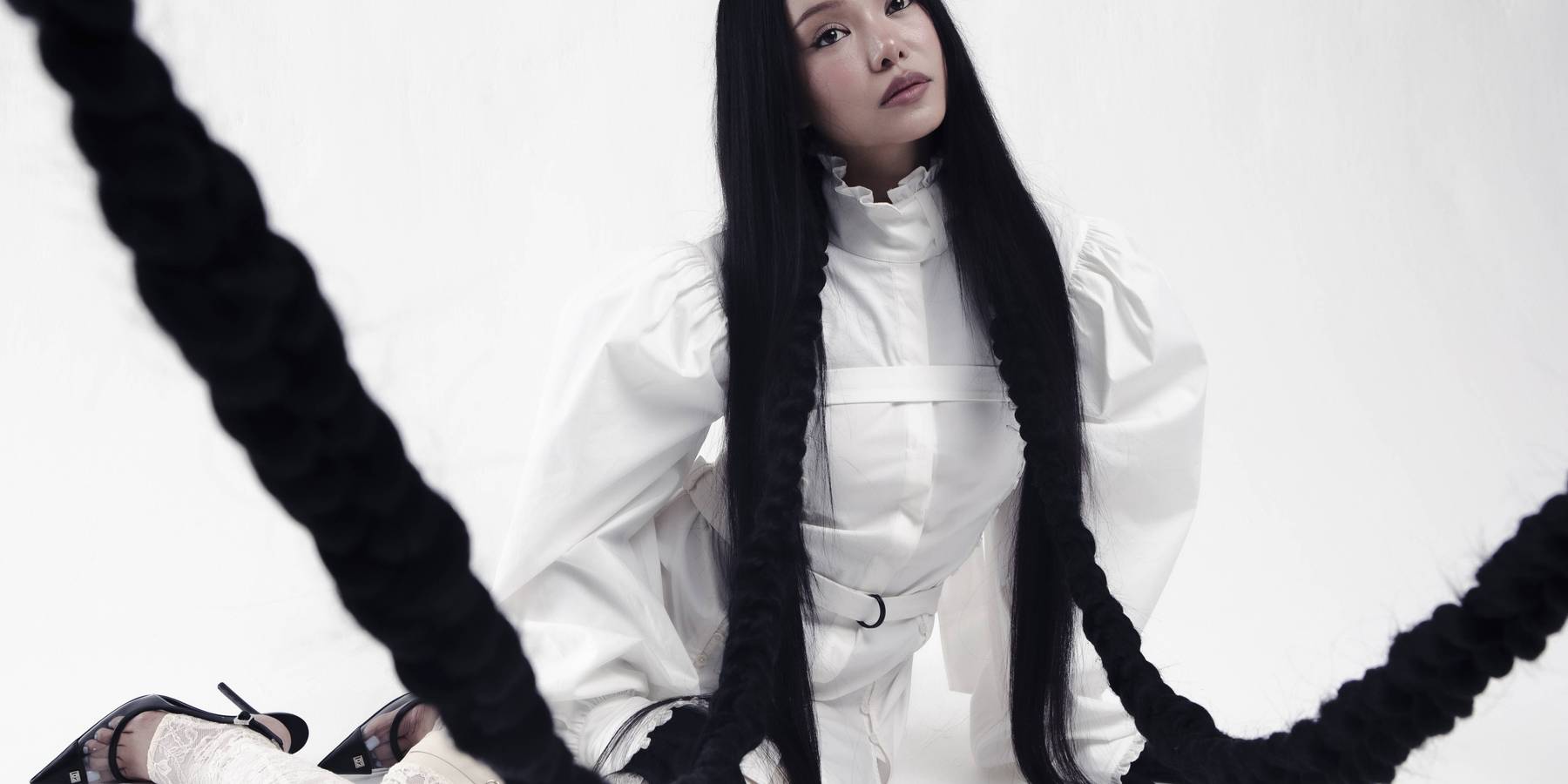
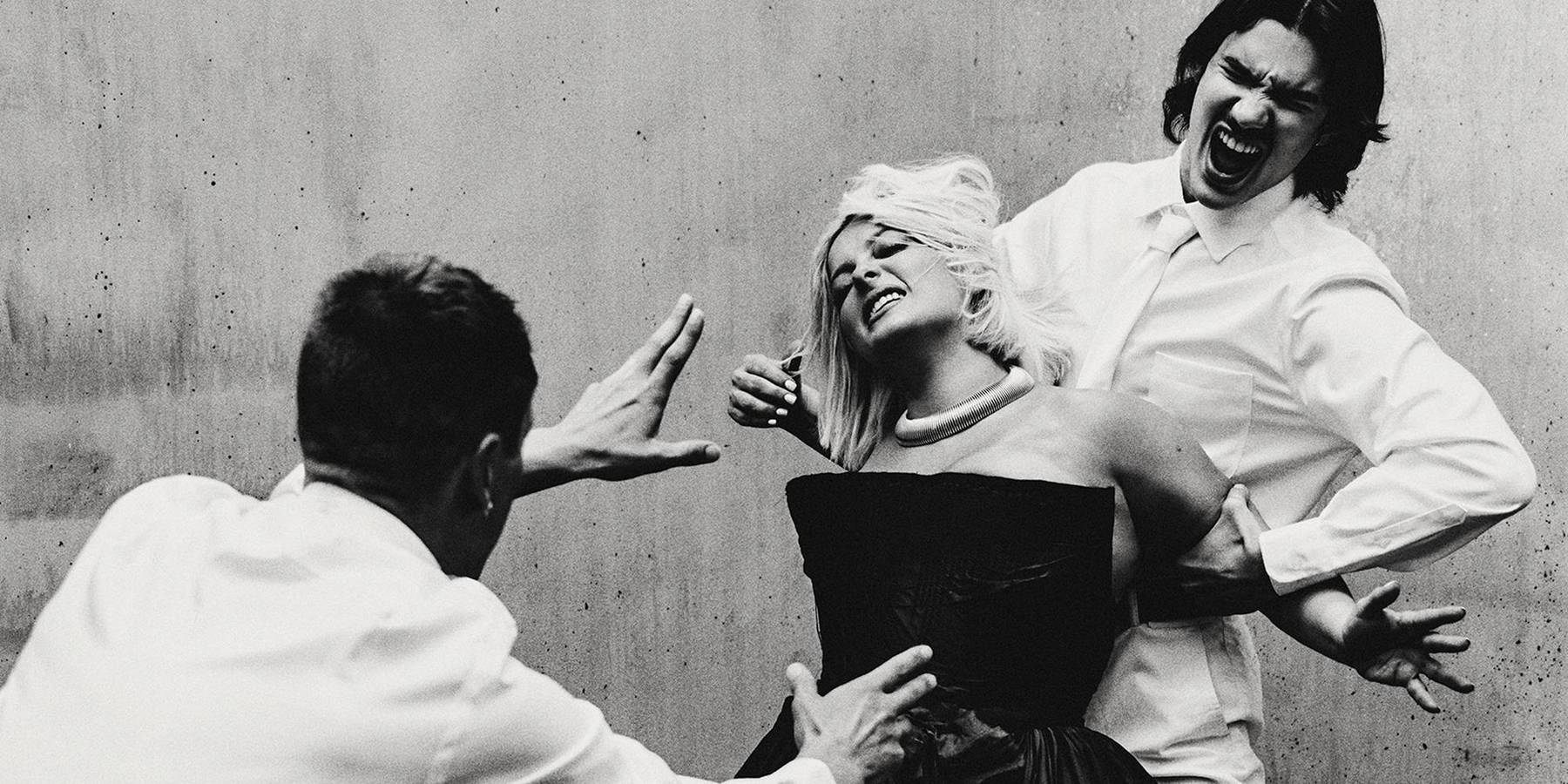
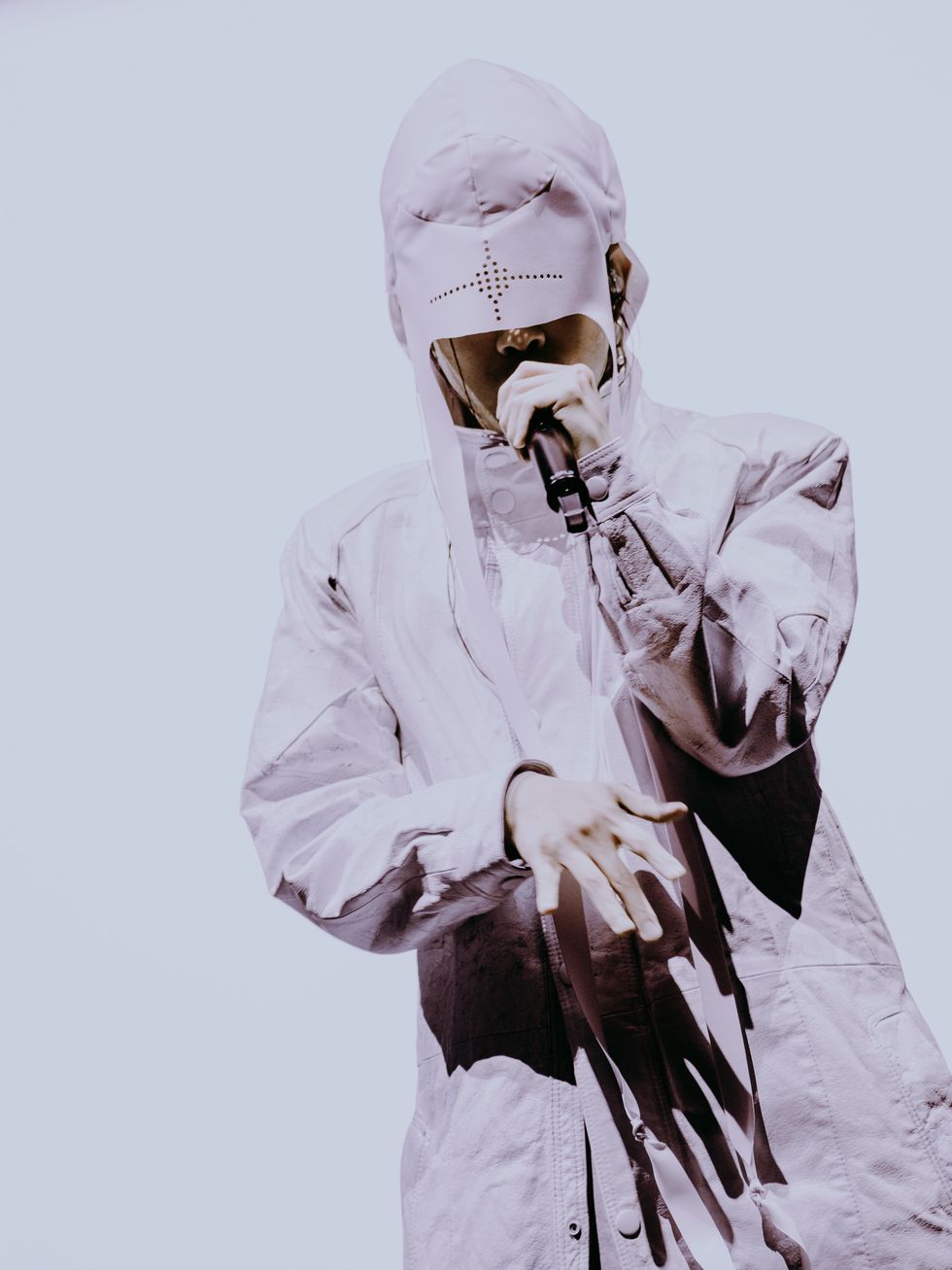
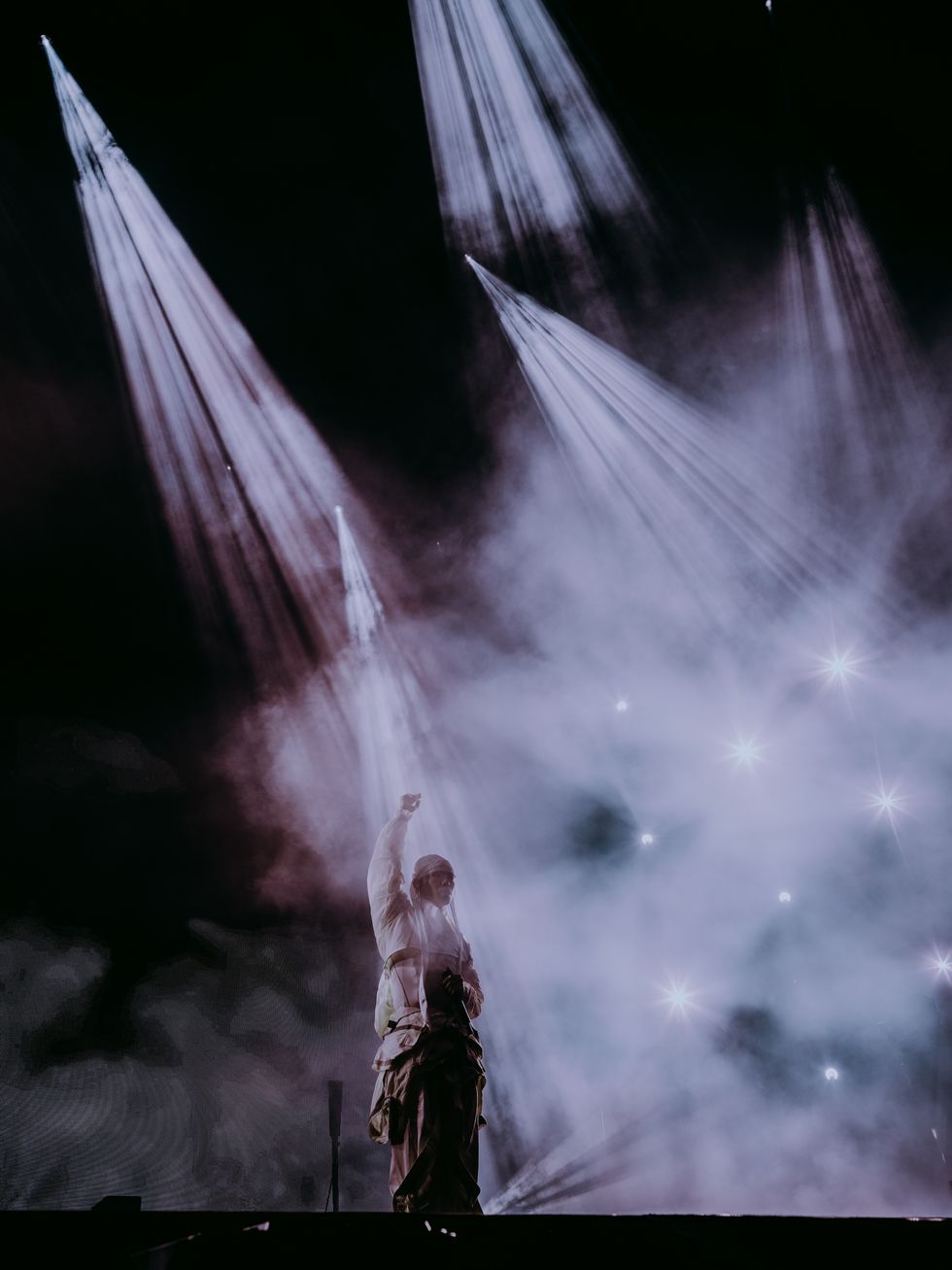
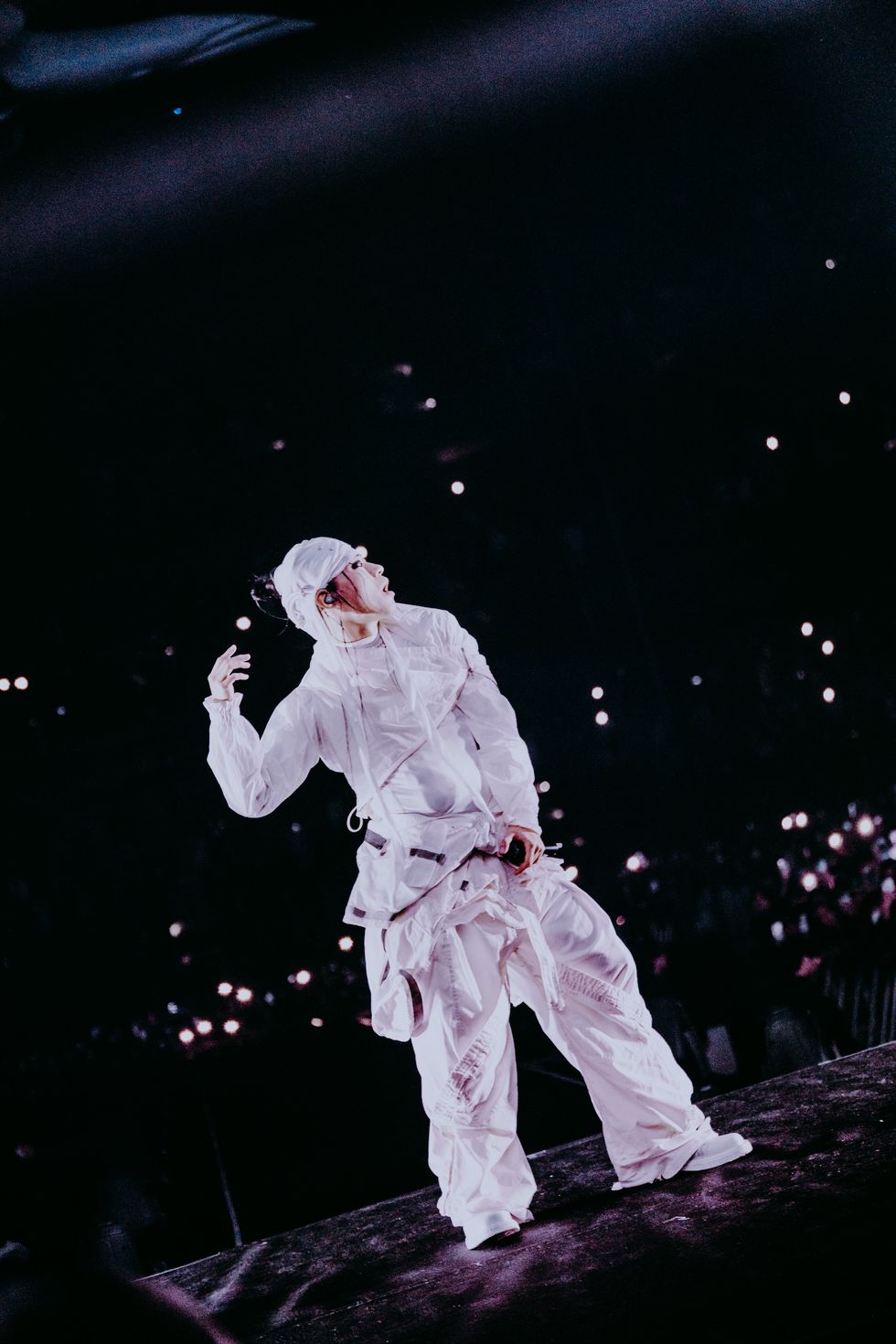
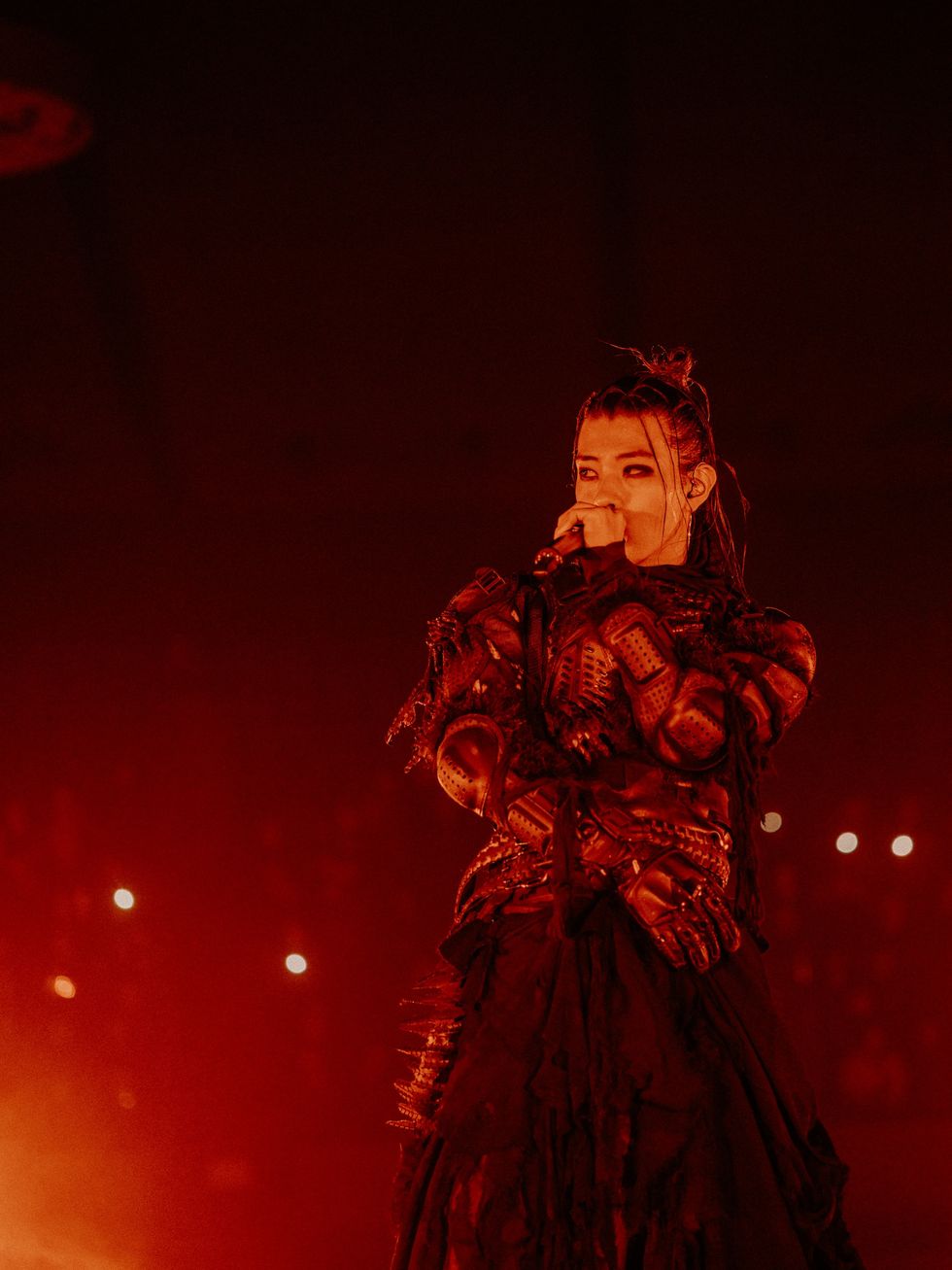
It’d be easy to compare Tohji to a video game character — the chrome, alien-like looks he wears like armor, and the surrealist, futuristic storytelling he gets across with his music and visuals. But this wouldn’t account for just how human he is.
“Since I’m living inside this body, there are certain movements that just feel good,” he tells PAPER. “That feeling of being suspended in the air — but still having your blood pumping wildly through your body — is what came out.” The 29-year-old Japanese artist is describing his newest series of EPs, zero-one and zero-two, which were released this past April and May, respectively.
Both records feel like a portal into Tohji’s inner world — part spiritual diary, part sound collage, all woven together with a liquid logic that defies genre. Written during a period of intense travel across North America, Europe, and Asia, the zero series captures the surreal disorientation of existing between time zones and subcultures, never fully landing. “Each city has their own logic,” he says. “When I came back to Tokyo after all that, I found Tokyo doing its own thing too.” That realization — of both global fragmentation and hyperlocal connection — became the emotional current that runs through the project.
Across the two EPs, Tohji channels chaos into coherence. Tracks like “Jungle Jin” are built on maximalist layers of bass and mismatched phrases, forming hypnotic shapes out of what first seems like noise. “Like how some people feel calm in a messy room,” he says, “I felt comforted by information-heavy tracks.” That collage sensibility extends to the visuals, too: metallic textures, Evangelion references, and handmade fashion come together in a vision that feels both cosmic and distinctly Tokyo.
Yet despite the singularity of his aesthetic, Tohji’s music is not about isolation. His work is grounded in community — particularly the one he’s built through u-ha, the party and collective he co-founded. “I can’t be friends with everyone,” he says, “but the people I deeply care about — even if they’ve never met — would definitely become friends.”
With zero-two, Tohji’s glitchy dream logic reaches new levels of emotional clarity. He’s not just crafting a futuristic sound; he’s imagining a new kind of intimacy — one that stretches across cities, languages, and dimensions, without losing its grounding in real feeling.
Fresh off his Boiler Room set in New York City on July 12, we caught up with Tohji to talk about building worlds through sound, finding peace in chaos, and what makes a party feel like home.
Your new EP zero-two feels like a dream that glitches in and out of reality. What kind of world were you trying to create with this project?
It felt like a glass eye with hundreds of little legs was crawling out of my skull and walking into the world. Recently, the world around my life has been getting a bit more complicated. When I tried to make songs about that, it became hard to express it with grammatically correct Japanese. I had to speak in this alternative Japanese that not even all Japanese people would understand. But that was the most natural way for me to speak at the time.
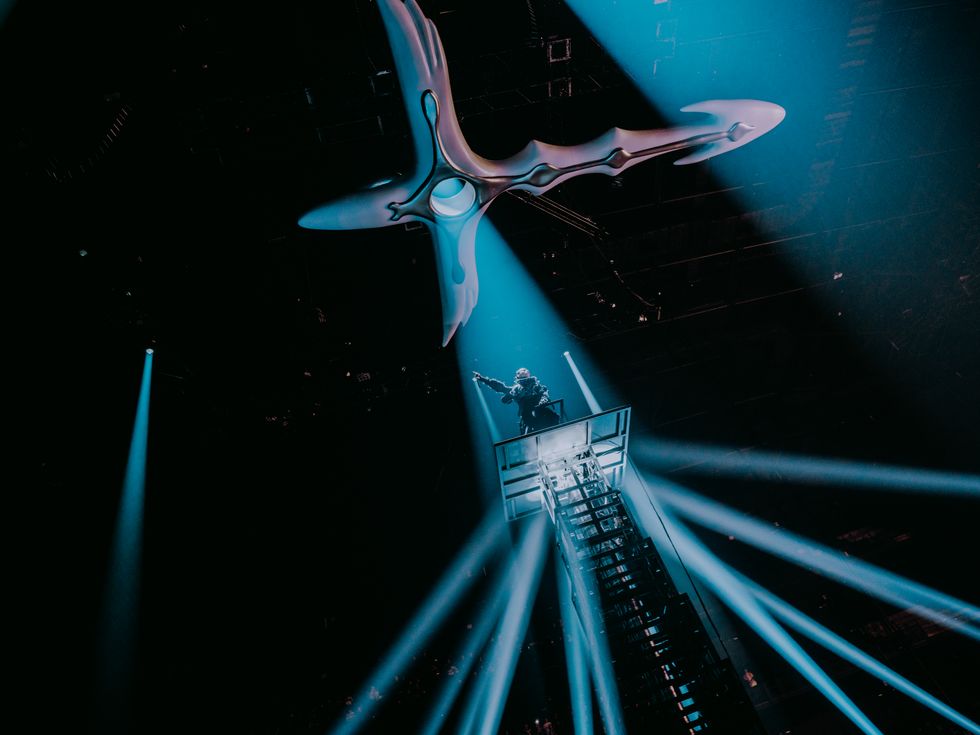
From zero-one to zero-two, there’s a shift in mood — more raw, more emotional. What changed in your life or your mind between these two EPs?
I was making zero-one and zero-two almost at the same time, so to me they feel like two parts of one whole. Last year, I played shows across Europe, North America, and Asia, and I realized something a bit surprising: the world is still not that connected. Each city has their own logic in its own way, not paying much attention to the others — and that’s normal. When I came back to Tokyo after all that, I found Tokyo doing its own thing too.
And as someone who doesn’t really belong anywhere, I felt like I was suspended in midair. So when I was in between airports, flying from one place to another, I sometimes wondered, “Where exactly am I right now?” That feeling of being suspended in the air — but still having your blood pumping wildly through your body — that ambivalence, I think, is what came out in these works.
"Jungle-Jin" has this chaotic, hypnotic energy. What was happening in your head when you made that track? What images or feelings were guiding you?
The whole zero series was about layering bass and playing with it. Like how some people feel calm in a messy room, I felt comforted by maximal, information-heavy tracks. Then I’d throw phrases on top — phrases that didn’t originally have much meaning together — just tossing them like patches in a collage. And somehow, those chaotic elements start forming relationships with each other, and a three-dimensional shape rises up from the noise.
You’ve said your voice is like “liquid.” How do you decide when to whisper, when to scream, and when to disappear into the sound?
Since I’m living inside this body, there are certain movements that just feel good — whether it’s the way my shoulders dance, the way my throat resonates, or the timing when a loop drops back to the kick. I just try to respect what feels physically right to me.
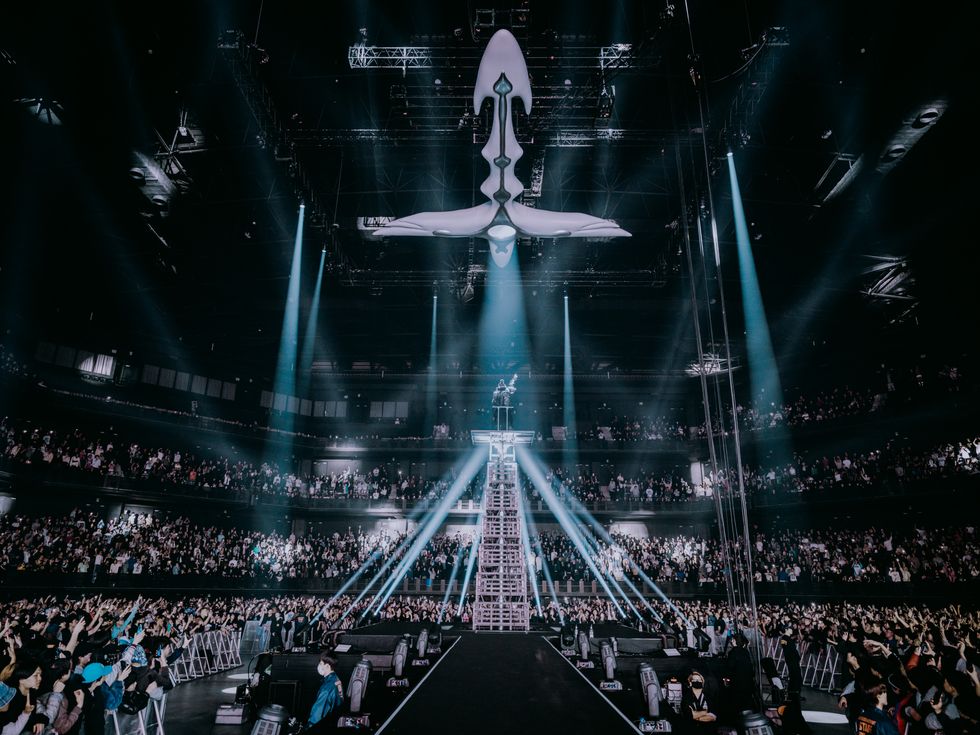
The visuals around zero-two — the artwork, the styling, the videos — are so specific. How do you build those worlds? Do you see images when you make music?
In the past, I often collaborated with creators from all over the world online. But for the zero series, I worked more face-to-face with Asian producers and designers. In a way, this project might be more local. Asian creators often interpret other works in a way that feels closer to my own. For example, I think the way Asian people feel about Evangelion is a little different from how people elsewhere experience it. I think that kind of local common ground comes through in this project.
You’ve created such a strong community with your party series, u-ha. What makes a party feel “right” to you? What kind of energy do you want people to feel?
I can’t be friends with everyone, but I feel like the people I deeply care about — even if they’ve never met each other — would definitely become friends. When I see new connections like that forming, I feel like, “this is a good party.”
If you could go to space, what song would you perform?
Iyaz – “Replay” (Acapella). If a grey alien with big black eyes happened to fly by in a small UFO and started quietly harmonizing with me, I think I’d slowly reach out and shake his hand.
Anything else you want to say to your fans around the world about this new era?
Artists and DJs are already good friends across cities. I hope the audience becomes like that too. If that happens, it’ll be something the world has never seen before.
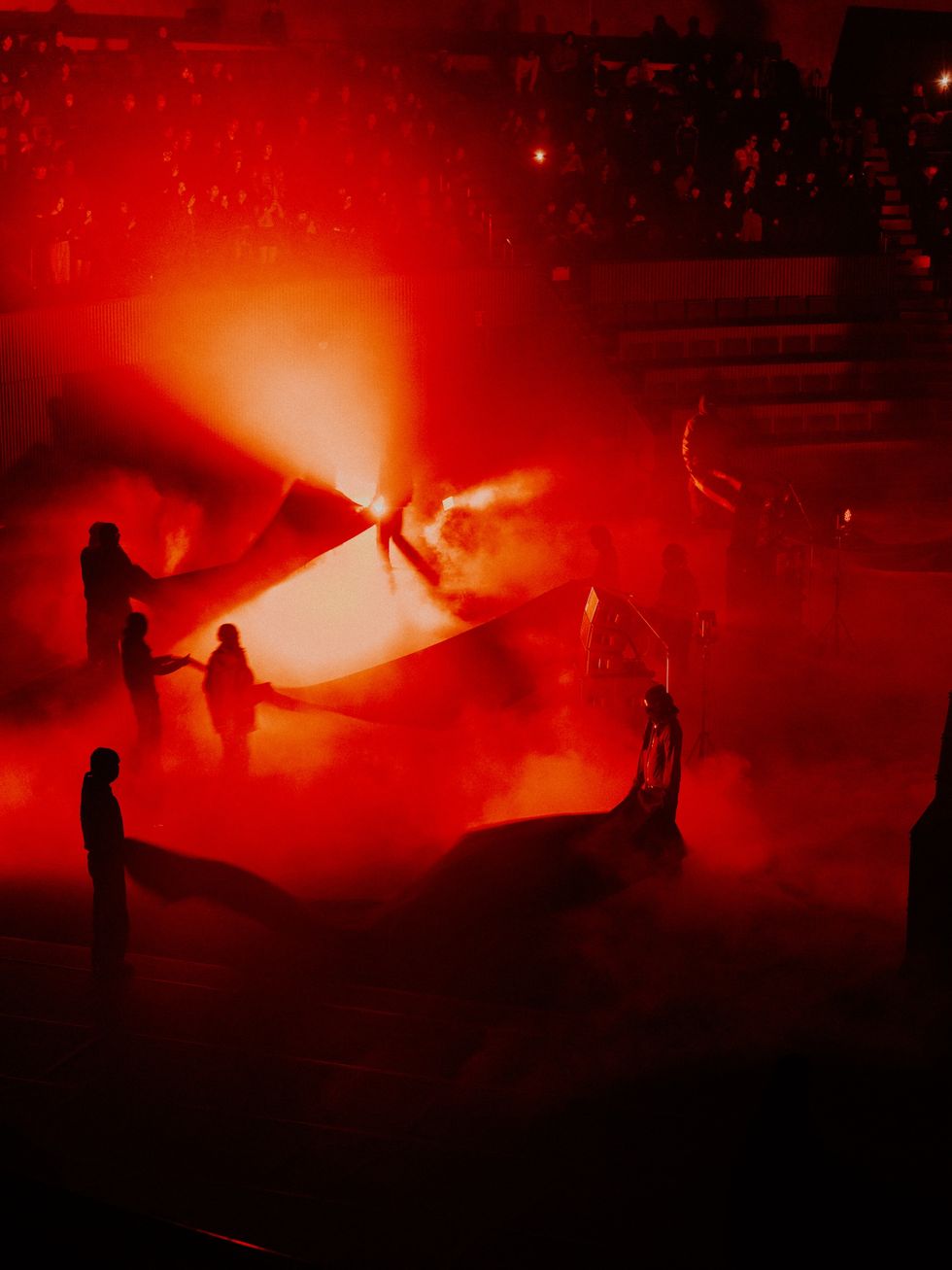
Photography: Jun Yokoyama
Related Articles Around the Web