Timothée Chalamet Is Not the Story of the Oscars
BY
Joan Summers | Mar 16, 2026
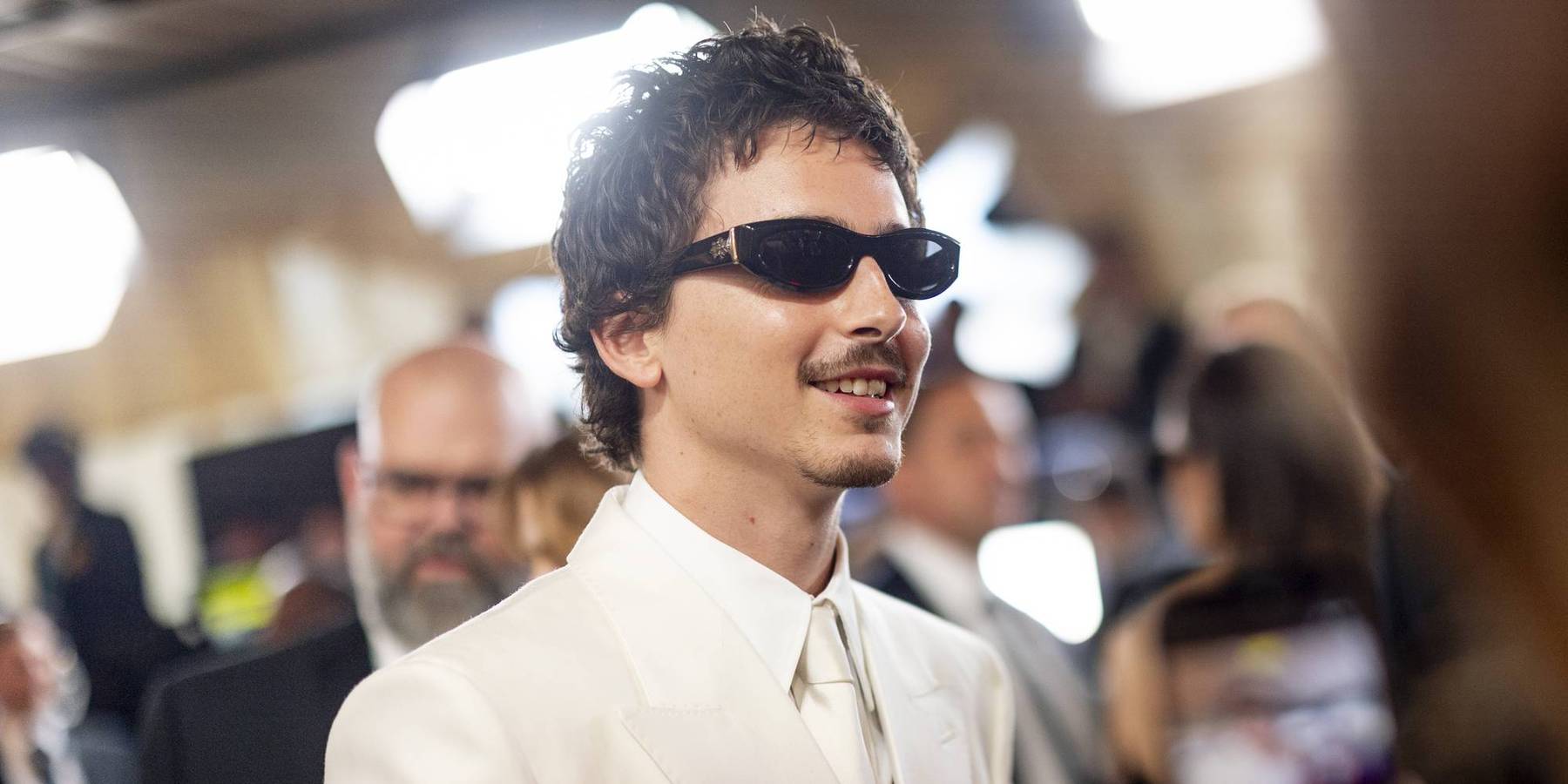
Timothée Chalamet, Marty Supreme actor and Hollywood’s most widely publicized awards aspirant, is not the story of the Oscars. At least, he is not the real story of the Oscars. But the institution made him the story anyway and we are all diminished for it.
At Sunday’s 98th Academy Awards, the Josh Safdie directed Marty Supreme lost every award it was nominated for — nine in total, including for Best Actor, Best Picture, Best Director, and Best Original Screenplay. This follows a widely publicized losing streak at the major awards ceremonies following the Golden Globes on January 11, where Chalamet won for Best Actor in a Motion Picture, Musical or Comedy. It went on to lose 11 nominations at the BAFTAs in February and three nominations at the Actor Awards
Categorically, Hollywood has rejected Chalamet at the gates of greatness; these are the same gates he has spent the better part of three years rattling near-constantly. If it was any consolation to the young actor, Leonardo DiCaprio snagged his first Oscar in 2016 and at 41 years old. It came after five previous losses, and remains his only Oscar to date.
But this is not the actual story that has been made of Chalamet this season. Following a run of press for his brief rap stint and relentless campaigning, the defining moment for this period of his career will be the comments he made about ballet and opera. At a “town hall” with Matthew McConaughey in February, the pair began to discuss the business of moviemaking, and changing audiences. It is best I quote Chalamet fully here, seeing as his words have now become the clip to farm for engagement this awards season.
“I admire people, and I’ve done it myself, [who] go on a talk show and go, ‘Hey, we got to keep movie theaters alive. You know, we got to keep this genre alive.’ And another part of me feels like, if people want to see it, like ‘Barbie,’ like ‘Oppenheimer,’ they’re going to go see it and go out of their way and be loud and proud about it. And I don’t want to be working in ballet or opera, or things where it’s like, ‘Hey, keep this thing alive,’ Even though it’s like, no one cares about this anymore. All respect to the ballet and opera people out there. I just lost 14 cents in viewership.”
It was a categorically stupid thing to say, in the moment and in hindsight, following an avalanche of negative attention and hysteria in the arts community. Out of context, it reads as callous and careerist, like something a venture capitalist might say about the next industry they intend to “disrupt.” In context, I do not hear haughtiness. I hear anxiety. It is the fear of a young careerist who sees his once great industry dwindling. His peers have been relegated to press junket clip farms where they can be found begging audiences to take the movies seriously again.
He is outside the gates, still rattling them, like Chicken Little in Supreme.
The following few weeks have been exhaustively covered by my peers, including the “Timothée” discount codes to various performances and statements from every working ballerina and opera singer in the United States. As I stepped out of the National Ballet's rendition of Pinocchio, a push notification informed me Doja Cat had joined in on the crusade. A day after issuing a condemnation, she retracted it, and said: “I’ve never been to a ballet. I’ve never seen an opera. And I took it upon myself yesterday to kind of give it to the man, because there is a culture based around outrage and things like that, and people want to feel like they’re part of something. It’s a need to connect, whether good or bad.”
We tell ourselves stories in order to live. Ironic, then, that the story of the arts industry is relentless posturing and careerist striving, unmoved by the very stories they themselves have brought to life at this exact awards ceremony.
War broke out at the borders of Hollywood in the time it took the news cycle around Timothée Chalamet to reach a point of mass hysteria. Jafar Panahi’s It Was Just an Accident was nominated for Best International Feature Film and Best Original Screenplay, alongside co-writer Mehdi Mahmoudian. He told PAPER, in an interview published ahead of the ceremony, that he would return to Iran and serve another stint in prison for his work on the film. It Was Just an Accident lost in both categories, and in the space between that interview and the present, his country has been relentlessly bombed, causing widespread destruction and mass casualties, including 165 people, many young students, at a girls school.
Elsewhere, Motaz Malhees, star of the The Voice of Hind Rajab, likewise nominated for Best International Feature Film, could not enter the US to attend the ceremony due to a travel ban on Palestine that prohibits his entry. The film documents the real-life murder of 5 year old Hind Rajab, a Palestinian girl, whose desperate pleas for help were broadcast across the world in 2024.
Earlier in the newscycle, the Safdie brothers were once again implicated in the alleged abuse of a minor on the set of their film Good Time, previously reported in 2023 amid widespread allegations towards producer Sebastian Bear-McClard. As I discussed extensively when the story came back to light, the focus was not about that young actress, or what she allegedly endured. The story was about if Marty Supreme had its Oscar chances tarnished.
At the ceremony itself, famed ballerina Misty Copeland "came out" of retirement to perform in front of Chalamet, a description of the moment that belittles her talent and contribution to the form. One Battle After Another walked away with an armful of awards. These include Best Picture, Best Director, and Best Supporting Actor. The film’s sweep comes alongside trophies for Sinners star Michael B. Jordan and director Ryan Coogler — Best Actor and Best Original Screenplay respectively. Together, these wins complicate the modern consensus that Hollywood has “rejected woke” and swung full tilt towards conservatism.
The revolution will not be televised; its retelling will instead be projected on film and highly rewarded.
If these are the stories of the Oscars, Timothée Chalamet is the cheap shot. The adrenaline rush coursing through culture is the byproduct of our satisfaction over an easy kill. Opera and ballet, funded not by public interest but wealthy benefactors , are thoroughly de-political. They provide a sanitary outlet through which to be right. In a world of chaos and war and the unknown, Chalamet has done the public a service, really. One can position themselves as the morally correct connoisseur and participant in society; one can buy tickets to the ballet and the opera; one can fire off tweets about the devaluation of art. One does not believe they can meaningfully intervene in the murder of a five year old; one cannot serve another's prison sentence or seek justice for the atrocity of war.
It is easier to take a bullet for the arts, in this country. At least actors and artists can be counted on to project these stories in dark cinemas under threat of a similar fate. In defense of this dying form, let everyone buy a ticket then.
Images via Getty