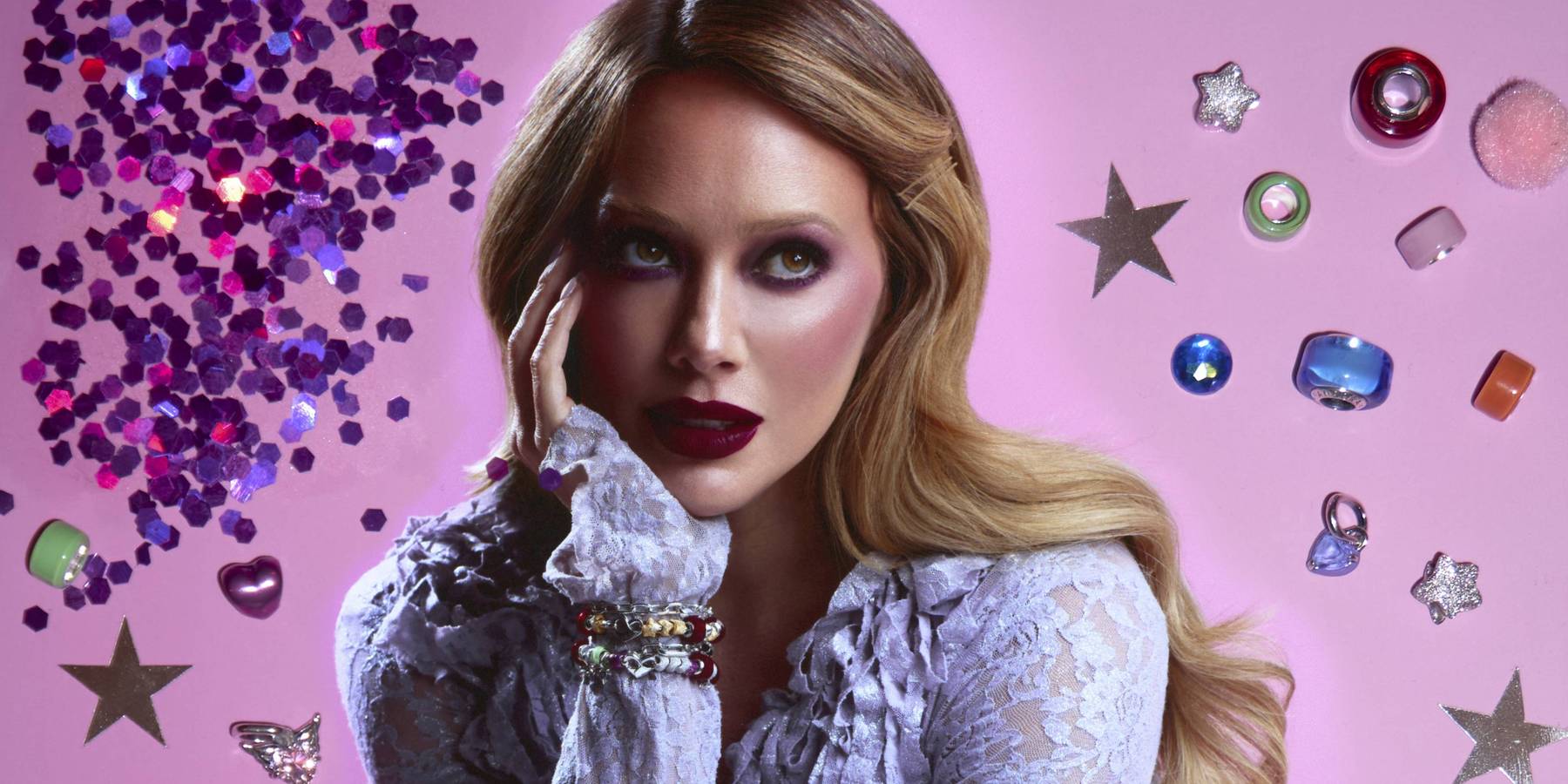
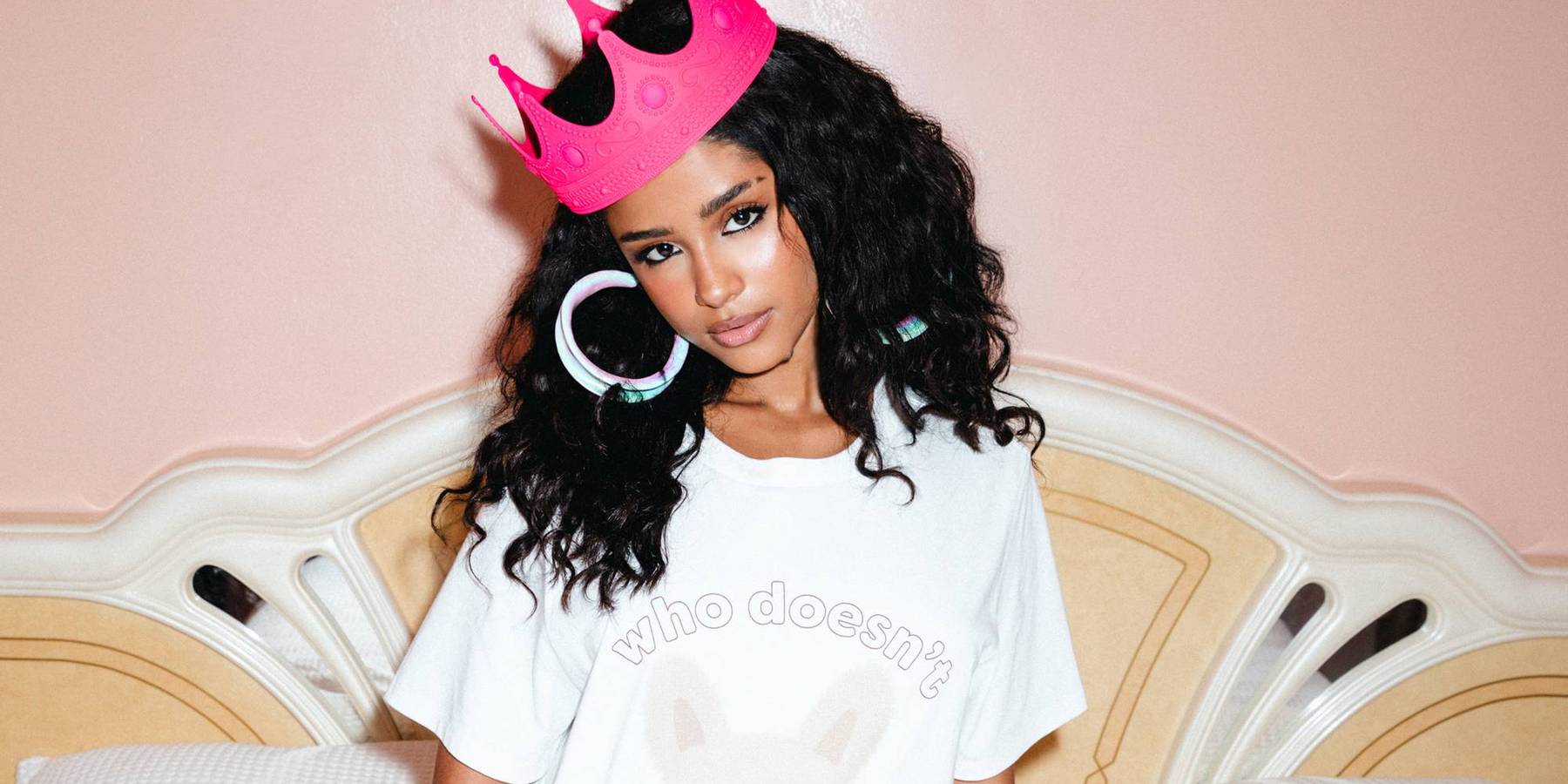
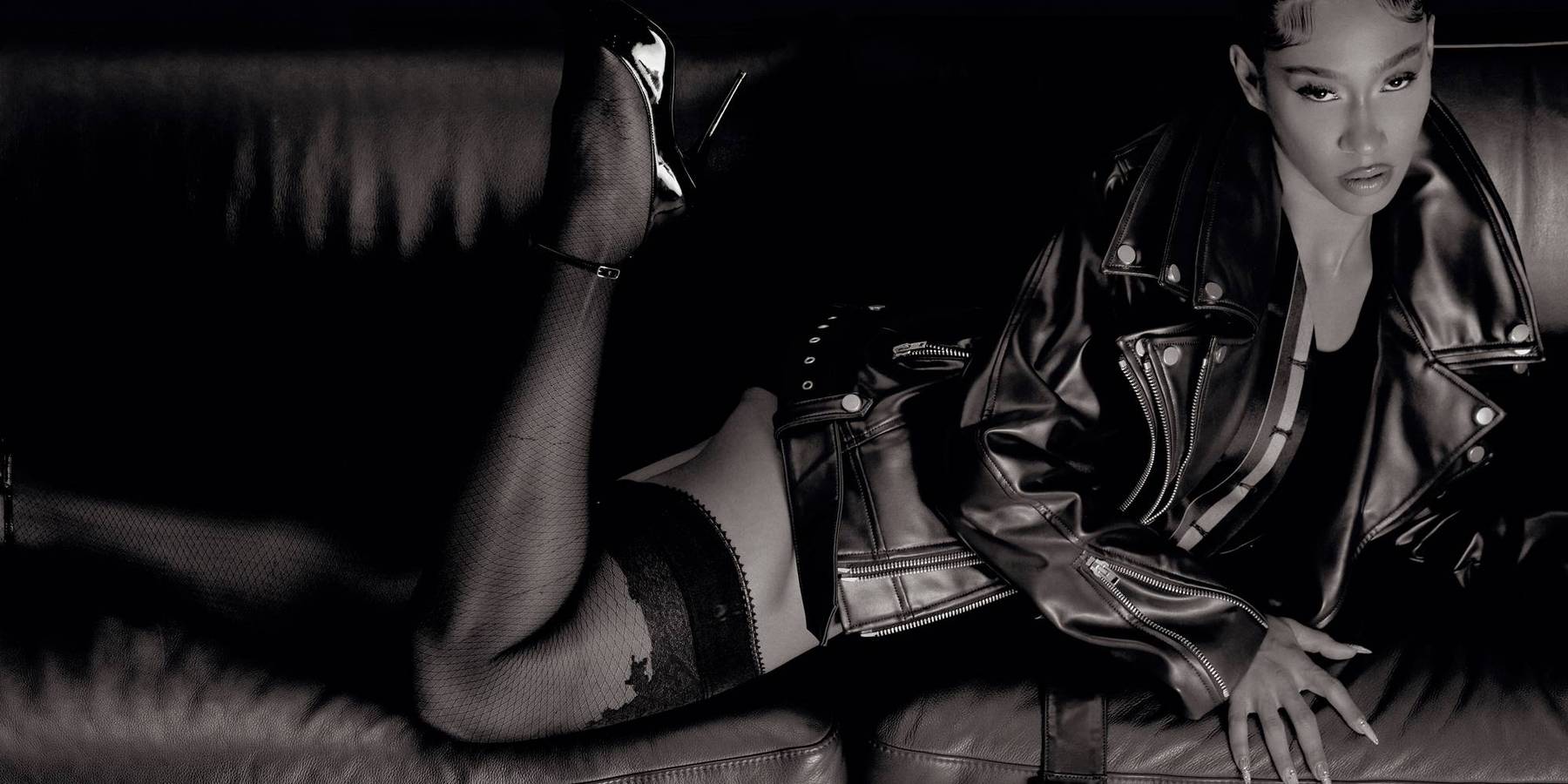
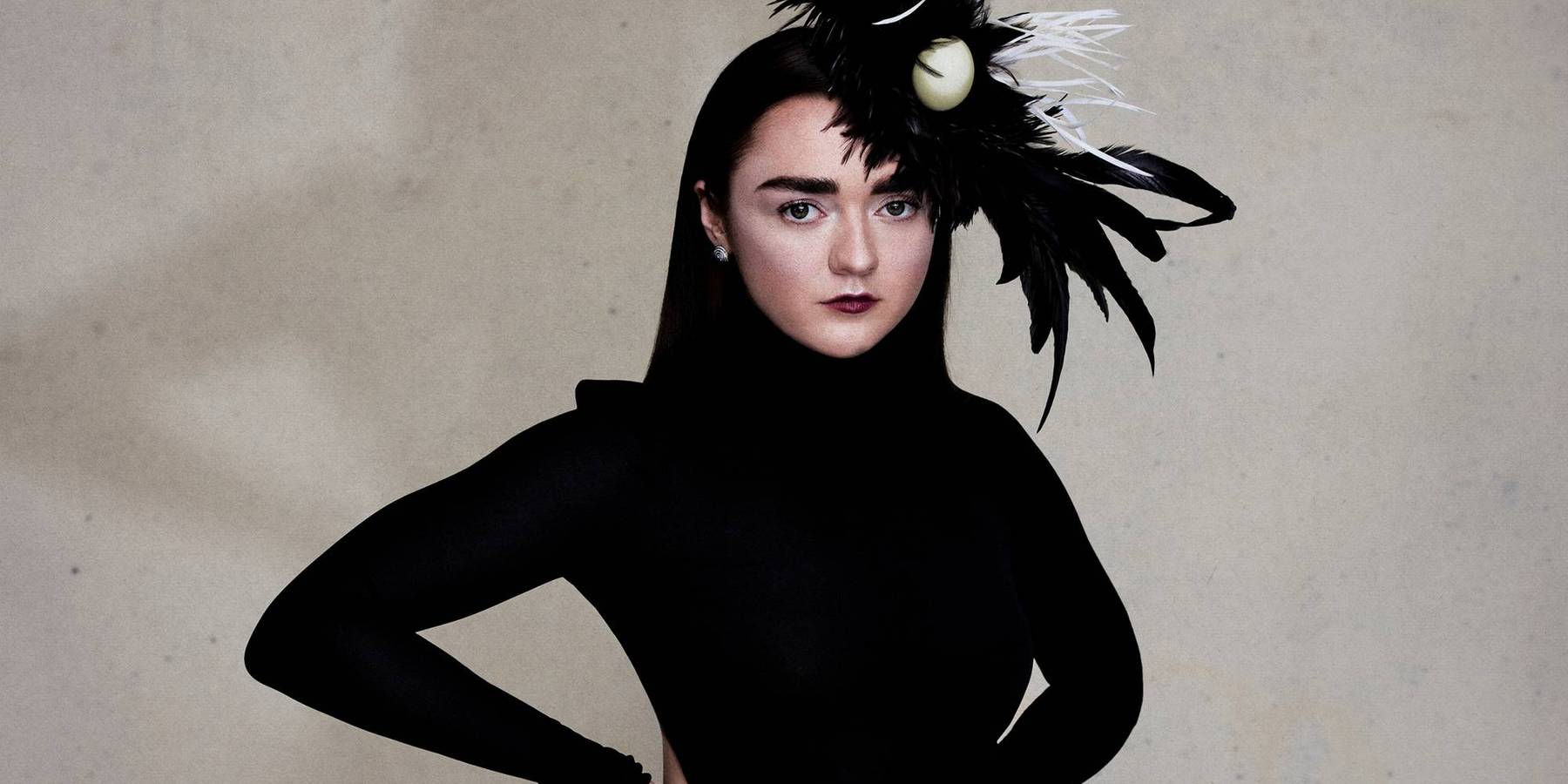
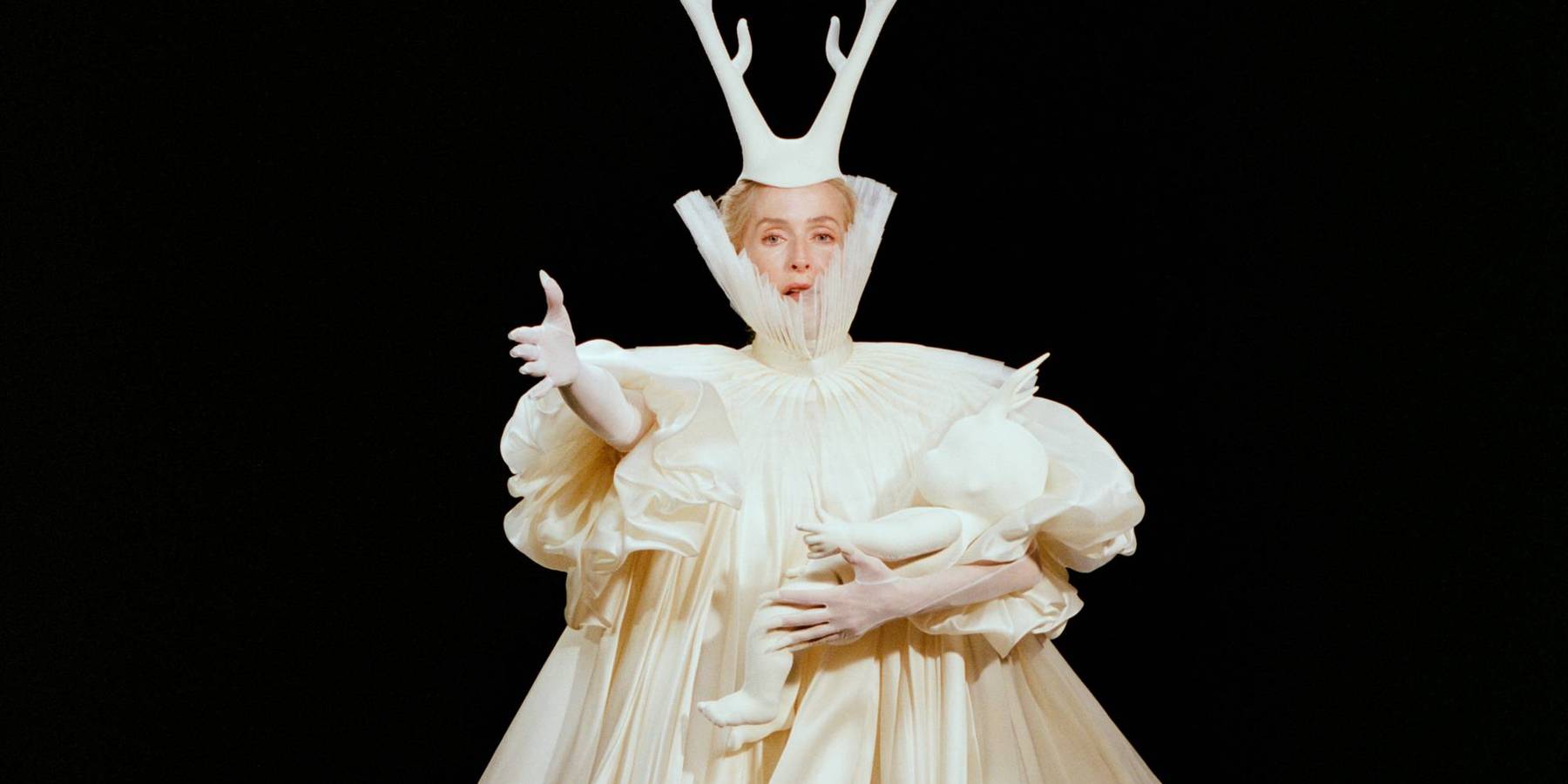
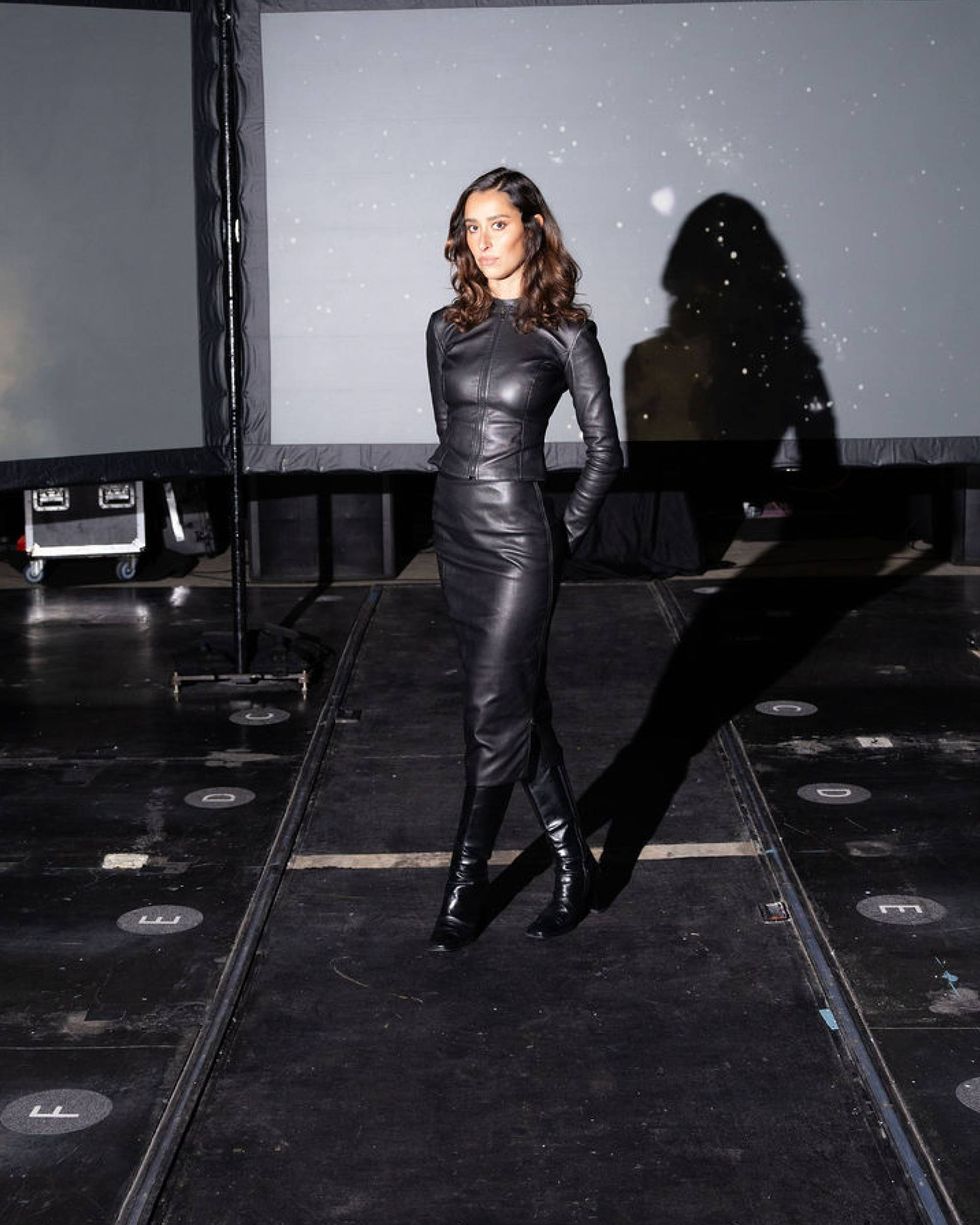
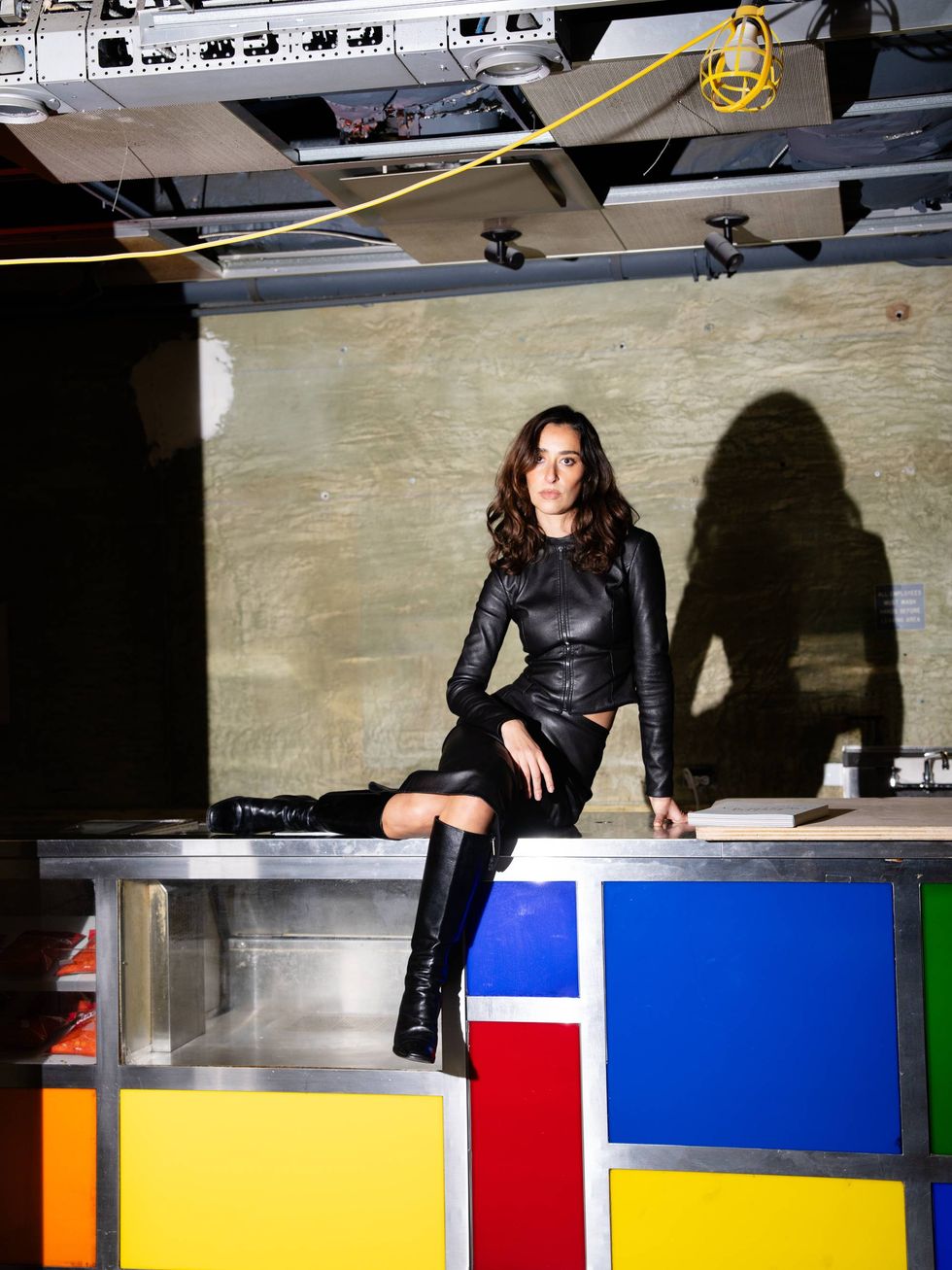
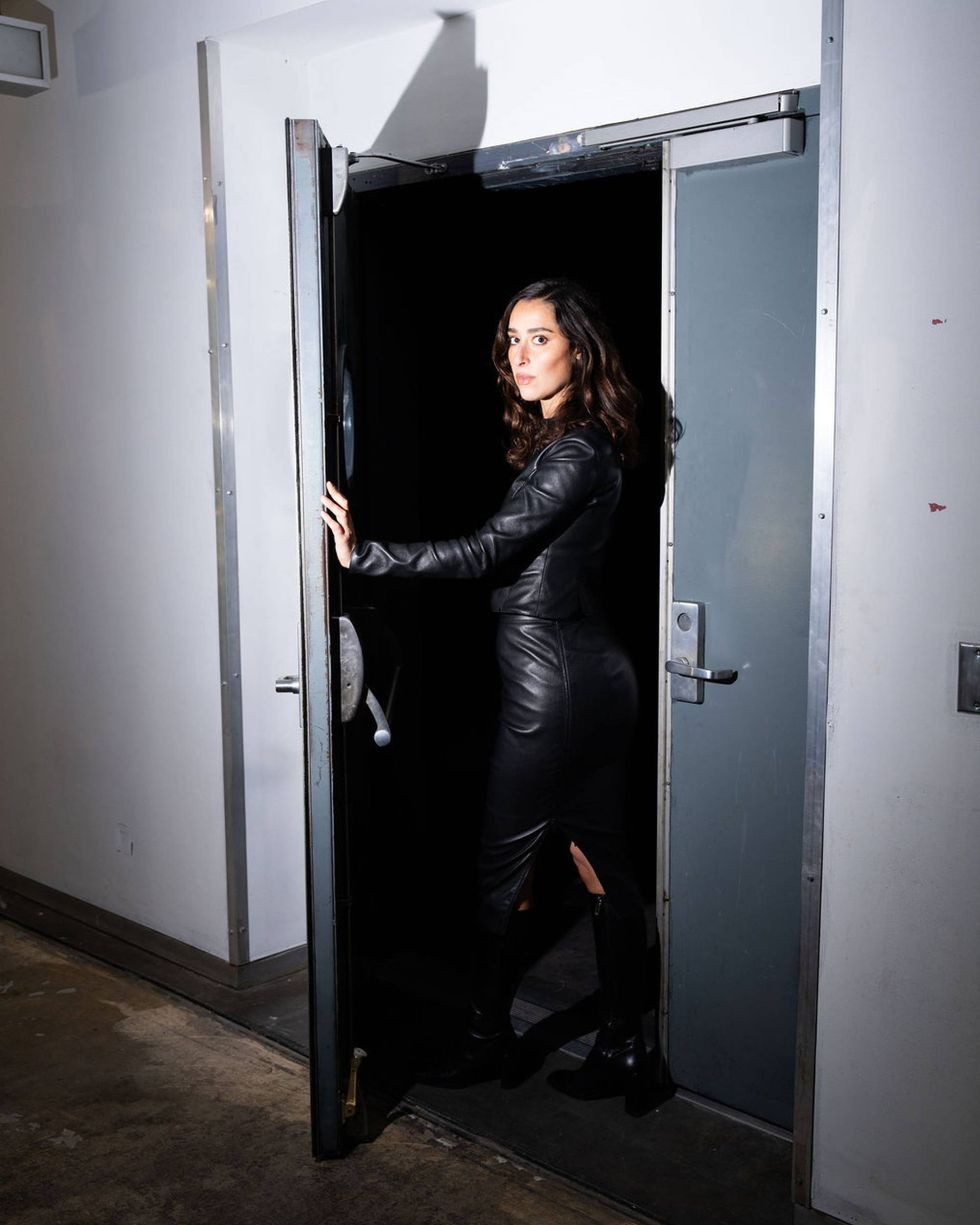
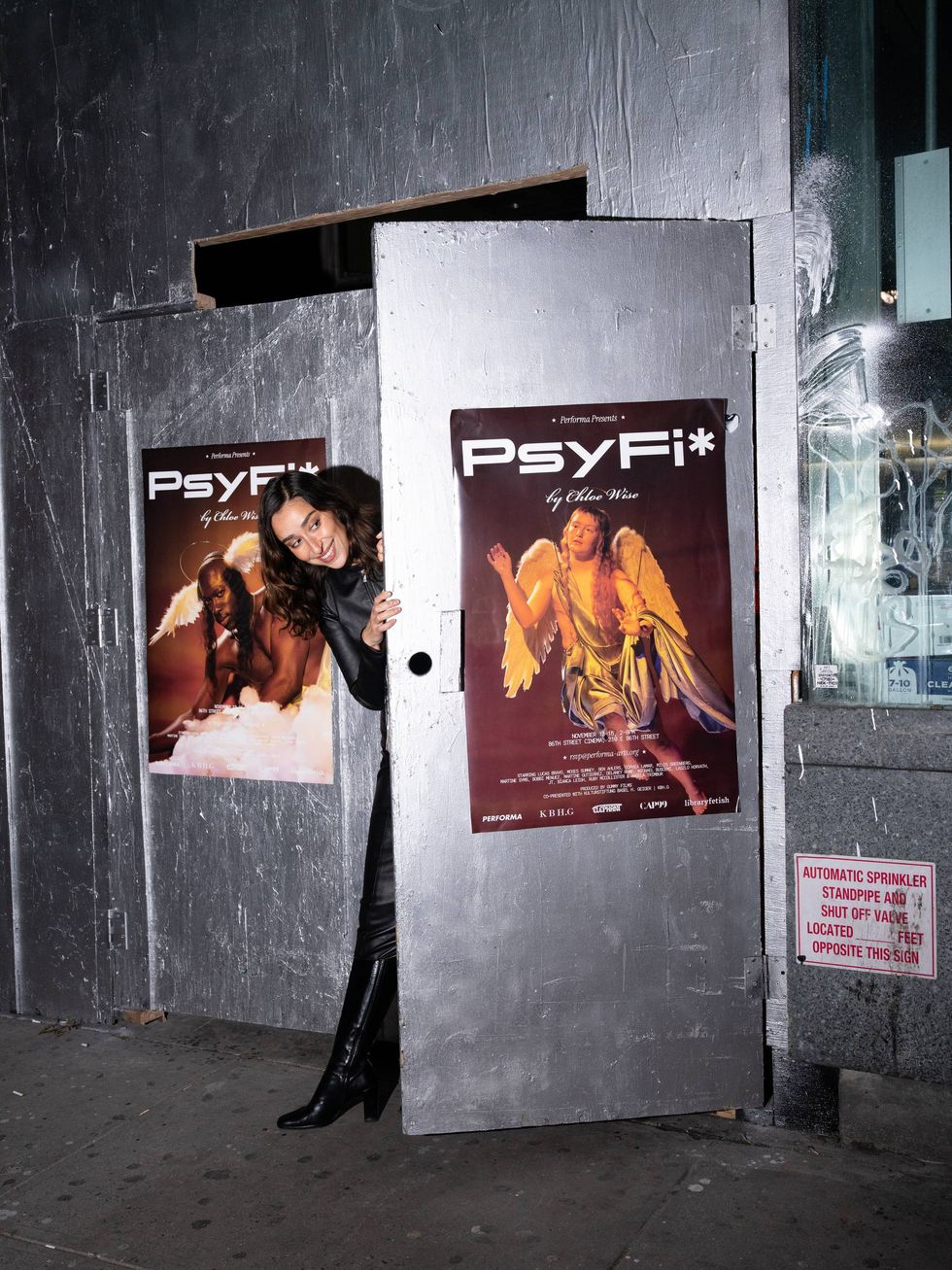
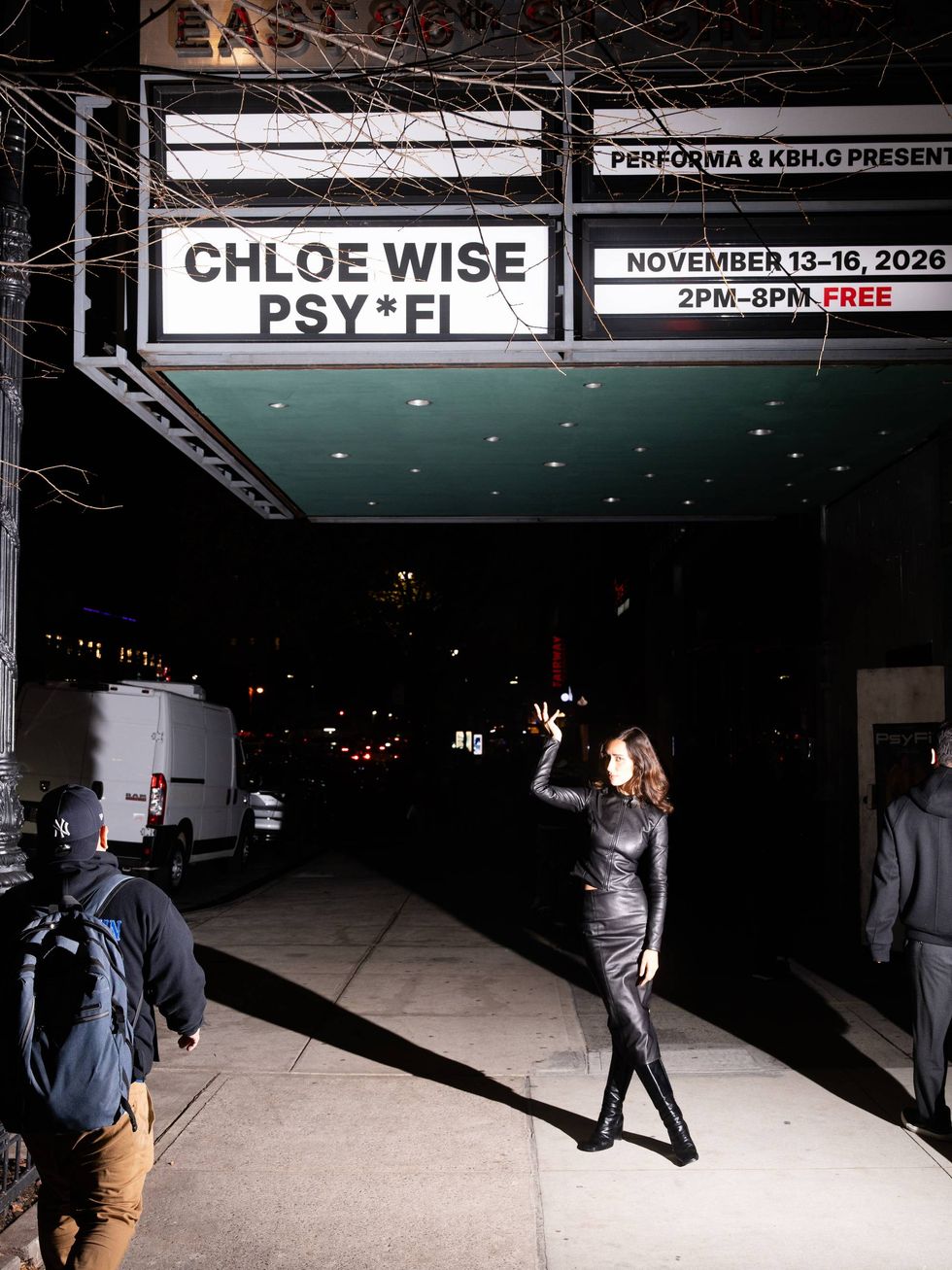
Chloe Wise is out of this world—in a freak UFO, blazing angel from heaven, alien temptress kind of way. Although she is typically known for her vibrant, moody portrait paintings (she famously painted Olivia Rodrigo for her latest album’s vinyl release), her latest artistic endeavor marks her most ambitious campaign in film to date. PsyFi, a sprawling three-screen immersive experience, premiered last Thursday at the 86th Street Cinema on the Upper East Side. The screening took place amid an ongoing renovation that has left the space more construction site than movie theater; nevertheless, the crumbling concrete walls and exposed wiring lent the space an appropriately illicit energy. At the premiere’s afterparty, held in partnership with the performing arts organization Performa, New York’s chicest art darlings danced beneath red lights while Wise herself twirled around in a waist-cinching Mugler jacket.
The film is the brainchild of Wise’s fascination with religious iconography, alien sightings, the multiverse, metaphysical philosophy, and countless other subjects—she describes herself as a “crazy sponge.” But at its core, PsyFi reads as a psychedelic reflection of what happens when technology and capitalism become the new totems of human worship. Aliens clad in sexy skirt suits reveal their children to dazzled lovers in a modern-day, extraterrestrial take on the Annunciation, while angels in heaven stream the Victoria’s Secret Fashion Show on TV. The film is a joke, a critique, and a fashion film all at once. But what exactly does Wise make of this strange new universe she's created? Over the weekend, she sat down with PAPER to discuss the thinking behind the project and the process of bringing it to life.
You've done a lot of short video works, but this is your most ambitious project to date. What made you decide to go full force on film?
I am obsessed with the concepts of religion and divinity, the relationship between UFOs and quantum physics, and questions of the cosmos. I really wanted to bring these ideas into my work, but I knew that painting was not going to be the place for me to do it. What would I do? Paint an angel? All of art history is paintings of angels. I knew that in order to bring those questions to the forefront, it had to be through video. I had always wanted to do multi-channel; this was the perfect opportunity.
With three screens, did it take three times the work?
It was so much work. I worked with six editors, myself included, tirelessly. It was so intense. It's basically seven short films that glitch into each other on three screens. It's so complicated.
How did you choose the people to be involved in the film? It's quite an interesting cast, featuring the rapper JT, online personality Delaney Rowe, and artist Miles Greenberg, amongst others. Were they all friends?
Mostly friends and people that I have worked with before, or people I’ve painted. That's the way that I just go about it. I didn't want to work with a casting director. I didn't care about just having actors in it. I love the texture of having a combination of a cast of characters that includes everybody from real actors, Broadway actors, musicians, rappers, friends of mine, and people who have never been on stage before. It was a great combination.
You’ve explored religious imagery and humanity’s fascination with the divine in past work, including your video work Feral and Wide-Eyed in the Garden. What draws you to these themes, and what led you to bring UFOs and technology into the conversation around divine revelation?
I've always been interested in art history and painting. All of art history is centered around religion. You have the depictions of the Garden of Eden, which Feral and Wide-Eyed in the Garden, the film you're referring to, was focused on.
A lot of paintings I've always looked at in art history are iconic. They're iconography, in the sense that they reference an icon and have a lot of worship, revelry, and beauty. So much of that visual media exists in reference to the canonical history of human civilization and culture, much of which is based in religion.
Cut to my interest in the UFO phenomenon. When you're interested in UFOs, philosophy, metaphysics, or questions of existential placement in the universe, you eventually find an overlap with religion. It's not only about belief in something bigger than ourselves or non-human intelligence outside the mortal terrestrial, but also about how the experiences described by UFO experiencers, alleged abductees, or people who've had contact with another side—even ghost stories—are remarkably similar to angel contact stories in the Bible.
Once you see that overlap, you can't unsee it. If you look at how angels are first described in the Bible, they're not blonde, cute cherubs with wings. They're rotating disks of fiery lava, plasma, and topaz, and they strike fear in the heart of anybody who looks at them. It's like, hello, that's really sounding a lot like a UFO abduction. Once you see that parallel, it's really interesting to start exploring.
Your video work also seems to explore ideas of the multiverse and time travel. How did those themes inform your decision to present PsyFi across three screens?
I love the multiverse thing. I think there's a multiverse of ways to approach a topic. I think you'd be wrong to limit yourself to looking at something like, for example, UFOs, through just the lens of science fiction, religion, the military, or Hollywood.
I wanted to feel unlimited and look at the topic through all of those different lenses at once, including on three screens. It's not just 2026 or 1950. Everything happens across all these different times. It's 2001 in the Victoria's Secret Fashion Show; it's 1948 in the melodrama. I love the idea of unshackling yourself from the constraints of genre, time, or one single screen.
I liked how you overlapped religious angels with the Victoria’s Secret Angels, touching on our idolization of the beautiful form today, while also using the alien to subvert what we think of as beautiful. Does your work concern itself with the fashion industry and the capitalist landscape we're living in, and if so, in what ways?
In the film, the angels in heaven—the Botticelli, Tiepolo Chapel angels—are watching the Victoria's Secret Fashion Show on TV. It reminds you that Victoria's Secret Angels are a reference to the Bible, and how funny it is that biblical angels may themselves be a reference to UFOs: something so scary, chaotic, formless, and shapeless that we project a humanoid figure onto and call an angel.
Then we domesticate that further, letting it copy and paste itself into a Victoria's Secret Angel: a sexy woman who's so much more palatable. I think it's funny how all roads lead to domesticating, sexualizing, capitalizing on, or commodifying something that's otherwise too complicated for our consumption.
I'm interested in everything because I'm a crazy sponge. Fashion, yes. I'm interested in how it can be so much fun, beautiful, sexy, playful, irreverent, and interesting, but also pure trash consumerism. Both can be true at once. It's really interesting to use fashion as a set of signifiers that help tell a story.
You're best known for your paintings, a historically traditional and solitary art form, whereas video is much more collaborative. What makes you decide whether an idea is better suited to a painting or a film? Do you prefer one medium to the other?
It's so different. Painting, I'm alone all day with an audiobook, and I'm responsible for whether the thing succeeds or fails. That’s very personal. With film, my God, it was so freeing and collaborative. I got to work with amazing people. Once I decide how I want it to go, everyone else helps me realize that vision.
When you see a painting, you might be moved by it, but then you move on. With film, something can move you, make you laugh, make you ask a question, or haunt you in your sleep. I got texts this morning from people saying, "I dreamed about your project. I had aliens in my dreams." The impact you can have is so much more dynamic because of moving images and sound. I wish that paintings could meet me at my multifaceted level.
I'm a person with a lot of things on my mind. I cannot have a simple chat. Every conversation I have is philosophical. To be able to express myself fully—which is what an artist wants to do—I can't just do one medium. I have to do painting, I have to do sculpture, I have to do video. Nowadays, video feels like the truest expression of who I am and what I want to say.
What an exciting pivot. Final question. What were some of your key influences on the film, whether visual, cinematic, or literary?
Diana Walsh Pasulka's book American Cosmic really inspired me to try and portray that aliens and angels overlap. The obvious visual references are very art historical: Tintoretto, Raphael, Caravaggio, El Greco. Then I think about campier things like John Waters, Peter Greenaway, and Warhol's films. At the Warhol Museum, I went and spent a few days in their film archives. It was incredible. He played with fashion, celebrity, everything really. Also, in terms of fashion, Galliano and his ornate, art-historical, theatrical new romanticism. Yes, I think those were some of my references, for sure.
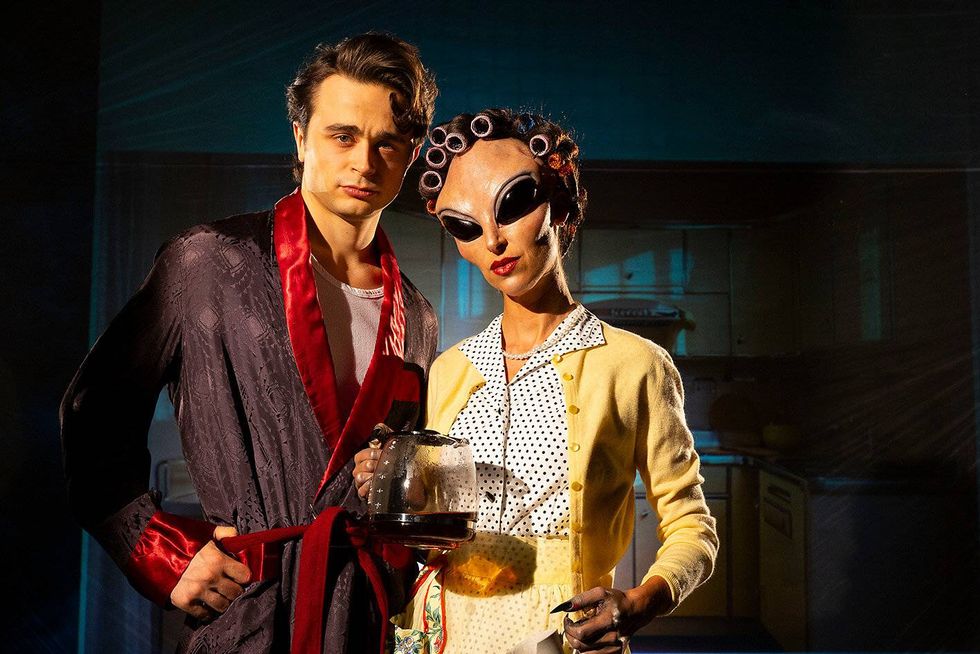
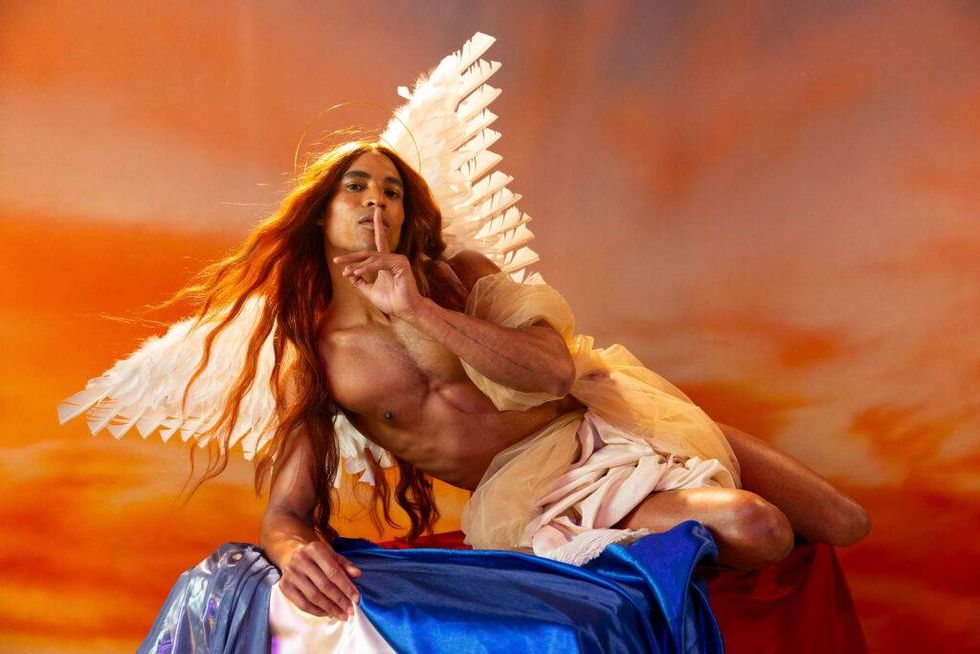
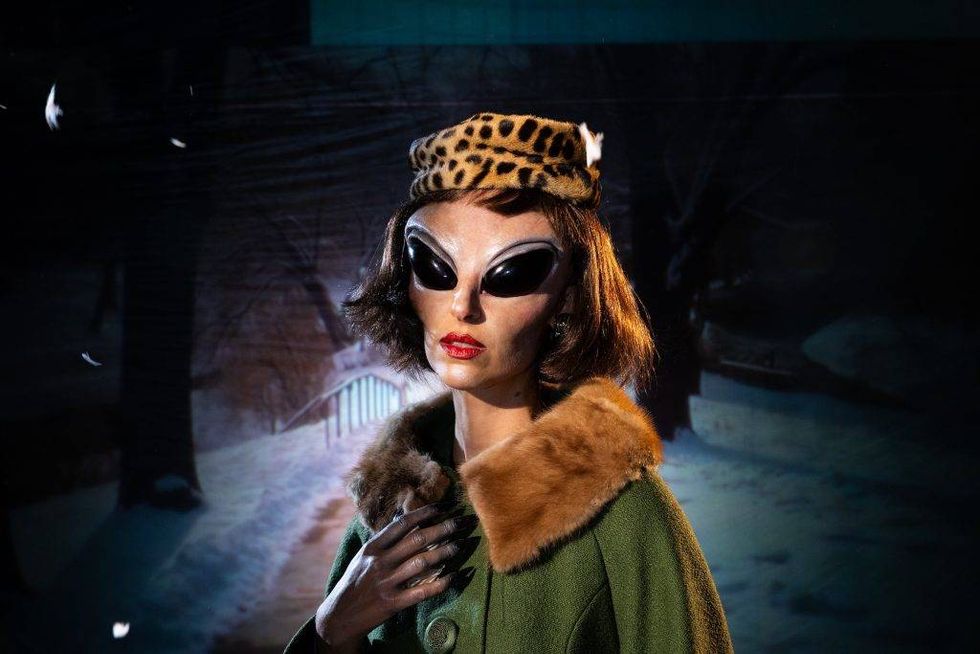
Photography by Chelsea Palatucci
Film stills courtesy of Chloe Wise
From Your Site Articles
- An Artist-Filled Fashion Party in Chinatown ›
- Jacquemus Commissioned Chloe Wise for Painted Campaign ›
Related Articles Around the Web