Can TikTok Maintain Its Luxury Overconsumption?
by Jesica Elise WagstaffJan 13, 2026
I had an unexpectedly rough year.
For the first time, I found myself calling hospitals, taxiing to appointments, and worrying a great deal over loved ones. I even got rid of all of my clothes. Despite stuffed closets and packed drawers, I relied on a vintage sweatshirt and jeans to get through it all. That was my uniform. It seemed I had no use for luxury and designer clothes, leaving me wondering whether I had any need for them at all.
While the purge might suggest I arrived at an answer, I did not. I just wanted to feel lighter when everything in my life felt so loaded, unfit for this more mature, resilient version of myself. For days I wrenched hangers from shirts and scooped out dusty shoes from under the bed. I kept saying that I simply kept too many clothes the last time I cleaned my closet, but that was only partially true. I held onto items with ascribed meaning; clothes and accessories with status, that helped me – a Black woman – fit into more affluent areas. Even though I often write about and discuss the intersection of status and presentation, I still found myself reluctant to move on from the very signifiers I argued undermined social and economic progress.
So if even I still believed in their promise of power, what hope did anyone else have?
That said, the purge worked. I found myself back in action, eager to learn and create again. I scrolled through TikTok for the first time in months, but found the landscape unrecognizable. Based on complaints I read elsewhere online, I expected an onslaught of trad-wives, either being superfluously choked by their husbands or touting the benefits of bone broth hot cocoa. Instead, I returned to a social media landscape riddled with critiques of billionaire Becca Bloom for a whole host of sins, namely defending her family’s wealth.
As income inequality and overall economic insecurity rattled the nation, here was an heiress who had amassed millions of followers plating her cat’s breakfast of caviar and quail eggs with Christofle servingware. Critics found she somehow missed the mark. Shocker. Still, the last time I opened the app, before the purge, criticism of Bloom’s consumption-based content was few and far between. I would know, I looked. Having experienced weeks long backlash myself for simply polling consumers who purchased Walmart’s "knock-off Birkin," I had little interest in wading into Bloom’s hyper-consumptive habits alone, even if I considered her content dangerous.
@beccaxbloom Best husband!🥺 #christmashaul #christmasgift #luxuryhaul #luxurychristmas #designerbags
As someone who grew up in close proximity to extraordinary wealth, I understood both the appeal and its pitfalls. Worse, I knew it would only benefit Bloom. The attention would lead to greater consumption, which would confer greater esteem, and propel her beyond the app to the forefront of popular online culture. And I was right. The supposed queen of #RichTok made headlines with her opulent September nuptials with hardly an unfavorable word.
Of course this is hardly new. Sociologist Thorstein Veblen coined the term “conspicuous consumption” to describe how the elite converted wealth into power during the Gilded Age by making their fortune observable. Through arbitrary and increasingly inaccessible distinctions, particularly in presentation, wealthy socialites distinguished themselves from the masses and even one another. This is not some passive form of social organization. It is meant to exploit; not only does this consumption garner an observer’s attention, it is designed to fuel aspiration. The same elite stand to gain in some way from any attempt at emulation, either economically or socially. Now distracted by the desire to keep up, the observer works to visually and morally align themselves with those they aspire to be; ultimately becoming uninterested in challenging them, socially or politically.
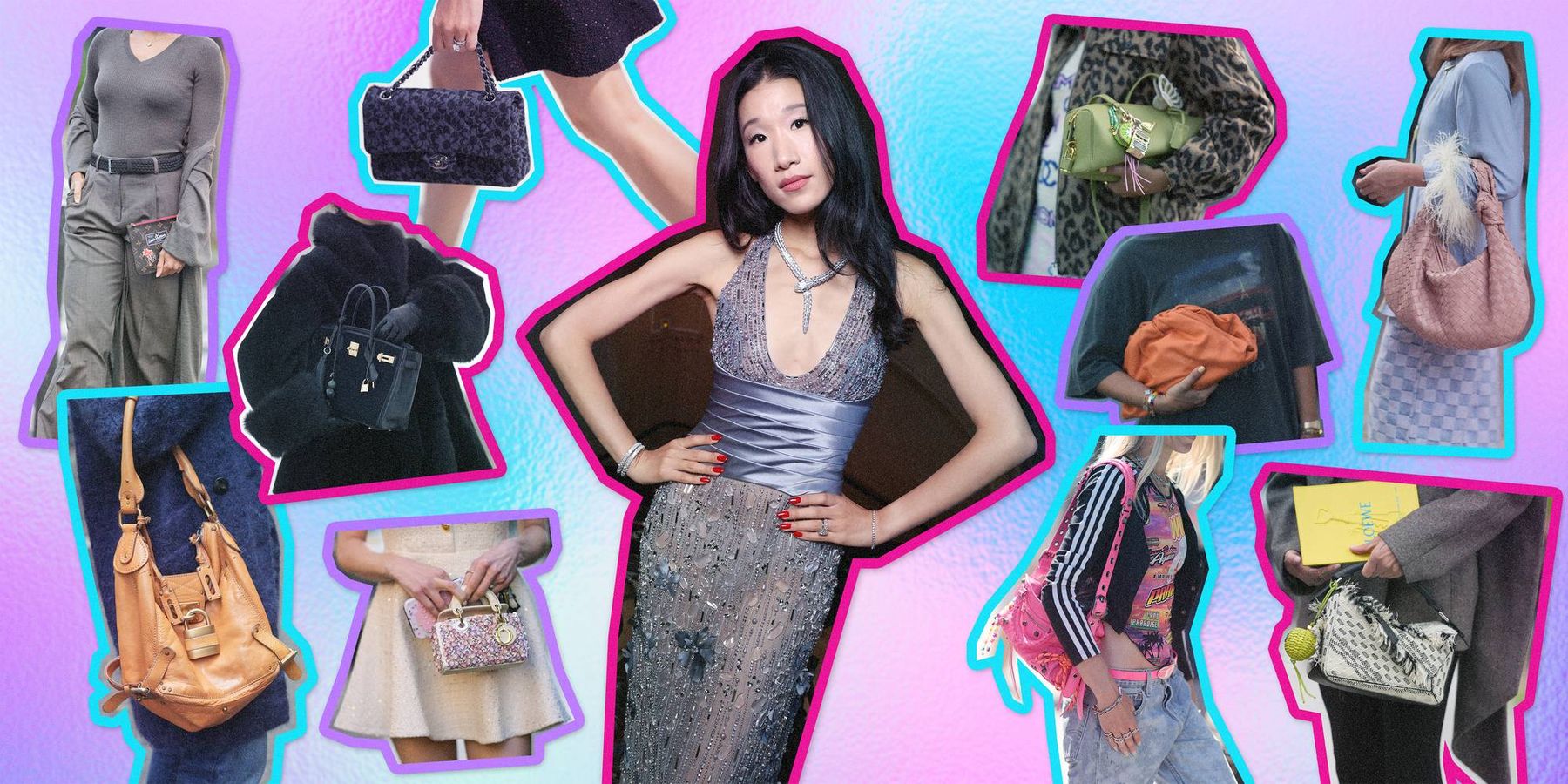
If this sounds like a stretch, consider TikTok’s biggest fashion trends over the past few years. In 2022, the L.L. Bean Boat and Tote went viral, prompting the Maine outfitter to place the preppy New England staple on backorder for months. Eventually, the Bottega Veneta Jodie and The Row Margaux bags took off to the point where even their dupes became popular. By late 2024, the Hermès Birkin, one of the most expensive luxury handbags on the market, caused such a frenzy that people began clamoring for the Walmart knock-off they claimed would “eat the rich.” Throughout all of this, the Van Cleef & Arpel Alhambra collection and its replicas appeared on the necks and wrists of teachers and influencers alike, in no small part due to its popularity amongst the likes of Bloom.
However, few of my fellow creators openly admitted to imitating the elite. Instead, content creators aspiring to emulate Bloom and others made the case that aspirational goods and their reproductions “democratized” fashion. By reducing the visual distinctions between themselves and the billionaires bombarding the app, the average creator might also confer esteem as well, both on and offline.
That was the promise, but imitation never delivers. Attempts at keeping up with the wealthy instead prompts status anxiety, increased consumption, and indebtedness. Sociologists have found that states marked by inequality generate a higher number of online searches for positional, luxury goods. The prevalence of knock-off status symbols online, and the rise in content around the consumption of cheap imitations, gesture toward this. However, the resurgence of mid-tier and entry-level luxury brands, such as Coach, Brahmin, and Kurt Geiger suggest that creators, at least, have cooled on status emulation. Over the holidays, creator Autumn Frager went viral for simply walking through a mall to purchase a Brahmin bag. Still, we are no closer to ridding TikTok of billionaires. We continue to believe in the notion of widely distributed power through consumption, and what I have come to realize is that even when we know it is a myth, it is still quite a difficult one to reject.
Even as I write this, I have The RealReal open in my browser. As I construct this new identity and wardrobe to match my newfound tenacity, I still find myself thinking of labels. I want a new sweatshirt, a black one to replace the bombed out crewneck. But as I search for some sartorial defense, a response to last year’s intense fear, uncertainty and vulnerability, I am aware that my choice will be observed somewhere online. And it will say more of my economic status than my emotional state. I guess I should choose wisely.
Jesica Elise Wagstaff is a writer and content creator focused on the fashion system and consumptive trends.
Images via Getty / Graphic Design by Jewel Baek