For Yan Fang, the intersection of beauty, emotion and artistic expression has long informed the way she understands the world around her.
Through deconstructing and reimagining references from flower petals to traditional Chinese aesthetics, Yan links the mirror of her inner world onto the canvas of the face– using makeup to tell stories, explore identity, and connect to the truest version of herself.
Despite Yan’s incredible skill, her path into makeup artistry was never something she intentionally planned; rather it unfolded through mere curiosity, revealing itself as a calling she could not ignore. Within graphic lines, negative space, and the transformative power of makeup lie a window into the soul–and the foundation of what she defines as “Eastern Futurism.”
Below, PAPER speaks to Yan Fang about her creative process, her inspirations, and her vision for the future.
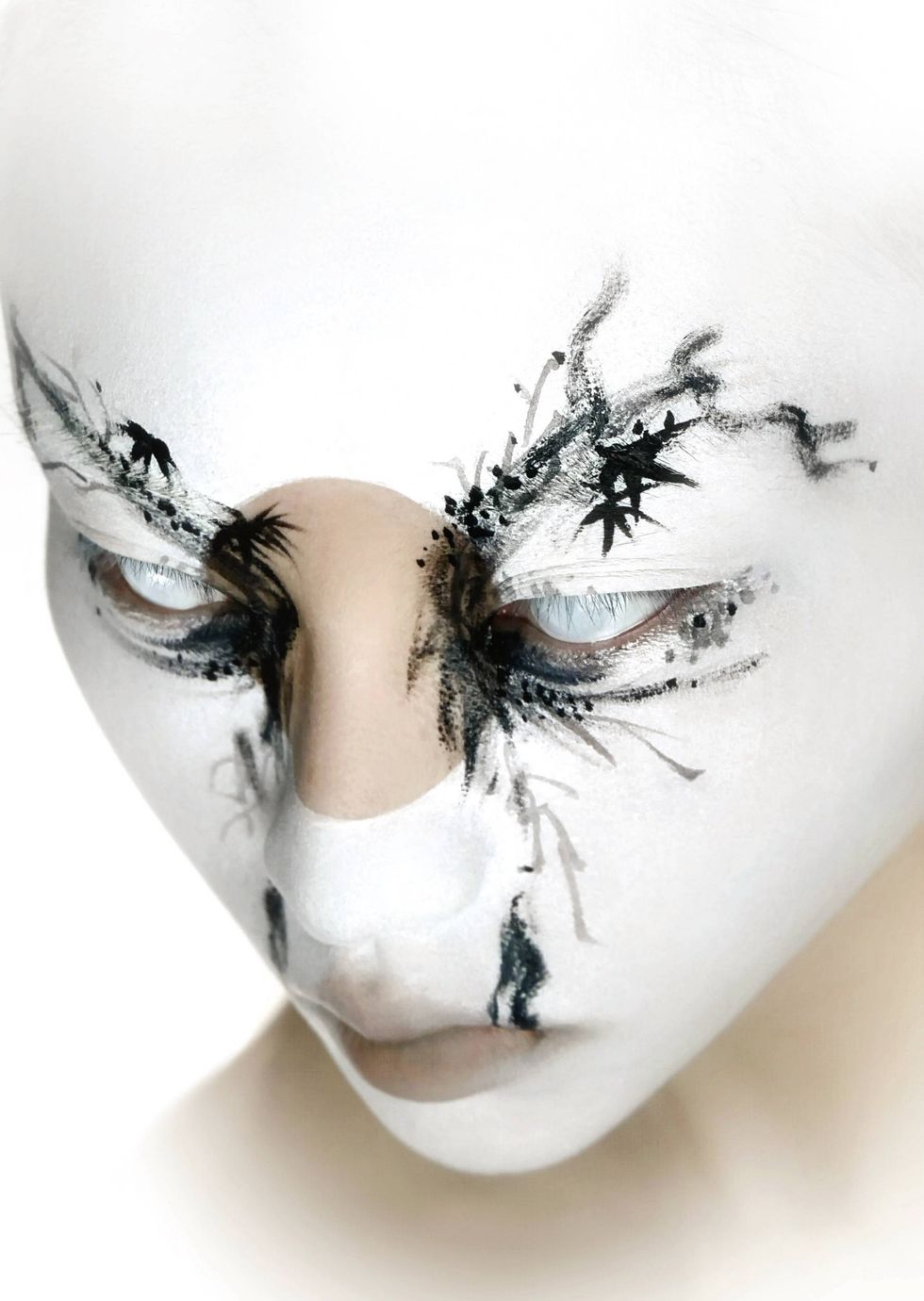
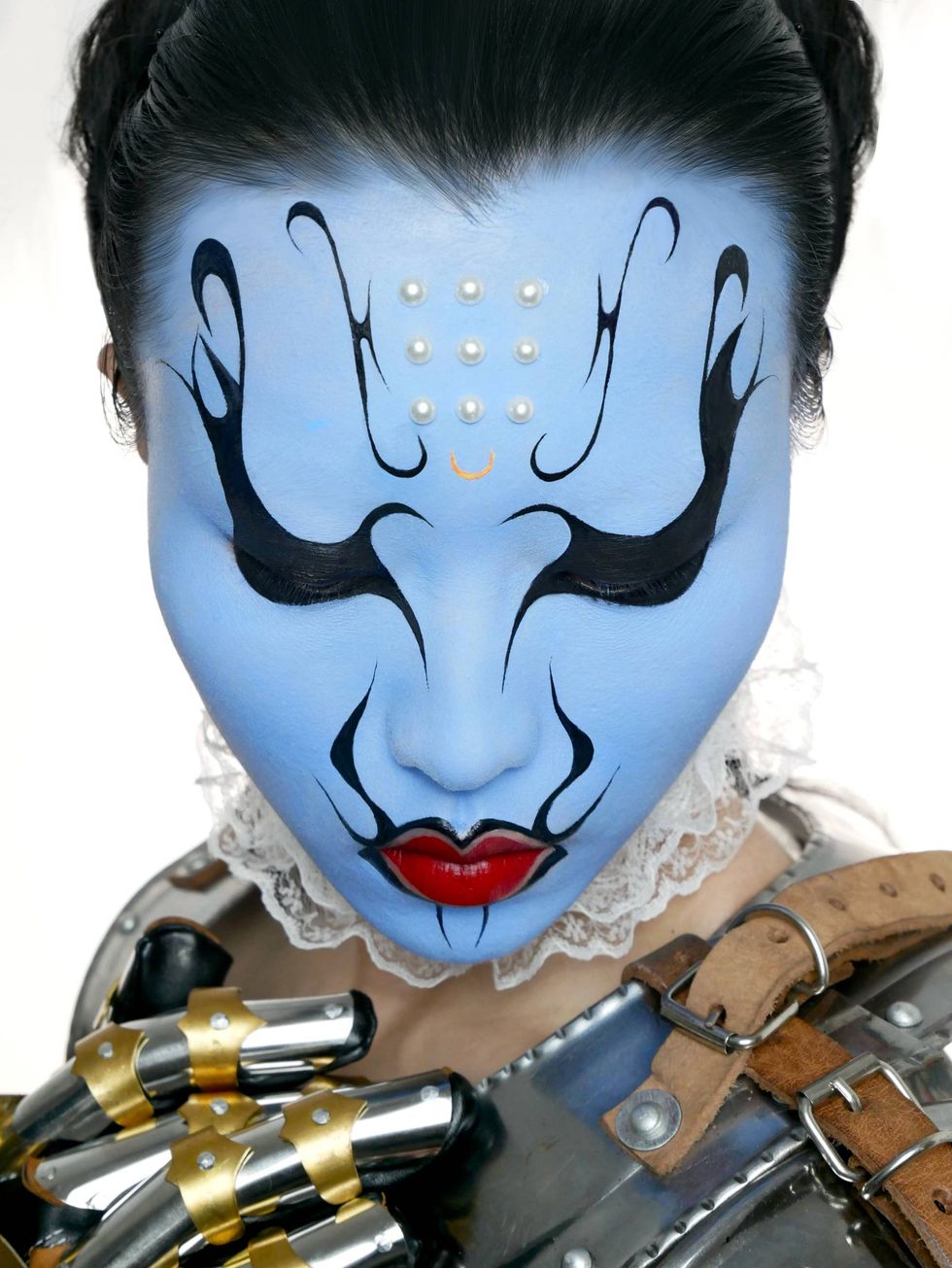
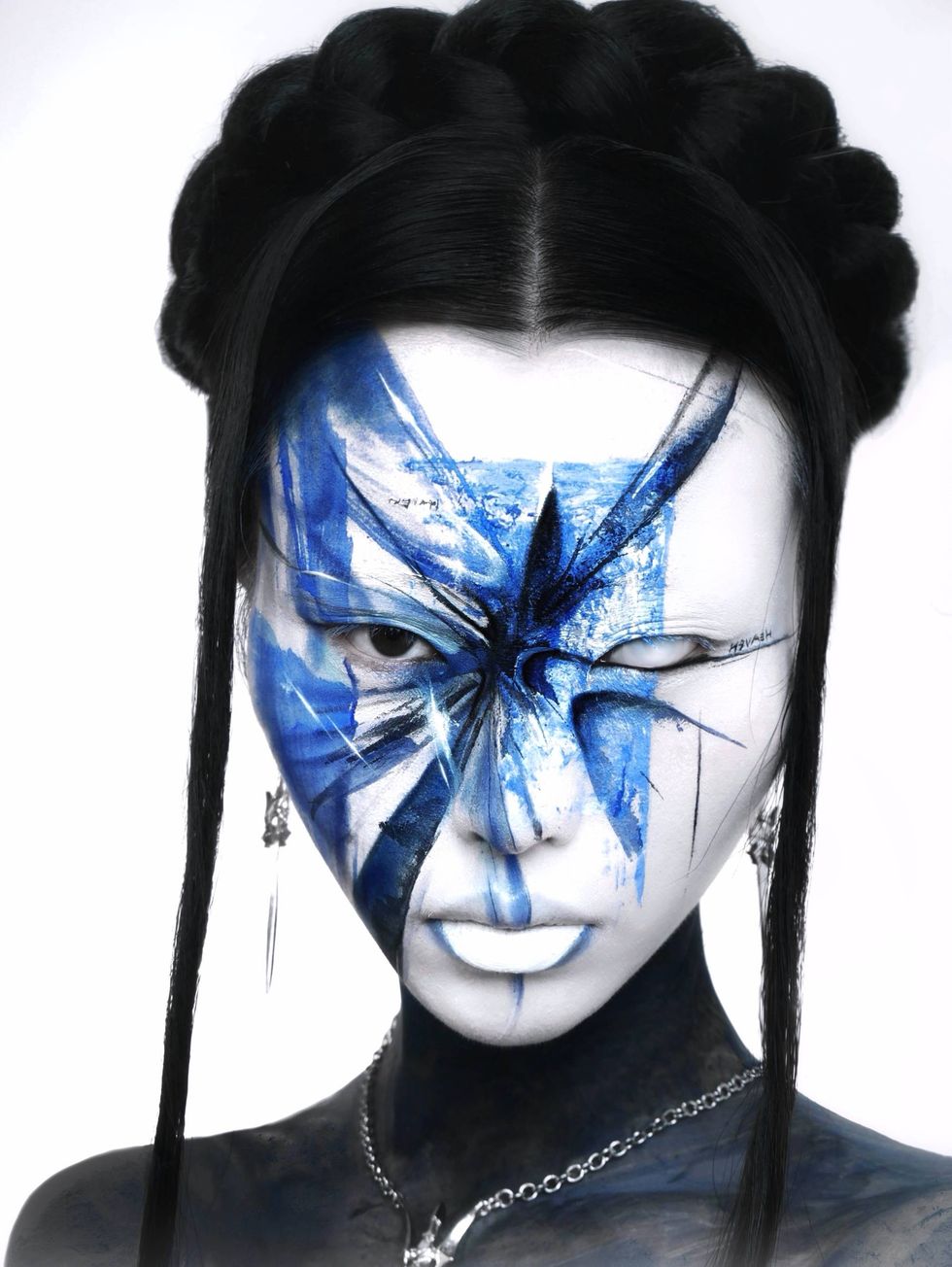
Can you tell us about your journey into makeup, and what using it as a tool for expression and identity means to you?
This question takes me back a long way. My passion for makeup began almost as early as my earliest memories. When I was about five or six years old, I was already fascinated by adults’ cosmetics—the colors and tools felt almost magical to me. Later, whenever I had to put on makeup for a school performance, I would feel a rush of excitement. That sensation of turning into something else was my first real experience of the power of transformation.
As I grew older, I started watching online tutorials and teaching myself. I began with everyday looks, gradually mastered the basics, then out of curiosity moved on to bolder, more colorful makeup, and eventually arrived at the style you see from me today. Looking back, my connection with makeup feels less like a chosen path and more like an instinctive love—an impulse buried deep in my nature.
As for using makeup as a tool for self-expression and individuality, its meaning for me has deepened over time. At first, makeup was simply about looking prettier or more distinctive. But the real turning point came when I first saw an avant-garde makeup look defined by strong graphic lines. I stumbled across it online, and it hit me instantly: a face could become an abstract painting. Pure lines, geometric structures, blocks of color—used not to serve conventional ideas of "beauty," but to express emotion. In that moment, I realized that makeup could break free from the framework of mere enhancement and become an independent artistic language.
From then on, as I explored more types of makeup, I also developed a deep interest in art. I found a profound resonance between the two. Makeup itself is a fleeting art form. Gradually, it was no longer about making me "special." It became a vital medium through which I understand the world and communicate my inner self. I take my feelings about art and the images swirling in my mind, and I bring them onto the face with brushes and colors.
So for me, makeup has never been about deliberately trying to stand out. On the contrary, I use makeup to let others see my inner world—the thoughts, emotions, and perceptions of beauty that I cannot always put into words. Makeup is the language I use to speak with the world.
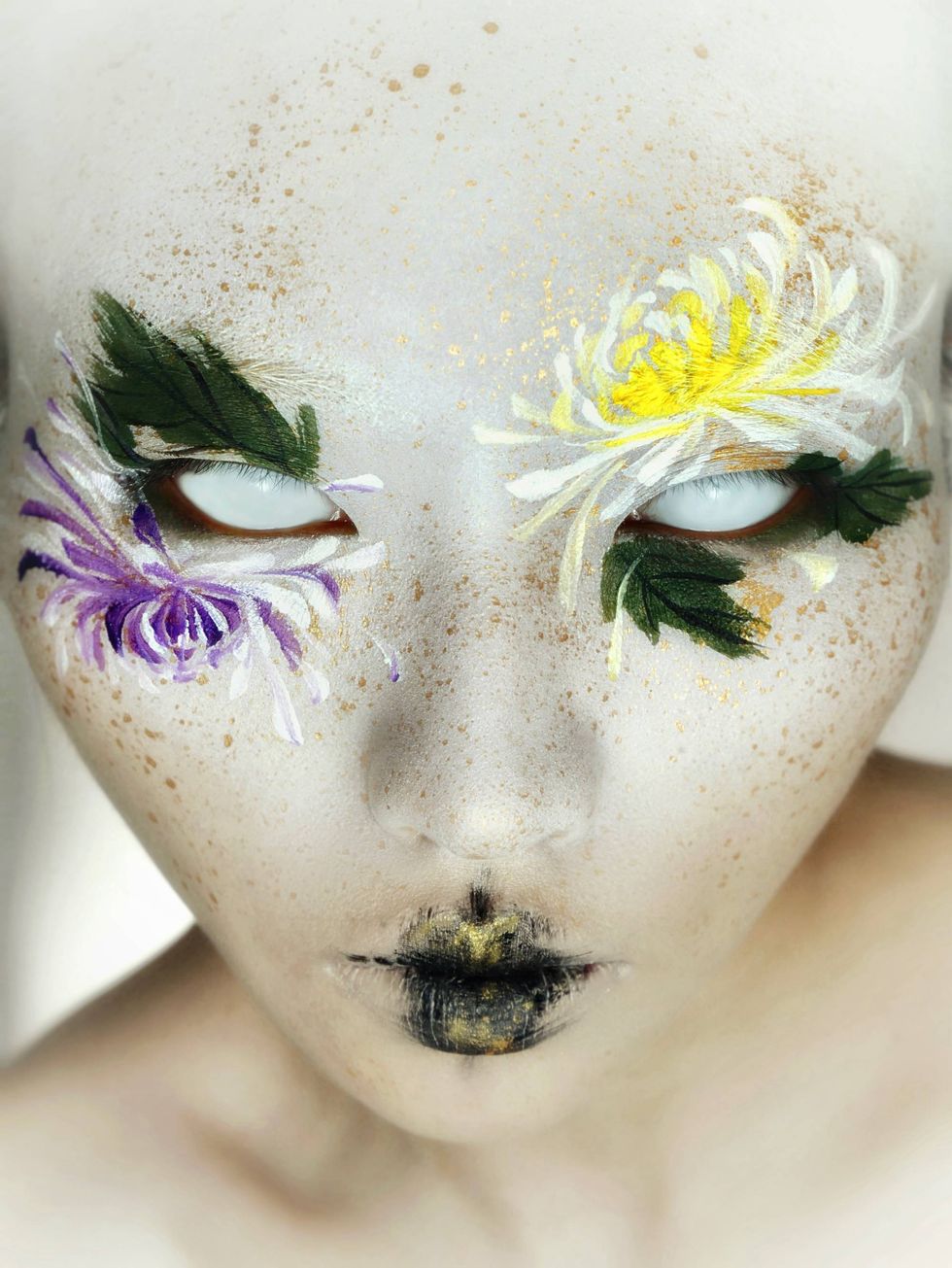
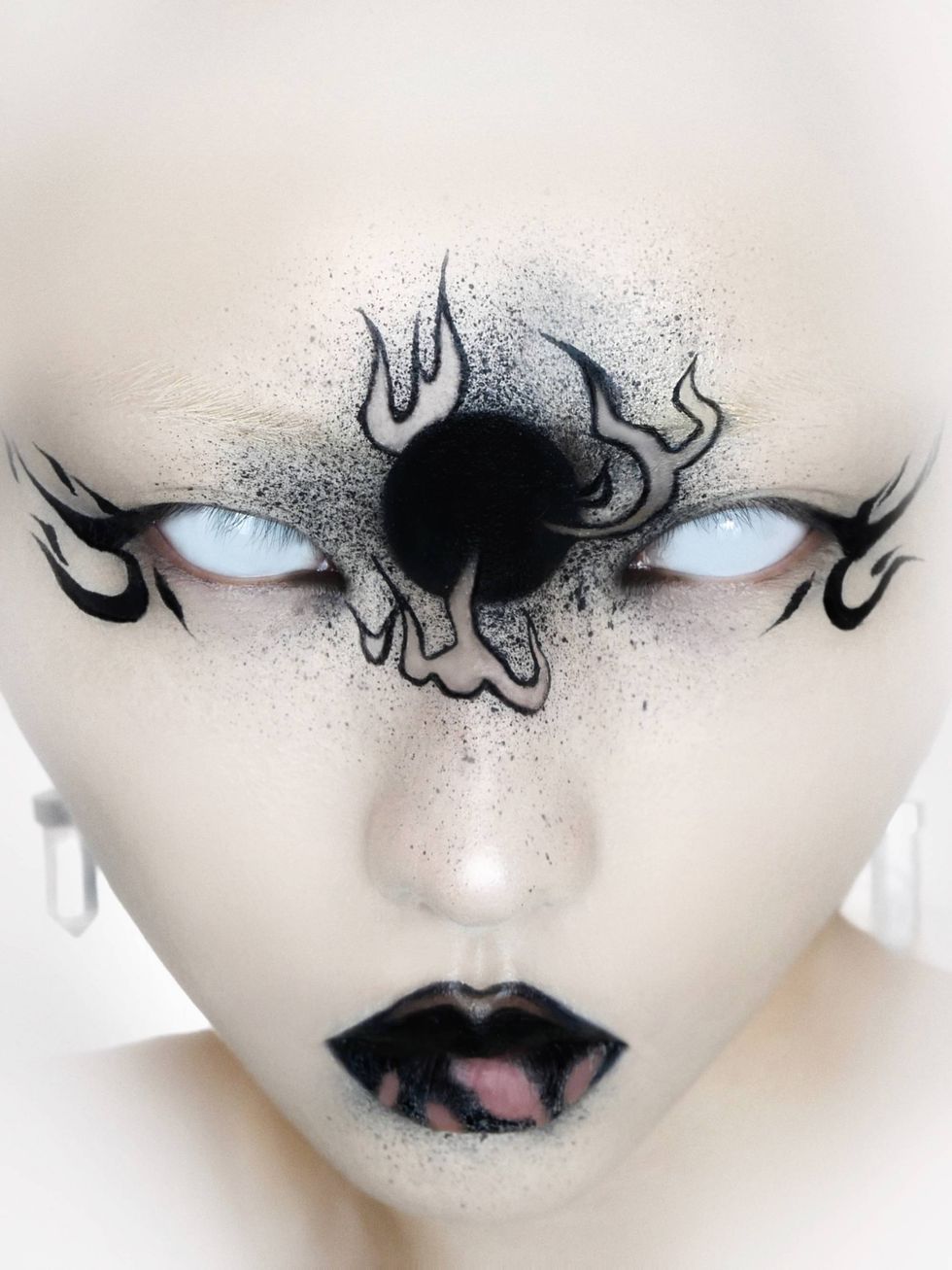
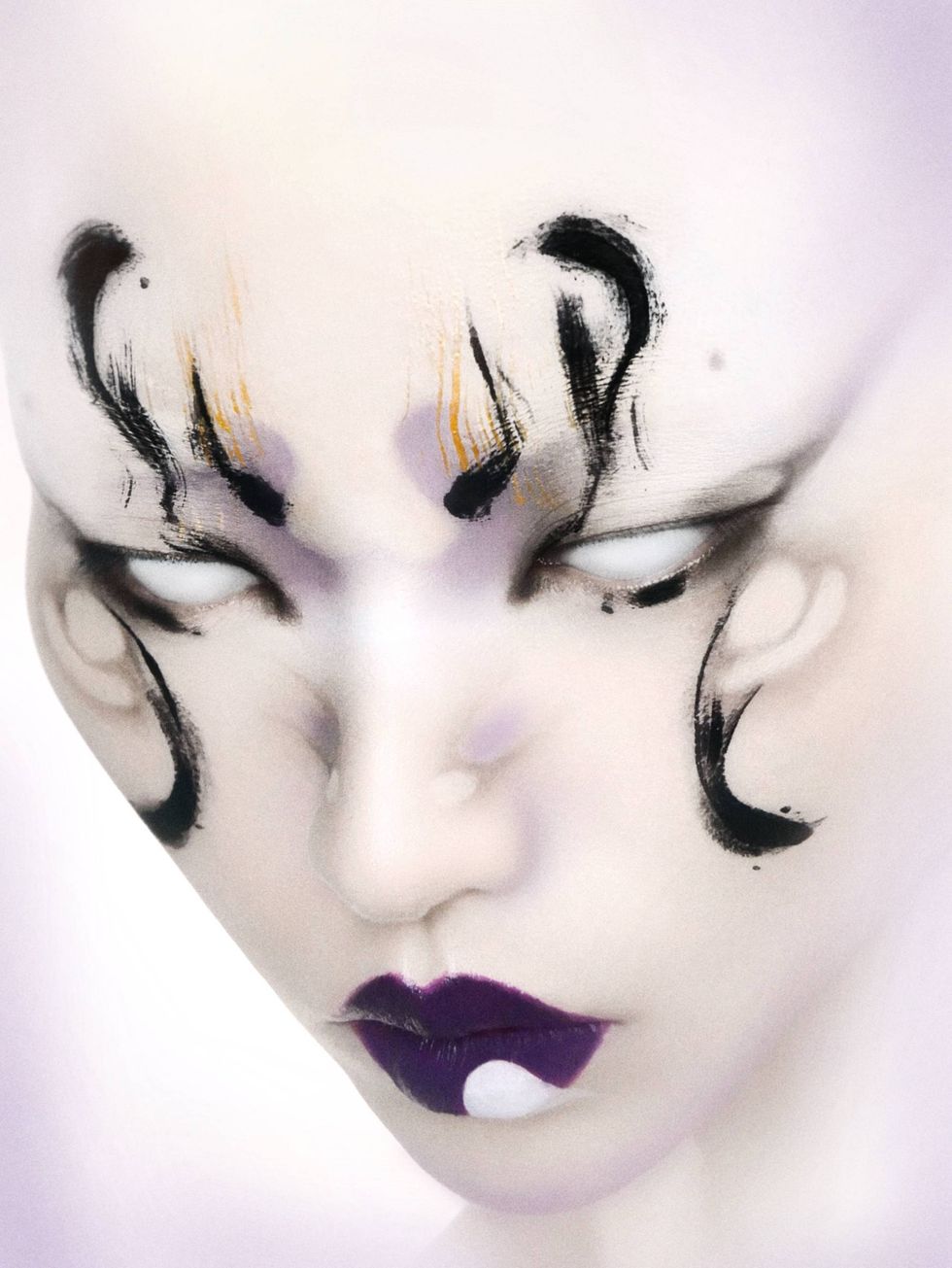
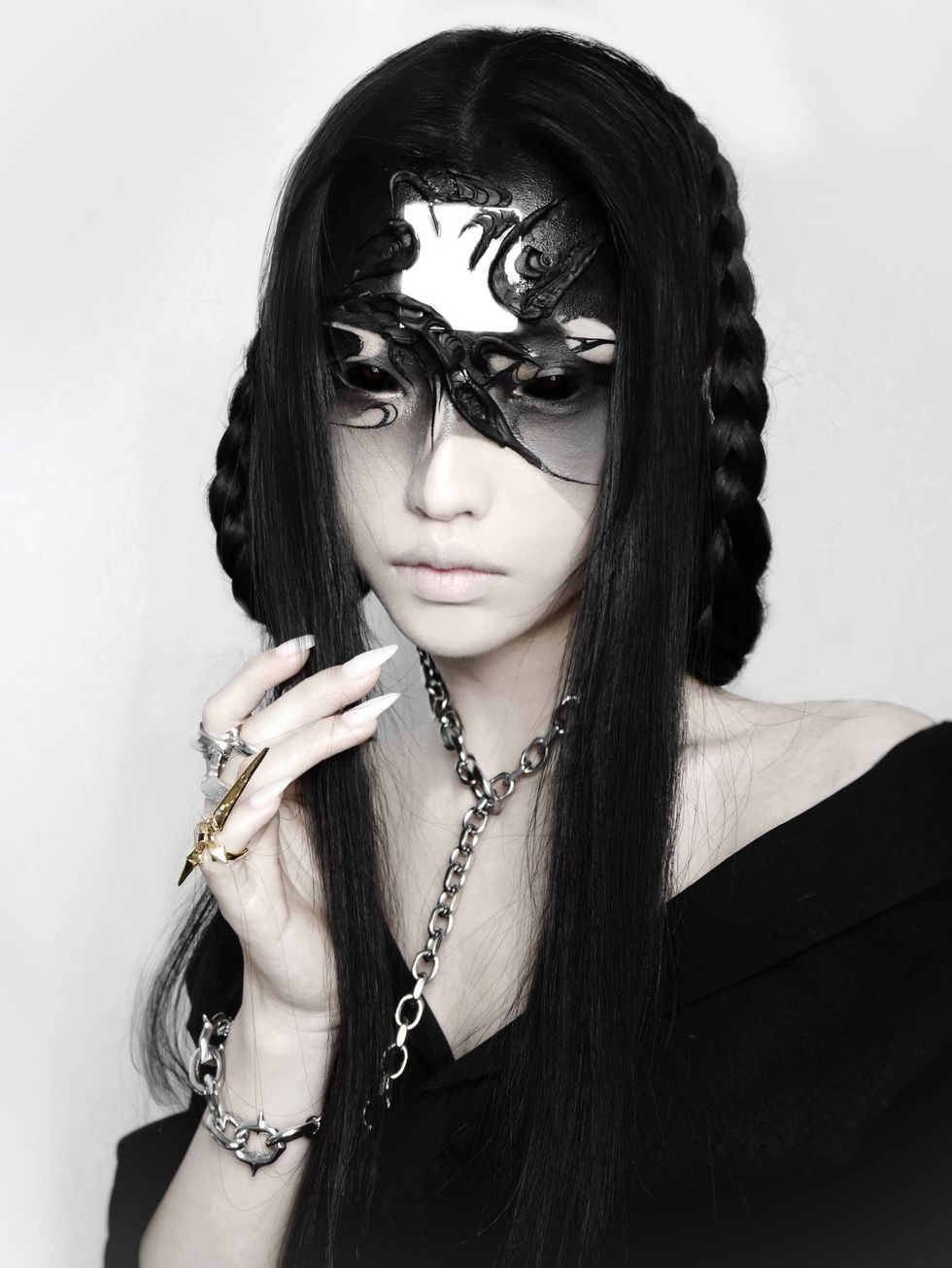
Your work often incorporates cultural symbolism, such as Yinglong and the Huo Zhu motif; What draws you to these elements, and what is your process like when you decide to translate them through makeup?
What draws me to these elements? First and foremost, my cultural background. Growing up immersed in this environment, these aesthetics have always lived in my subconscious. They have accompanied me throughout my life and are an inseparable part of who I am. But for a long time, they remained dormant, buried deep inside me. It wasn't until I began to study art systematically—first looking at global art, then gradually exploring Western and Eastern art, and then moving further and further back until I finally arrived at the Chinese art of my own cultural background. In that moment, I felt a deep resonance. Something inside me suddenly awoke, as if finding an outlet, urgently wanting to be expressed. That's when I decided to bring Chinese aesthetics into my own creative work.
I have long called my style "Eastern Futurism." By "Eastern," I mean rooted in Chinese aesthetics. But Chinese aesthetics is an incredibly vast field. So far I have drawn from traditional patterns, Peking opera, landscape painting, calligraphy, and more. Even just these already feel like more than I can fully master. There are still many more images and concepts waiting for me to explore. They didn't actively "attract" me; rather, I chose to actively see them, to see my true self.
As for my creative process, I have a consistent habit, which is quite simple to describe: I first select an image or concept, then deconstruct it, and finally reassemble it into a makeup look. In doing so, I try to avoid copying it literally onto the face. I feel that a purely representational approach does not qualify as true artistic makeup design.
Take a flower as an example. It has its own unique lines, structure, and colors, perhaps also some distinctive markings. I break them down into very tiny components—a curve, a dot, a color block—and then, combined with the structure of the human face or the atmosphere I want to convey, I reassemble them into a makeup look. Of course, I don't always use every single component from the original image. Sometimes I use just one, sometimes two, depending on the specific idea I want to express. But for me, "deconstruction" is a crucial step. It determines whether the journey from image to finished makeup has truly gone through the process of artistic expression.
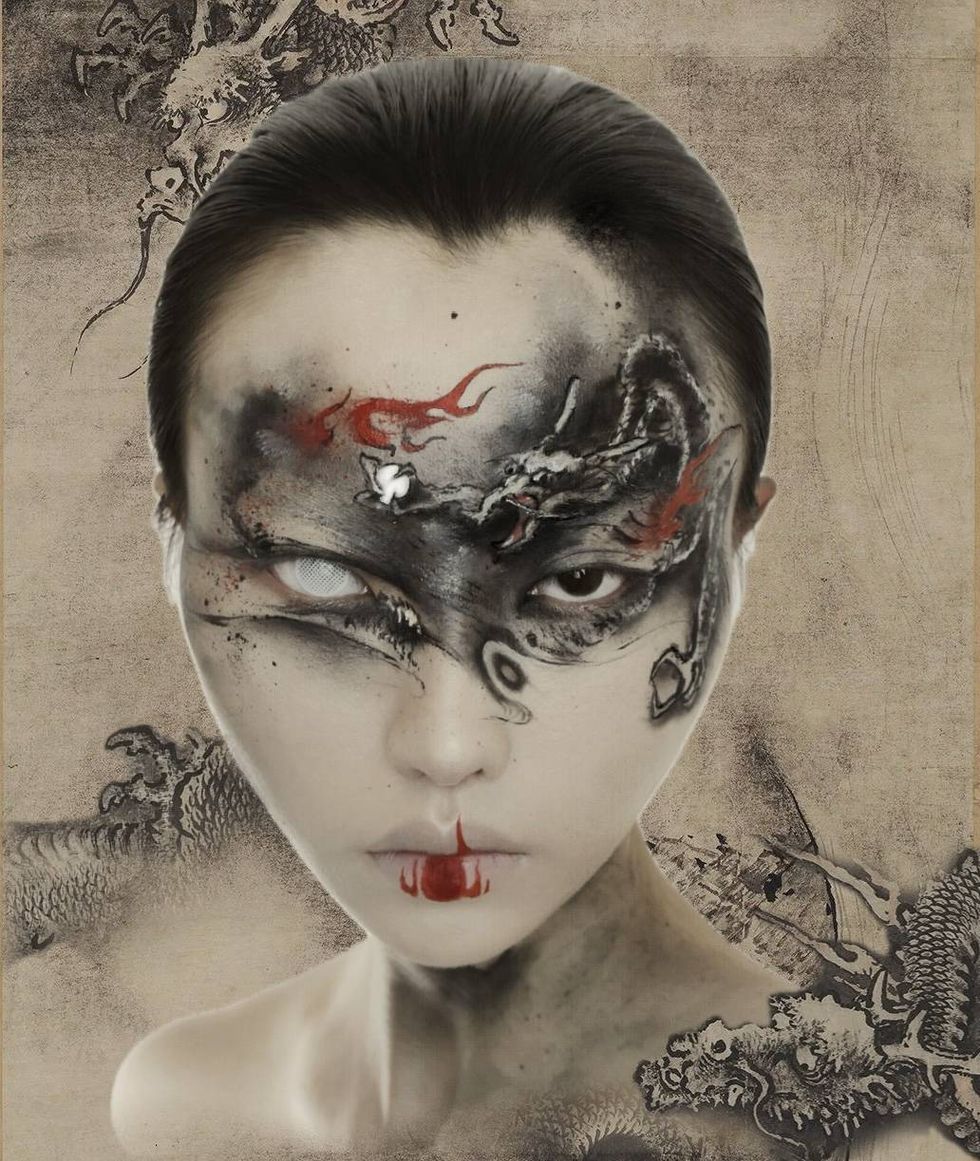
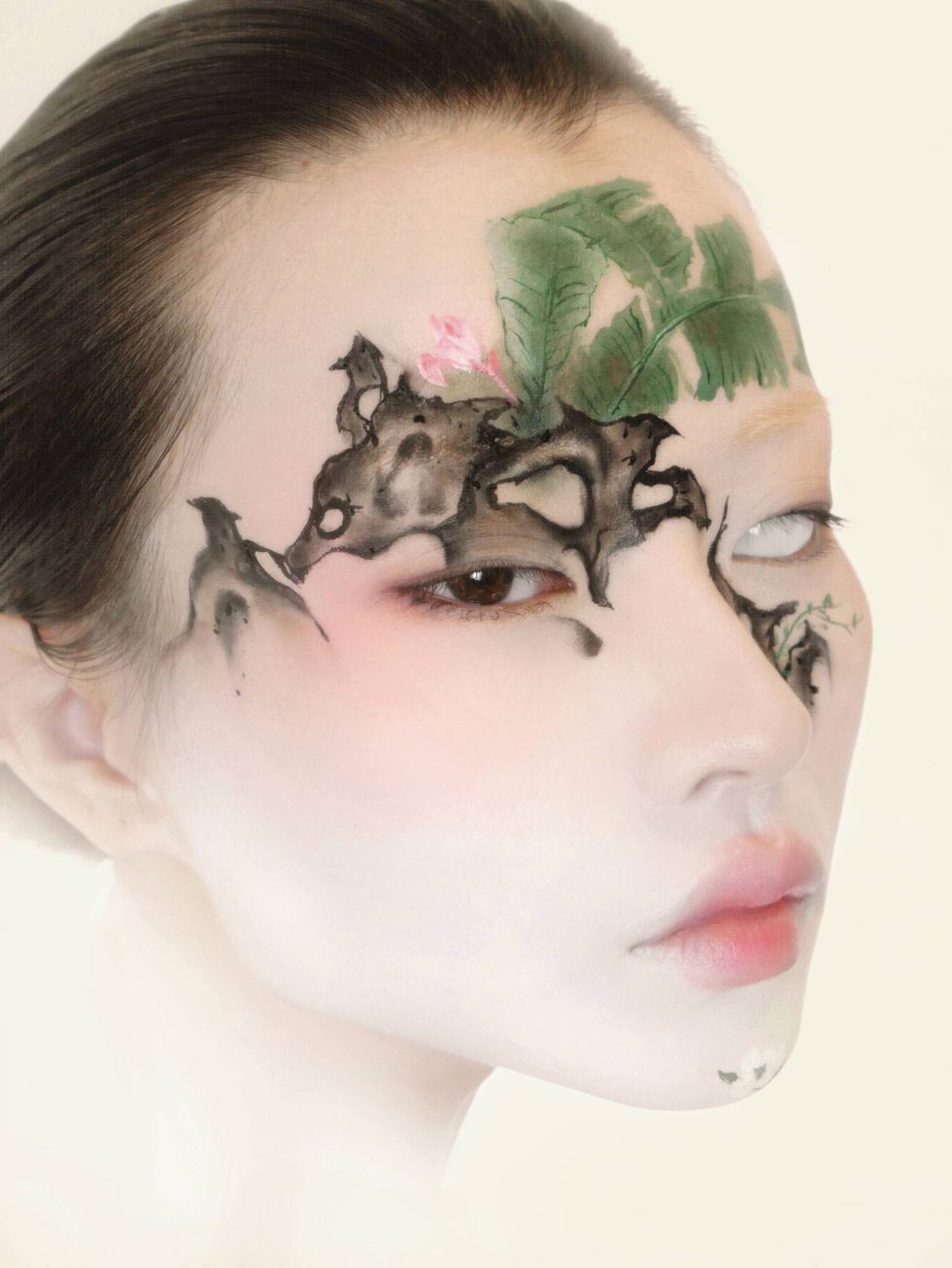
You have also referenced painters like Wen Zhengming and Chen Rong in your work. Are there any other historical art forms from China you are influenced by and that stays with you?
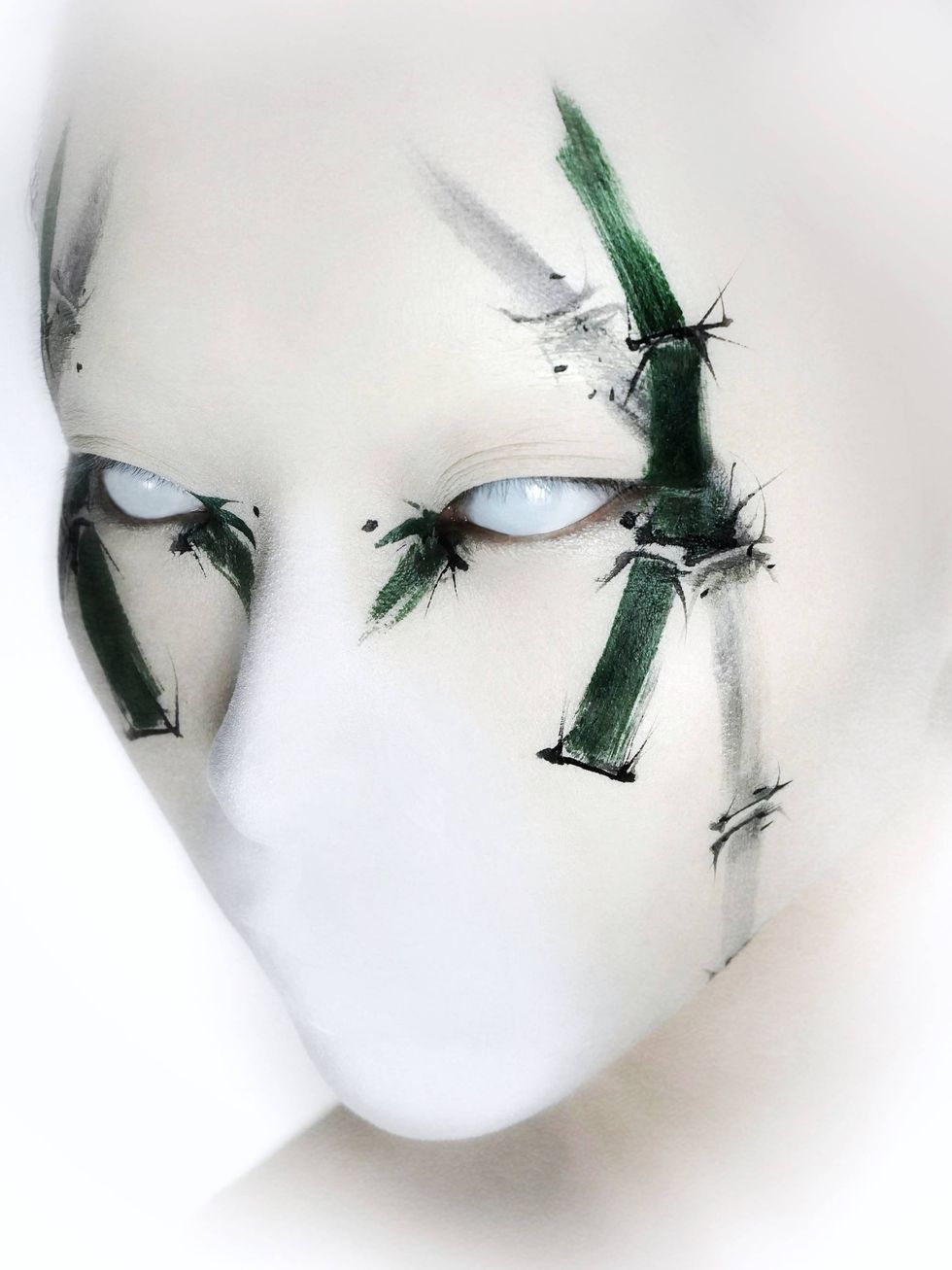
Wen Zhengming and Chen Rong can both be placed within the broad category of Chinese painting. That tradition is the richest source of inspiration for me, because under this umbrella there are countless smaller branches. Different subjects, different painters' styles, different eras—each gives me completely different inspiration. Often, a classic subject has a particular painter who stands as its representative, such as Chen Rong with dragons, Zheng Banqiao with bamboo, Ma Yuan with landscapes, and so on. China has a long history, and naturally, its art is equally long and profound.
Of course, beyond Chinese painting, forms like Peking opera, calligraphy, and traditional patterns have also influenced my work. But to be honest, it's difficult for me to say that any single art form has influenced me alone. I believe that what allows Chinese aesthetics to be called "Chinese aesthetics" as a whole is that it has its own underlying logic—a kind of coherence across different forms. That logic is the inner spirit and aspiration of the Chinese literati.
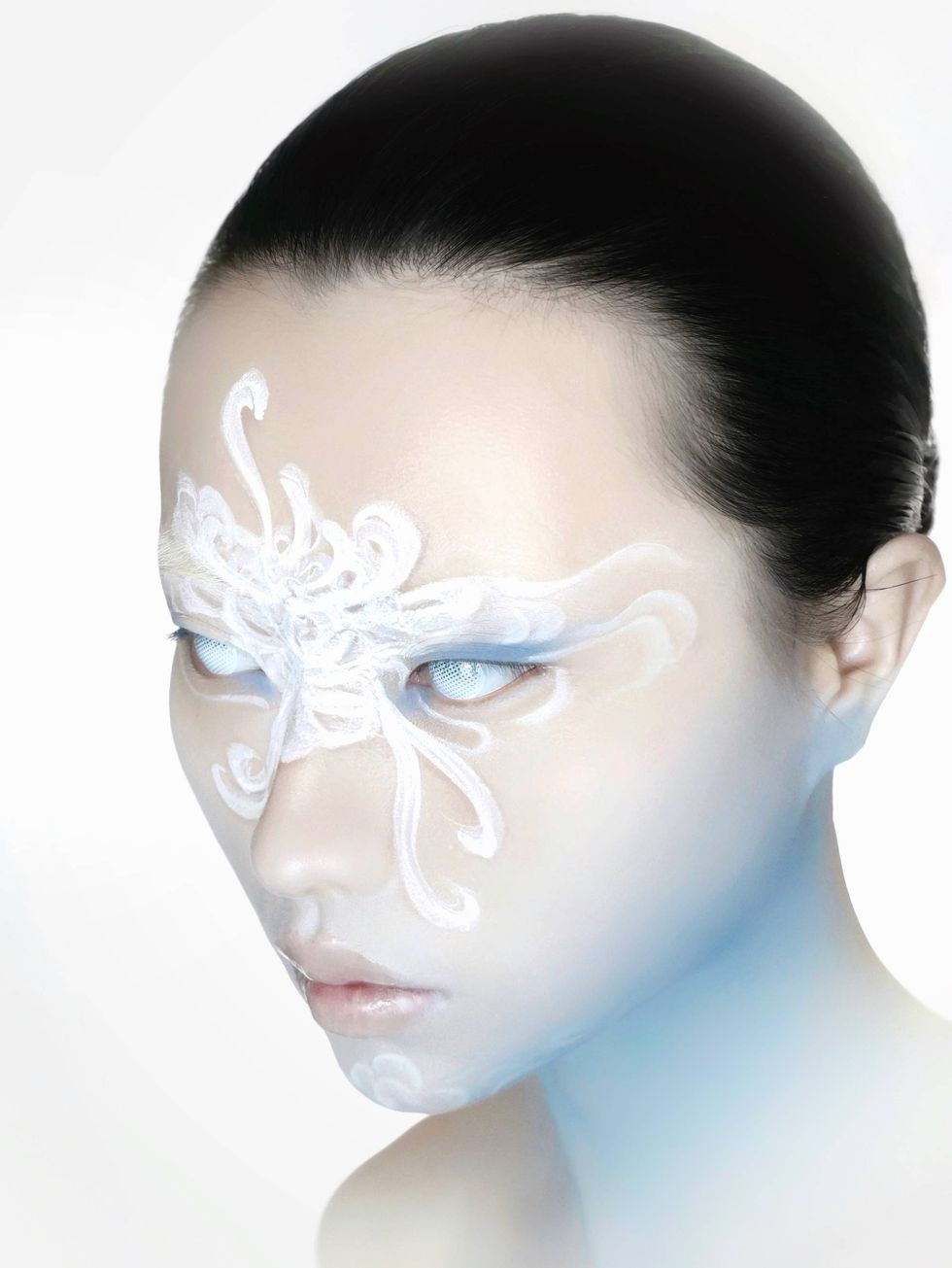
But the element that has had the most substantial impact on my work is one of the most important and most distinctive aspects of Chinese aesthetics, one that sets it apart from Western art: liubai, or "留白"—the art of leaving blank space.
Liubai refers to the deliberate retention of empty or negative space in an artwork or design. It is not merely "nothingness," but rather "using nothing to conquer something." Through the contrast between void and substance, it carries meaning, guides the imagination, and enhances the overall beauty and expressiveness of a piece. This concept has deeply influenced how I design makeup. In my creative process, I consciously remove certain elements and leave a blank area, which becomes the "breathing space" of the entire design. It prevents the makeup from becoming overly cluttered or redundant, and gives the viewer's imagination a place to rest. This perfectly aligns with the artistic conception pursued in Chinese aesthetics. Since this is also what I inwardly aspire to, liubai will undoubtedly continue to accompany my designs for a long time to come.
What else has been inspiring you lately?
To be honest, my creative output hasn't been very high recently. When you're active on social media, it's easy to fall into a dilemma—how to strike a balance between popular taste and self-expression. I felt I needed some time to pause and rethink my direction. After reflecting, I realized that I still want to do what truly matters to me and pursue my own artistic vision.
So what inspires me most lately is, in fact, my inner desire to express myself. After taking a break, I've rediscovered a stronger interest in creation. This inspiration comes more from within.
If I have to mention something external, it would probably be a makeup competition I recently took part in, which was also a TV show. Through that experience, my determination to express my true self only grew stronger. I came to understand that if I want to create work that resonates with more people, I must first be true to myself. Only by firmly establishing my own style can I convince others—rather than changing my style to cater to them.
Beyond that, I've also been spending time hiking outdoors, trying to return to a natural state as a biological human being. I consciously observe natural textures—the lines on weathered rocks, the flowing traces of water ripples, or the marks left by withered plants. These seemingly unrelated things have helped me break free from the habitual thinking of "what makeup should look like," and have rekindled my creative impulse.
Can you tell us about a look that has challenged you, either methodically or conceptually?
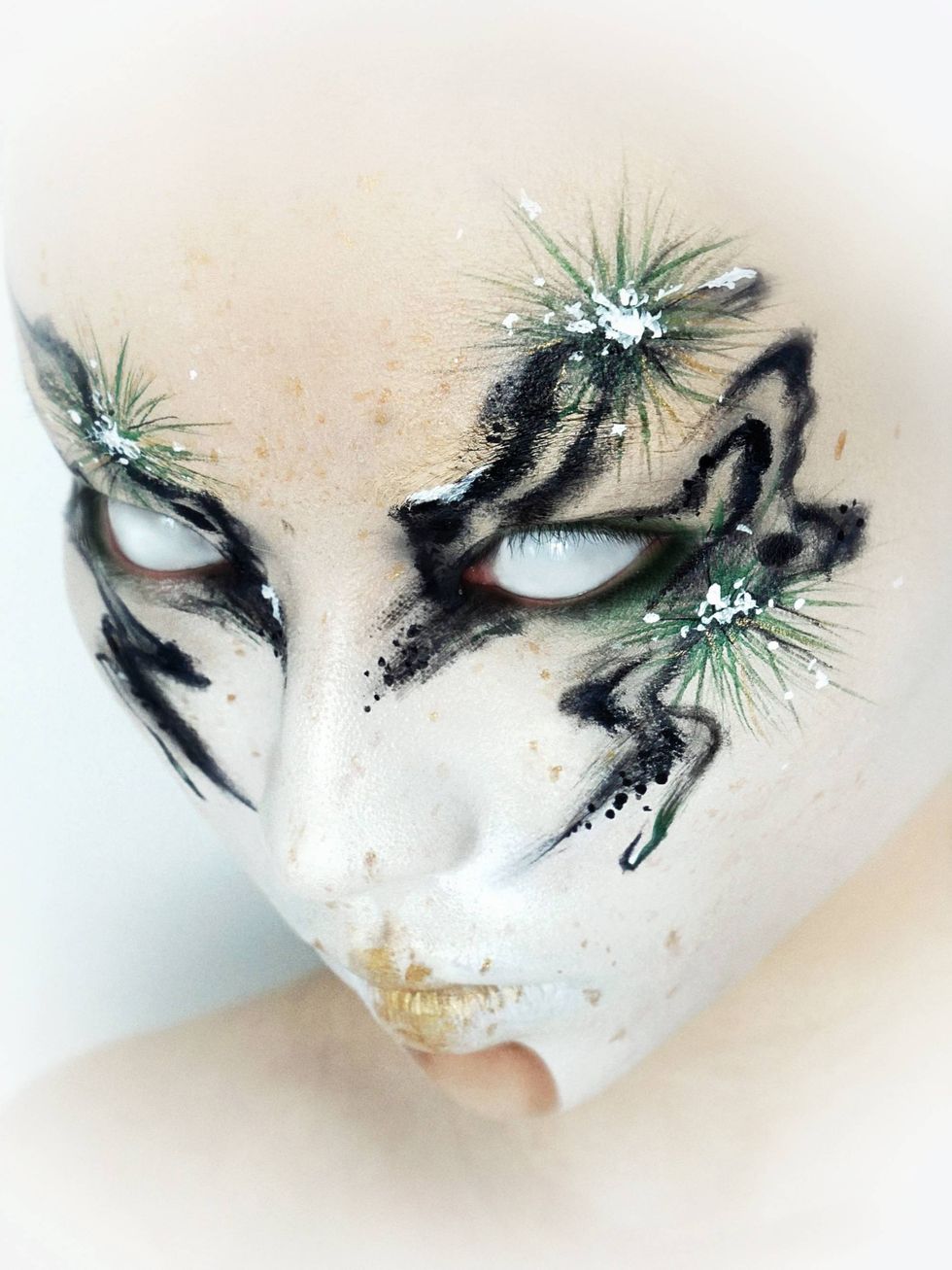
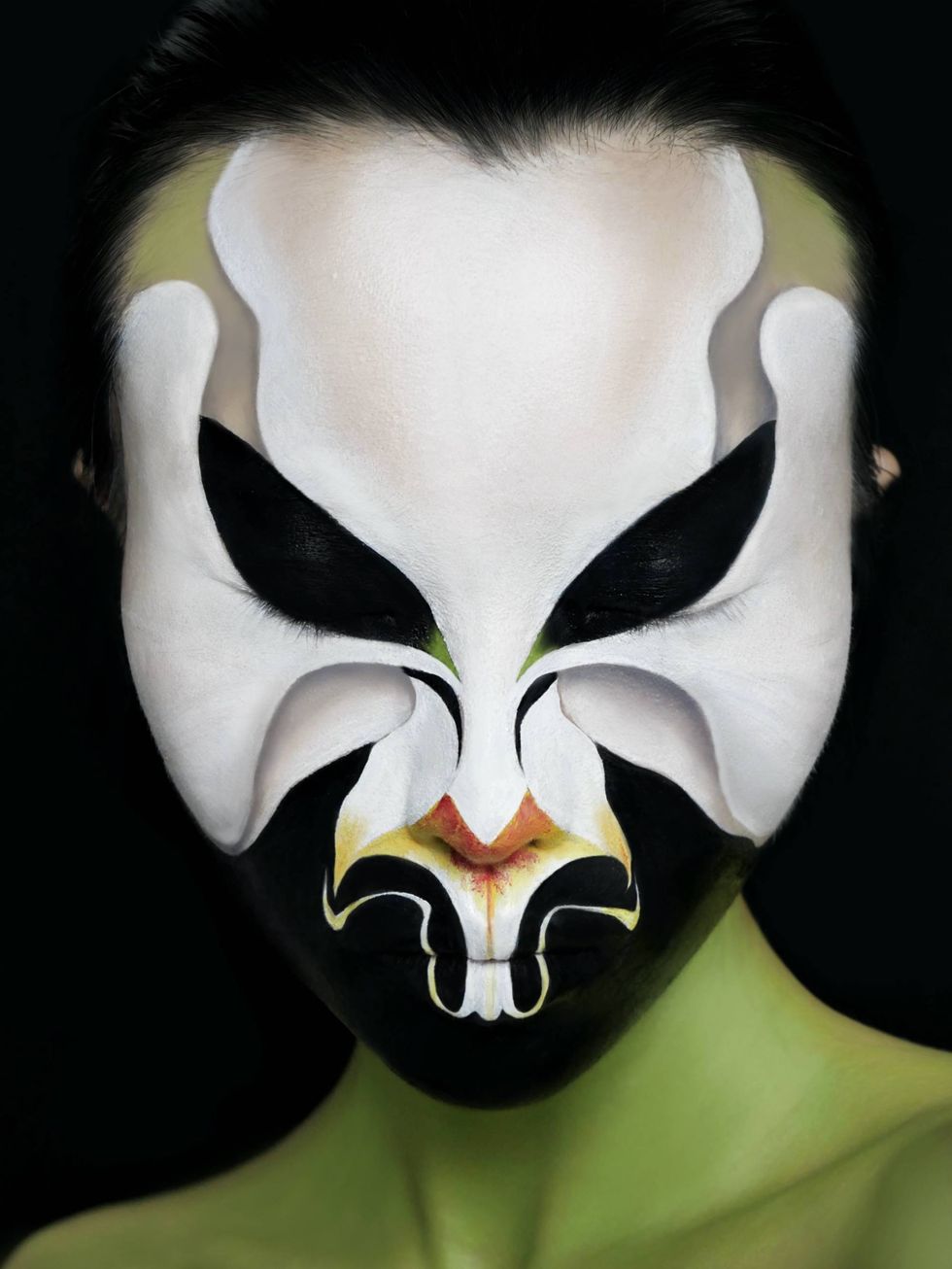
I'd like to talk about my work "雪松挺翠"("Pine Tree Standing in Snow" .)Although it was completed quite some time ago, I spent a very long time conceptualizing it. Back then, I had just begun trying to integrate Chinese aesthetics into my makeup looks. I felt that the traditional "Three Friends of Winter" (pine, bamboo, and plum) was a great starting point, and the pine was one of them. In traditional Chinese culture, the pine holds an elevated status. Its core meanings and symbols include longevity and health, resilience and perseverance, as well as nobility and integrity.
But as we all know, the pine has a very concrete and fixed form. Those rigid, angular lines of its branches make it difficult to naturally integrate with the fluid structures of the human face. For example, I tried drawing pine branch lines directly around the eye, but it ended up looking like a scar. I also tried mimicking the tufted structure of pine needles, but on the face it appeared cluttered and chaotic. I went back and forth, adjusting over a dozen sketches, and none of them felt right.
Later, I studied many ancient paintings, looking at how different artists depicted pines in various forms. Eventually, I found a shape in Wen Zhengming's work that suited the eye area. I designed an eye makeup look based on it, then combined it with other elements to complete the piece.
For me, the greatest challenge in this creative process was this: Wen Zhengming's painting was already an artistic extraction of the natural pine tree. And I had to take that extraction and process it once more through the language of makeup. How could I preserve the spirit and essence of the pine while making it adapt to the structure and movement of a human face? It took countless rounds of trial and error. But when that eye makeup finally came together, I felt a sense of dialogue across time and space. This is also the deepest lesson that Chinese aesthetics has taught me: tradition is not something to be copied, but something to be transformed.
What do you want people to feel or understand when they see your work?
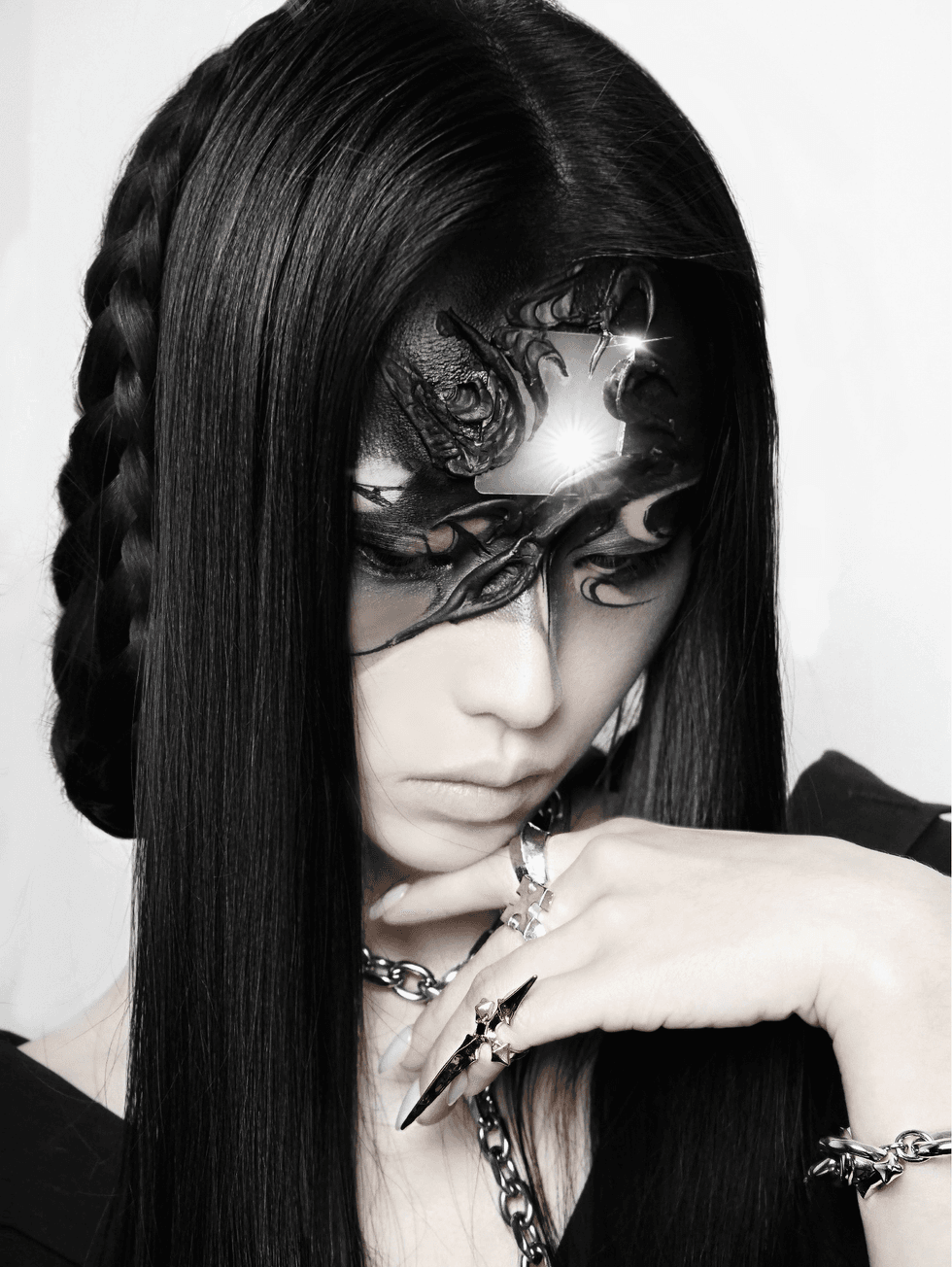
Art reception is a fairly subjective process. Everyone brings their own cultural background and identity, so they will naturally have different perspectives on a work.
What I hope for most is that when people see my work, they can immediately recognize the imagery I'm using, and then feel the spiritual power and inner resonance that imagery carries. Of course, that kind of immediate recognition is more likely to happen when we share a cultural background.
If someone from a different cultural background sees my work, they might not immediately understand what the image is. But I hope they can look beyond the surface and still sense the emotional expression and artistic concept behind the work—or even simply feel the emotion and visual impact it brings.
Ultimately, I want people to experience a sense of connection in front of my work, whether obvious or subtle. I don't want them to just say, "That's amazing" or "That's so unique," and then swipe past it. I want them to pause, even for just a second longer, and feel why that image is there. I want them to know that I have something to express—that it's not just an empty picture floating on a face. Whether they fully understand the meaning behind it or not, I think that's enough.
What can we look forward to seeing from you in the future?
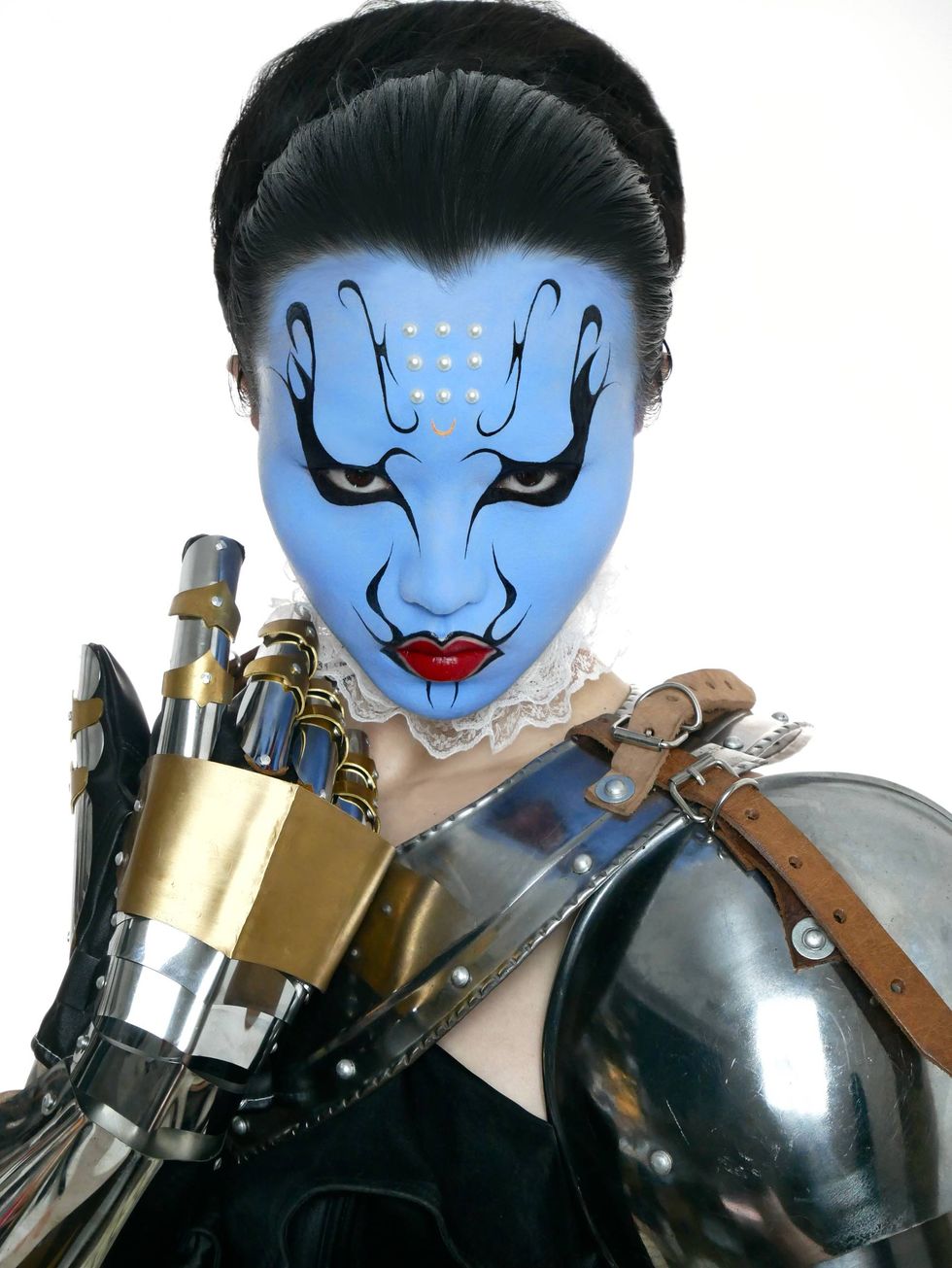
In the future, I will explore more directions to practice my concept of Eastern Futurism. You may see more unexpected combinations of Eastern aesthetics and futuristic elements—for example, blending some lesser‑known traditional imagery with a more contemporary visual language.
At the same time, I am experimenting with new techniques and materials. But more importantly, I am planning to extend my aesthetic philosophy into other art forms. Not necessarily makeup—perhaps through installations, video, or wearable objects. I want my ideas to step off the face and become more dimensional and tangible. I hope to “materialize” these concepts and present them to the audience through diverse media.
Of course, I will stay true to my creative philosophy. That is the foundation of my aesthetic. But moving forward, I will continue to refine my expression and bring you different visual experiences. I want each new work to offer something fresh, while still feeling unmistakably mine.
From Your Site Articles
- Always Scrolling: Mei Pang ›
- The Queer Asian Designer Taking On Toxic Masculinity With Sensual Knitwear ›
Related Articles Around the Web