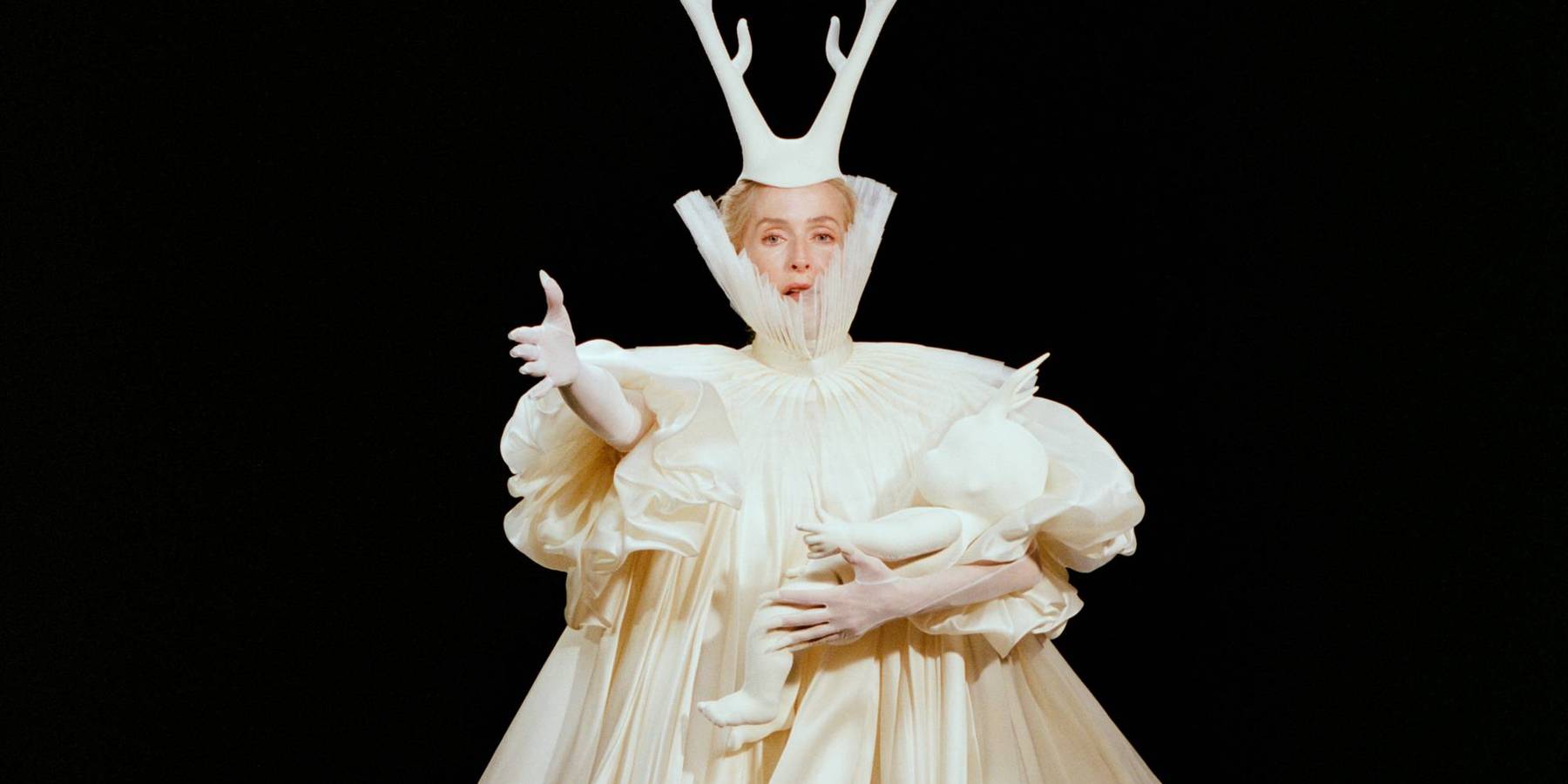
Paper is one of our earliest creative playgrounds. We fold it, cut it, color it in. We turn it into little houses, flowers, figures, boats. But there is nothing sentimental about a blank sheet of paper. And yet, in the right hands, paper has always known how to play dress-up.
Take, for instance, the trompe-l'œil period costumes that the late Belgian sculptor and designer Isabelle de Borchgrave made out of paper and paint. Or when designer Jeremy Scott mischievously sent models down the Moschino Spring 2017 runway dressed as literal paper dolls, tabs and all.
Both approaches make the same point: The material is only the medium. What matters is what a mind can make of it. And that is the essence of haute couture. Haute couture has always been an argument for human labor and ingenuity. This season, these principles felt like a manifesto.
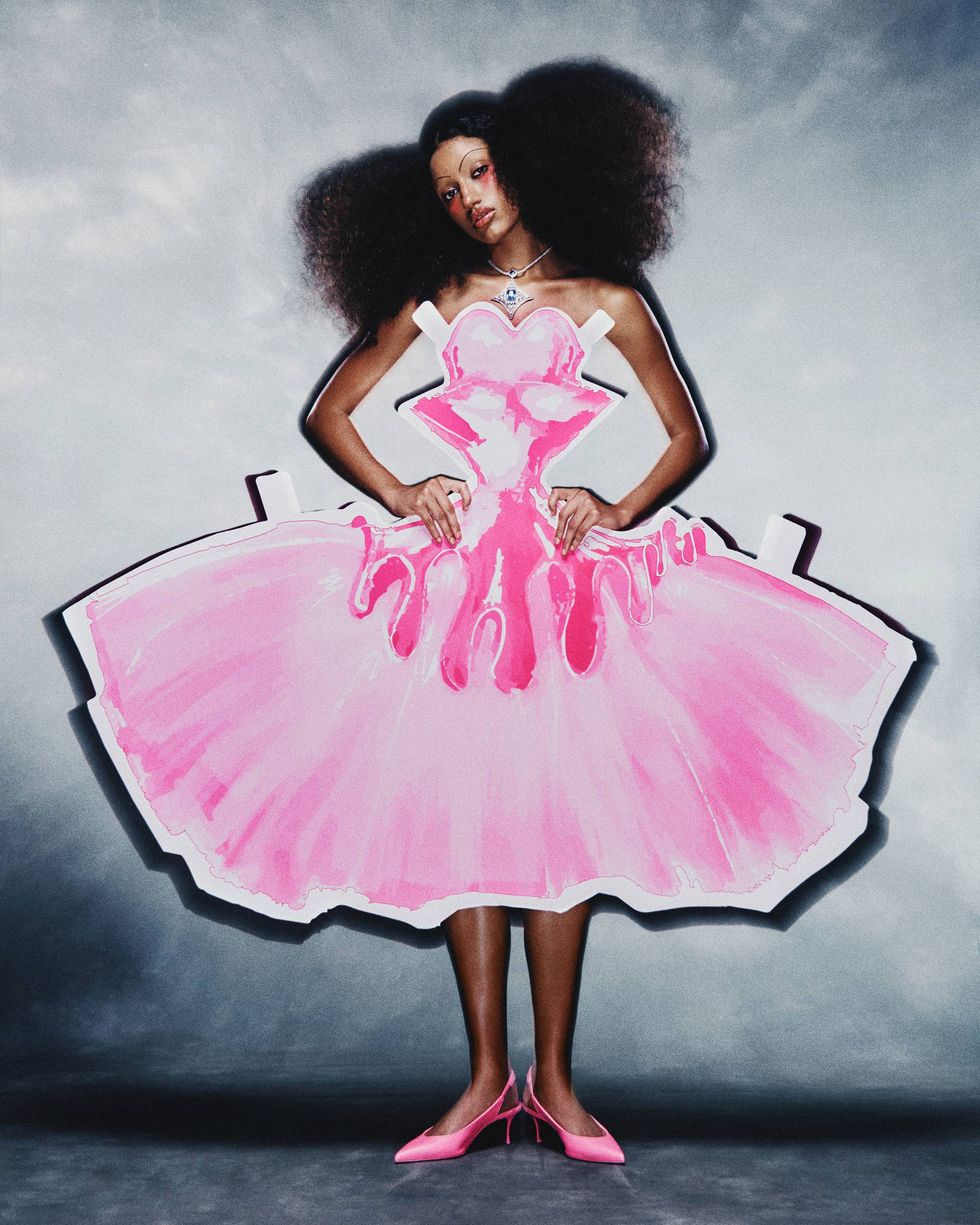
Dress: Life-size Illustration of Robert Wun Couture by Pepe Muñoz, Necklace: Jacob and Co., Shoes: Christian Louboutin
Look at Schiaparelli, which opened Couture Week with Daniel Roseberry’s latex tentacles and hand-sculpted crinoline, or Chanel, where Matthieu Blazy turned vine embroidery and three-dimensional blossoms into something fairytale-like. Dior went inward, with Jonathan Anderson filtering lilies and ferns through the work of sculptor Lynda Benglis. At Jean Paul Gaultier, Duran Lantink made silhouettes gloriously haywire without losing discipline. Robert Wun offered a balloon-embellished finale that felt childlike in its joy, while Iris van Herpen worked with 30,000 hand-blown glass spheres.
Skill. Imagination. Craft. These matter in couture. We’re drowning in AI slop and fast fashion, algorithmically optimized trends and bodies smoothed into frictionless perfection. Everything arrives instantly, looks identical, and disappears in seconds. Against that, craft offers something radical: evidence of time. And fashion consumers are hungry for exactly that.
Maybe that’s why “polyester” has quietly become a new Gen Z insult. It’s shorthand for something disposable and painfully generic, a feeling that isn’t disconnected from how most clothes are being made today. Flimsy stitching, mediocre details, faux embellishments, poorly considered cuts, and rushed finishes have become standard in mainstream fashion, with some garments barely built to outlast a viral trend they chased.
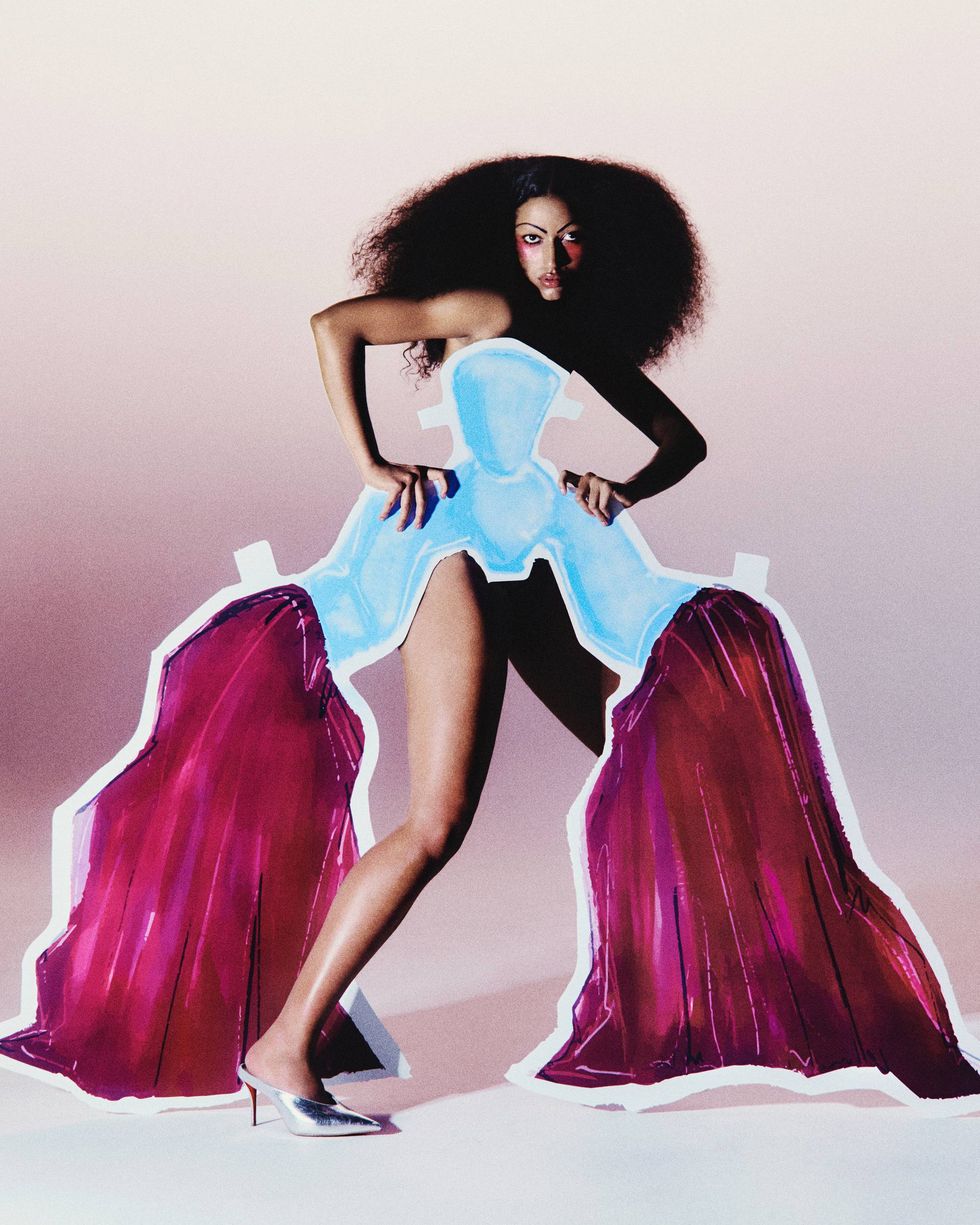
Dress: Life-size Illustration of Jean Paul Gaultier Couture by Pepe Muñoz, Shoes: Christian Louboutin
But that doesn’t mean everyone is suddenly shopping couture. Haute couture has always offered art in an extreme form, but it is, of course, wildly exclusive and wildly expensive. The interesting bit is what happens when those same principles start trickling down. A growing crop of designers are bringing couture’s obsession with handwork, technique and detail into ready-to-wear, creating a middle ground. With demi couture, you get the made-with-intention feeling of couture in pieces with a couple fewer zeros on the price tag. The new demi-couture guard is anything but mundane. Case in point: Bad Binch Tongtong’s sculptural shapes, Matières Fécales’ sharp narratives, Cong Tri’s intriguing grace, or Harris Reed’s maximalist drama.
Amidst the rise of demi-couture, the high street has been paying attention. Call it “premiumization” or call it “luxury cosplay,” but chain stores are adopting all the right lingo and signifiers: designers, archives, ateliers, creative partners, and editorial gloss. But can true craft survive being commodified? Fashion has a history of turning the new shiny thing into a buzzword, and “craftwashing” can easily become just another marketing tactic without giving the people doing the actual work the visibility, fair pay, or cultural credit. Handmade cannot be a filter slapped on fast fashion to make it feel less disposable.
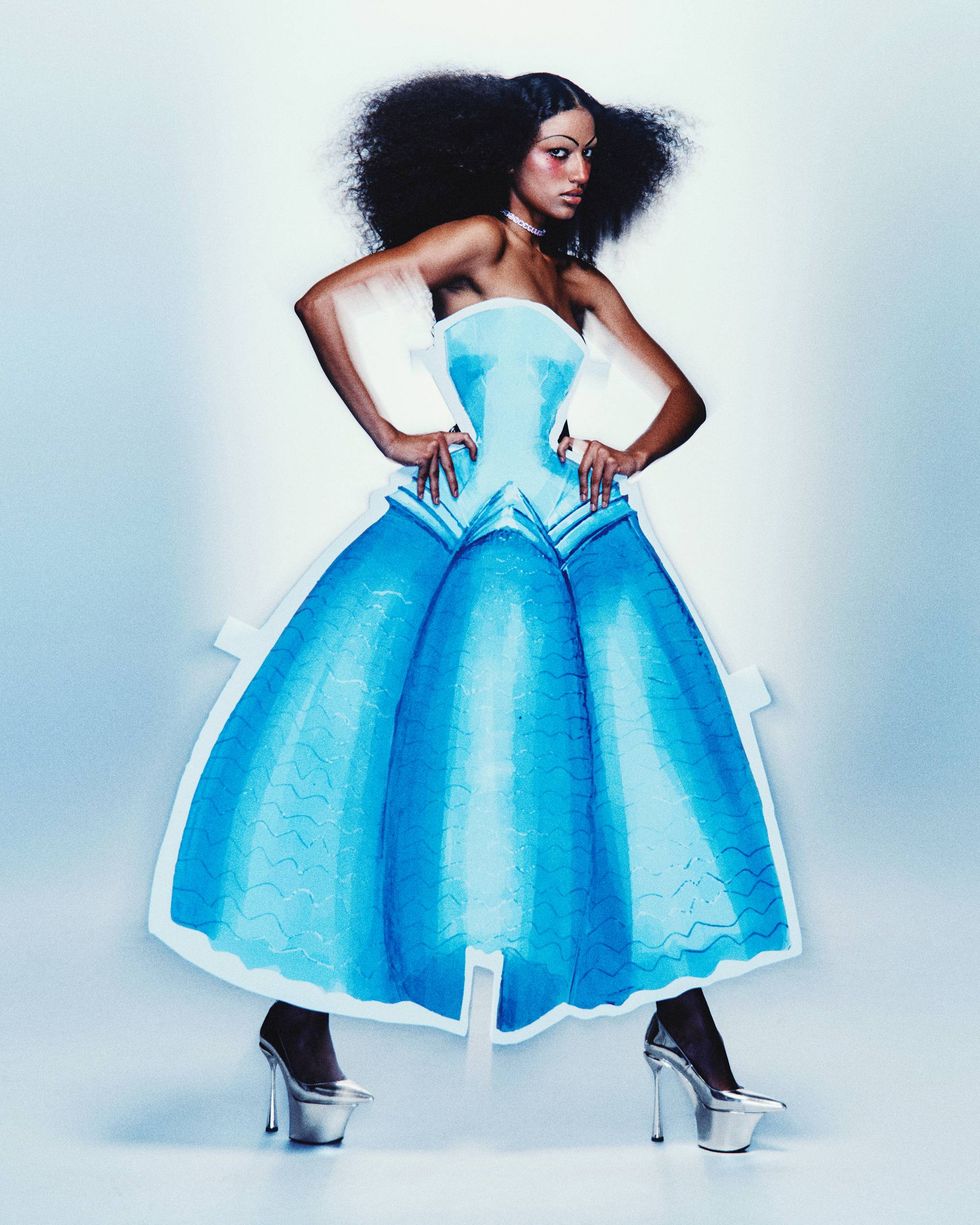
Dress: Life-size Illustration of Georges Hobeika Couture by Pepe Muñoz, Shoes: Thom Solo, Necklace: Luisa Alexander
Craft is when labor meets skill, the magic alchemy when time, effort, and emotion combine with judgment, imagination, and memory to produce something that could not have existed quite the same way twice. That is what couture understands, and what demi-couture is making newly accessible. Not everything needs to be painstaking, but there is something thrilling about knowing that a human mind and hand have taken the long way around to make something beautiful.
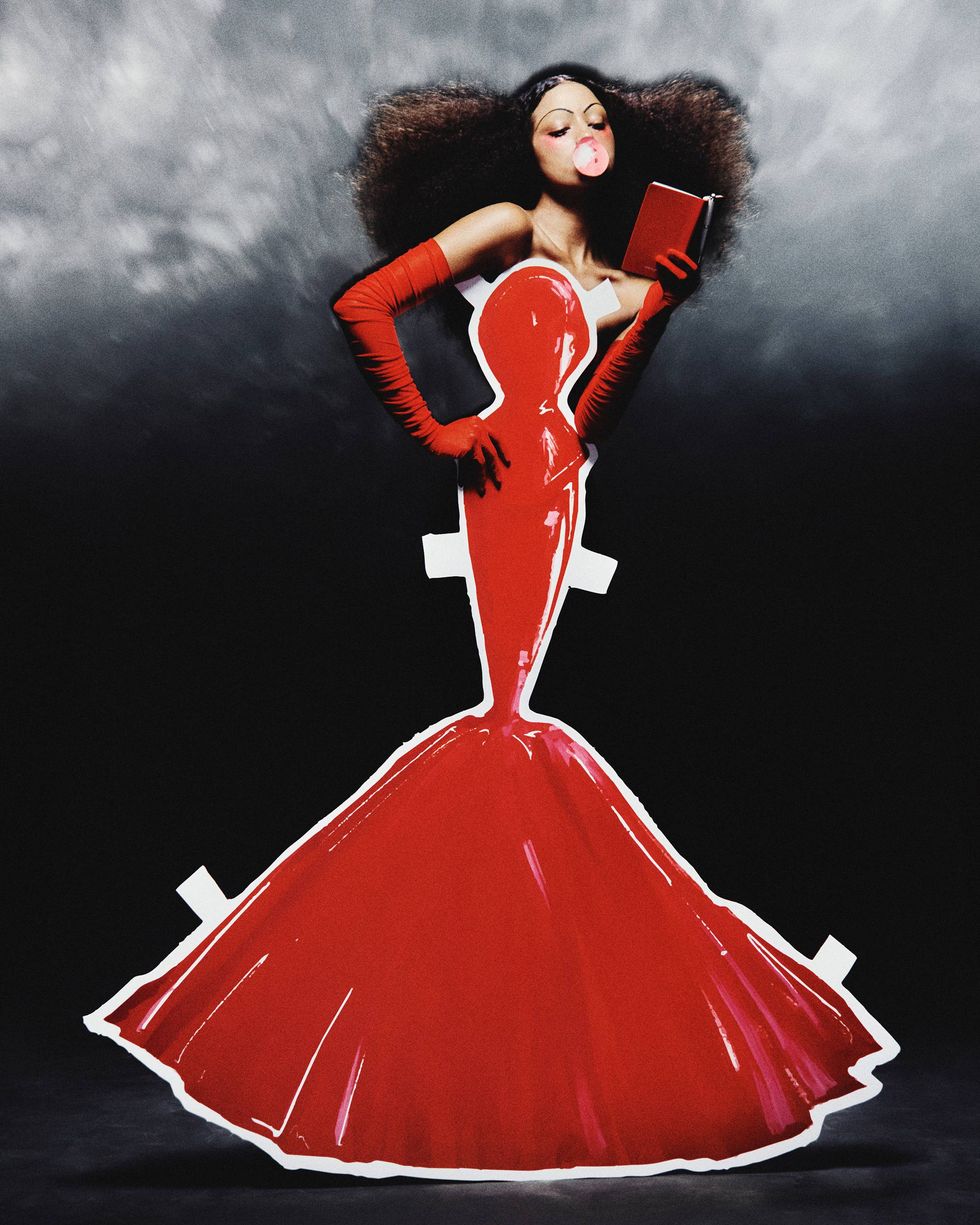
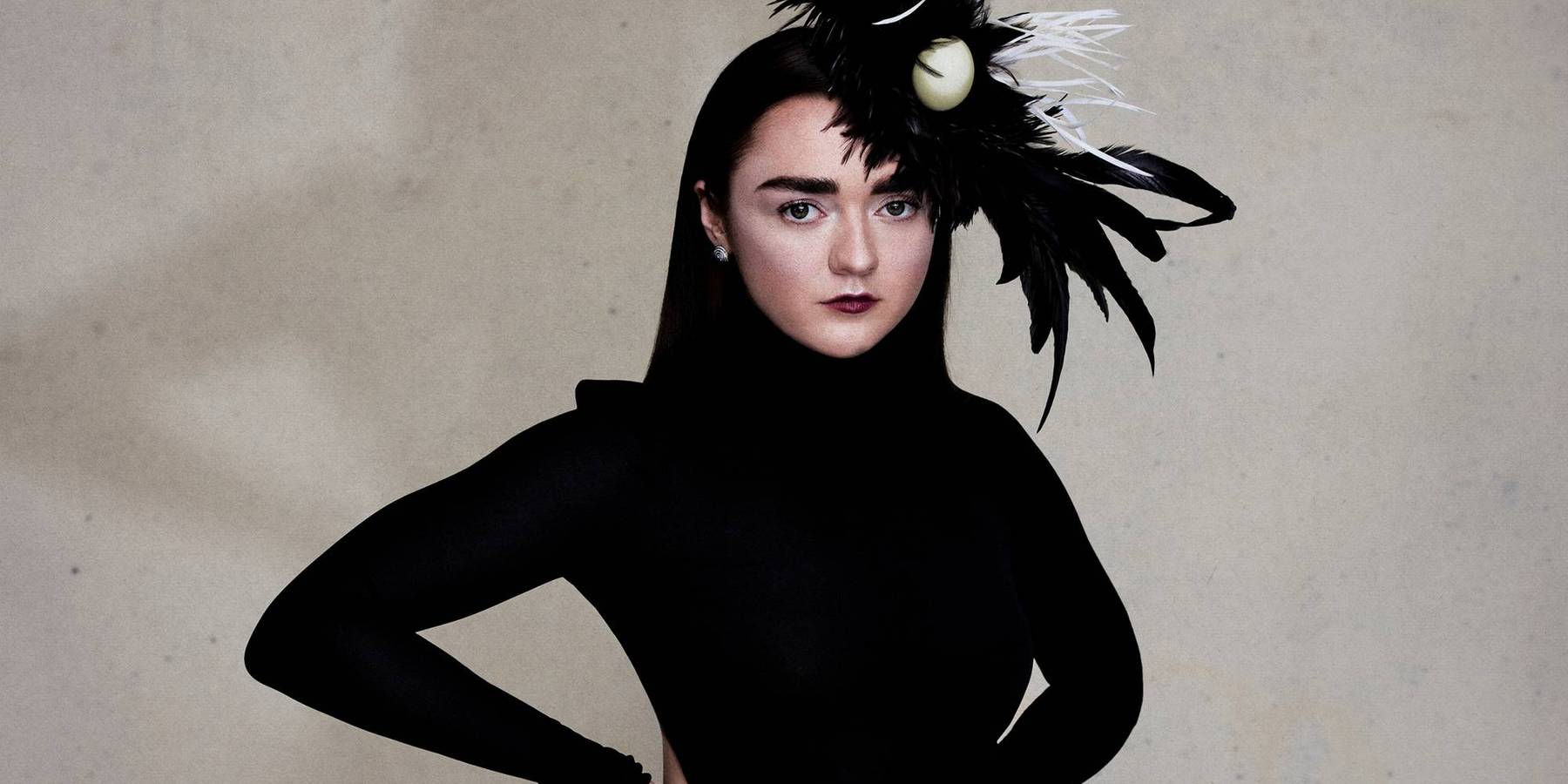
Dress: Life-size Illustration of Robert Wun Couture by Pepe Muñoz, Gloves: Stylist’s Own, Notebook: Montblanc
Talent: Isa Steadman Ruiz
Photographer: Diego Bendezu
Illustrator: Pepe Muñoz
Story: Shreya Shrivastava
Styling: Angelina Cantú
Makeup Artist: Mitch Yoshida
Hair Artist: Chica Nishiyama
Production Design: Lana Boy
Prop Styling: Aidan Farragher
Digital Tech: Natalia Ormeño
Photo Assistants: Hannah Esquenazi, Maxwell Garcia, Brandon Abreu
Stylist Assistant: Ana Mendoza
Partner: Montblanc
CREATIVE & EDITORIAL
Head of Creative: Brian Calle
Editor-in-Chief: Jordan Bradfield
Fashion Director: Angelina Cantú
Editorial Director: Mickey Boardman
Digital Director: César Alvarez
Jr. Creative Director: Peter Demas
Editorial Manager: Tamara Amhaz
PRODUCTION
Print Design: Composite Co.
Jr. Graphic Designer: Gabe Walsh