It’s another hot summer’s night in London. The capital is in the full grip of the heatwave sweeping Europe, and sweat glistens on foreheads, necks, the backs of legs. Thank fuck Wembley has air con, a girl next to me on the Tube says to her mate. She didn’t even have to say where she was going; I already knew what stop she was getting off at, on the pure merit of the pink cowboy hat and matching feather boa.
Predictably, it was one of the nights Harry Styles was playing Wembley Stadium, and almost the entirety of the carriage — if not the Tube line at large — was gussied up in the same format of dress. I think we’re underdressed, I comment to my friend when I meet her outside the station. Crucially, we didn’t overtly look like everyone else. Pick me! Cool boots and a mini skirt, the kind of thing one might wear to concerts since forever.
But it’s 2026. Boots and a mini are just not proper decorum for today’s Big Live Pop zeitgeist.
Today, stands outside Wembley are a sea of feather boas and Elton John-style sunglasses on little girls and their moms, women already a few drinks in, teenage girls earnest to take their looks even further. One can be sure it’s the same across the world, wherever fifty-dollar merch shirts advertise tour stops.
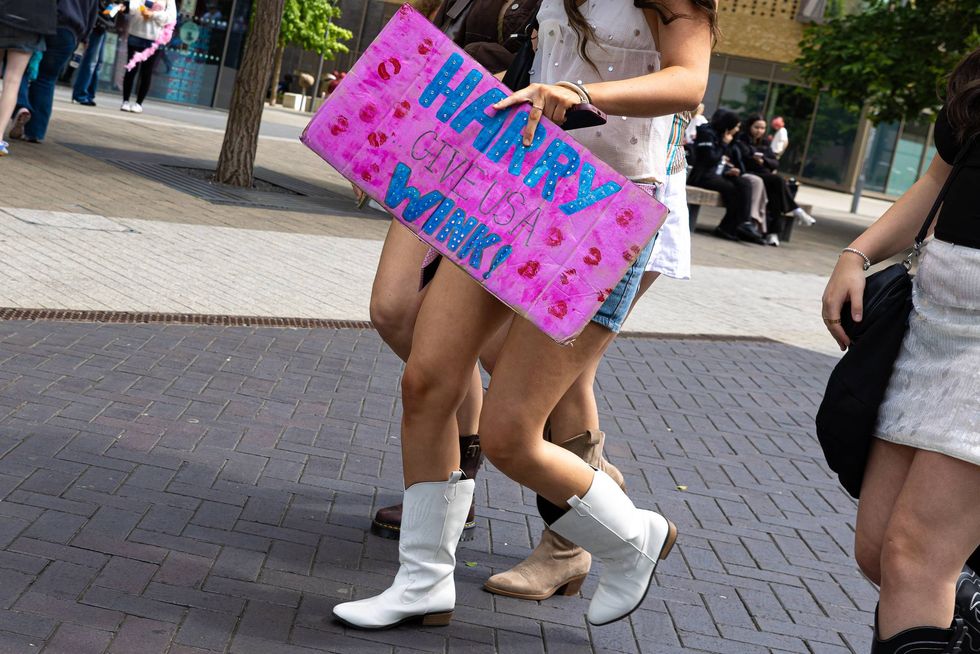
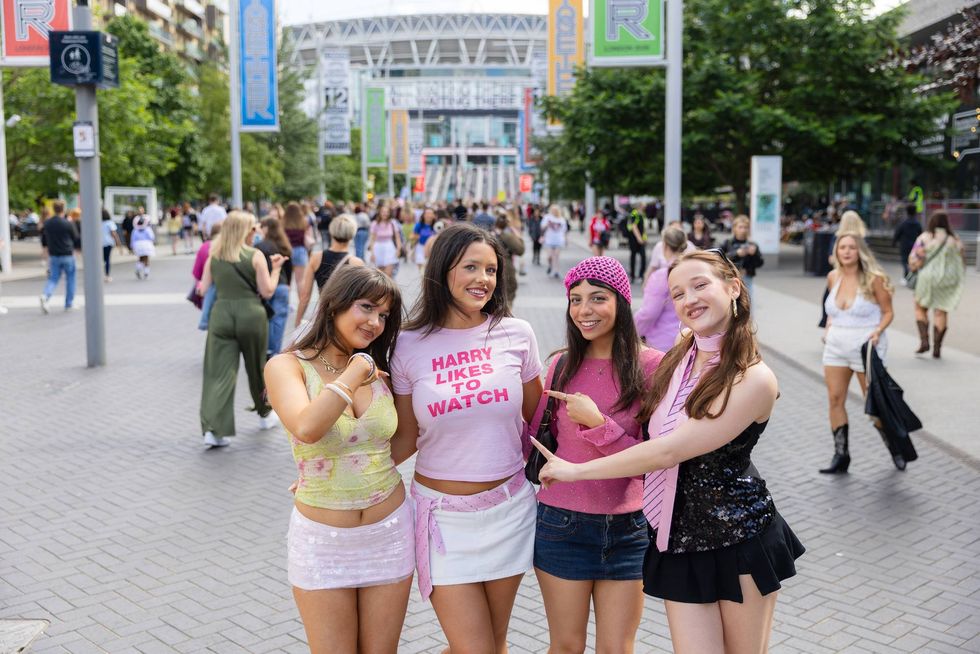
You know the drill. You’ve been to a live music event before. Purposefully assembling an outfit that merges night-out wear with something reflective of the evening’s genre, if not even the band itself. Like, you can wear a Nirvana tee-shirt to a Geese gig. That’s cool, dude, you’re like, old school bro. Do you have a weed pen? You can similarly lean into the near-constitutional order, “jeans and a nice top,” to anything that is “jeans and a nice top” music. (Lewis Capaldi and Olivia Dean). But, you have to admit: dressing for concerts – pop concerts, in particular – has blown way out of proportion of late. And that is not just my Instagram algorithm.
For, on the subject of Harry Styles: the man who was once the world’s long-reigning heartthrob has generated an aesthetic landscape reproduced endlessly by fans at his concerts. His loyal fanbase of predominantly young women is less interested in dressing in a way that would suggest any interest in attracting him, as Directioners might have in the past. Rather, they dress to belong.
The days of fantasising about being noticed, so immortalised in WattPad fanfiction, are long gone. Fans are much more concerned about the community united by him.
It’s a direct reaction to a trend sweeping the pop scene at the moment. The last time I was at Wembley, it was Taylor Swift’s Eras tour in 2024, when another girlfriend and I found ourselves similarly underdressed for the occasion. “What Era are you meant to be?” one fan had asked me. I gestured down to my white maxi skirt and suggested Folklore. She looked me up and down. “I feel like that’s more of a cardigan-orientated look,” she said sweetly. “Maybe you could see it as a 2008 VMAs nod.” She, herself, was dressed in a custom-made sequins fit that was a direct homage to Swift’s recent Midnights release.
Swifties in 2024 went viral for making friendship bracelets and swapping them with strangers at concerts. This interpretation of a singular lyric from Midnights’ “You’re On Your Own Kid” became not just a tradition, but a ritual, observed with the saccharine zealousness of true believers. For these weren’t just cheap bracelets ordered from Amazon on next-day delivery. Across all avenues of social media, Swift’s fanbase chronicled themselves making these bracelets like they were employees at the local rosary beads factory.
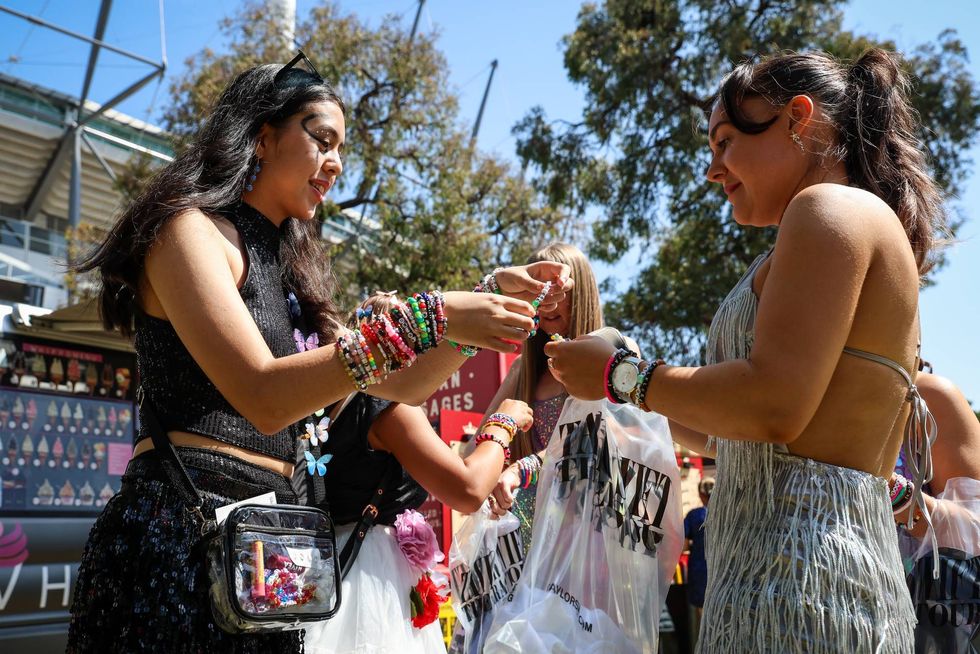
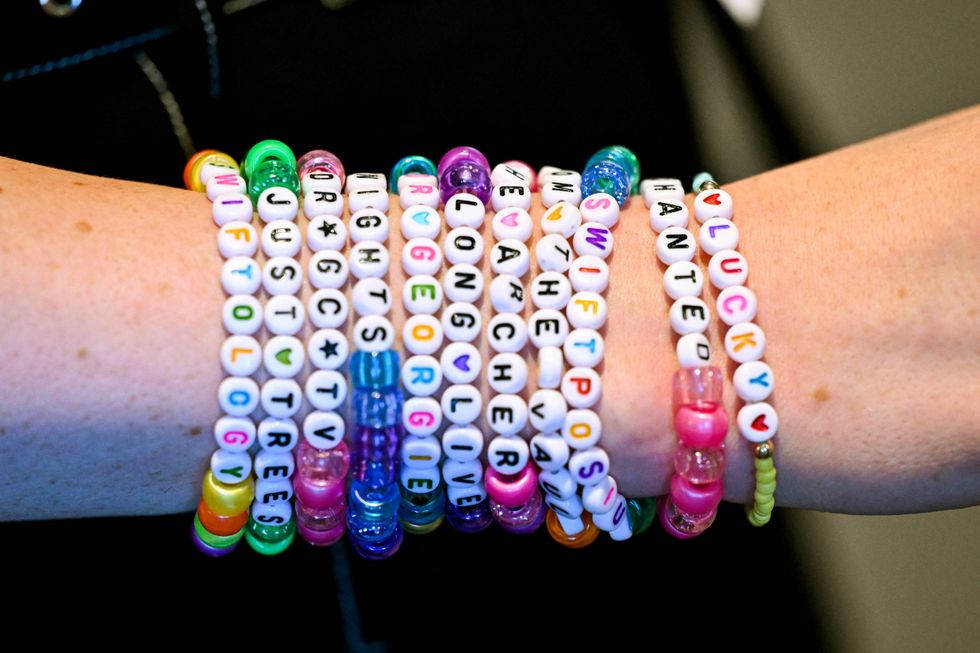
From dressing up like Swift to becoming part of new lore in real time, Swift’s record-breaking Eras tour didn’t necessarily start the cult costume-dressing phenomenon, but it certainly brought international attention to it. As live music returned after the pandemic, Beyonce’s 2023 Renaissance tour commanded similar commitment from her audience to an aesthetic spearheaded by not just the artist, but the collective culture of both tour and album. Queen Bee herself encouraged her fans to dress up in silver, especially during Virgo season, in which she was born.
It’s the kind of thing that wouldn’t sound out of place in a Medieval retelling of a benign monarch – Swift’s fans performing the fulfillment of a lyric like a royal decree, Beyonce’s fans dressing up to match her for her birthday month. Even Pitbull’s live shows have made it near mandatory to don a bald cap and sunglasses, à la Mr Worldwide himself.
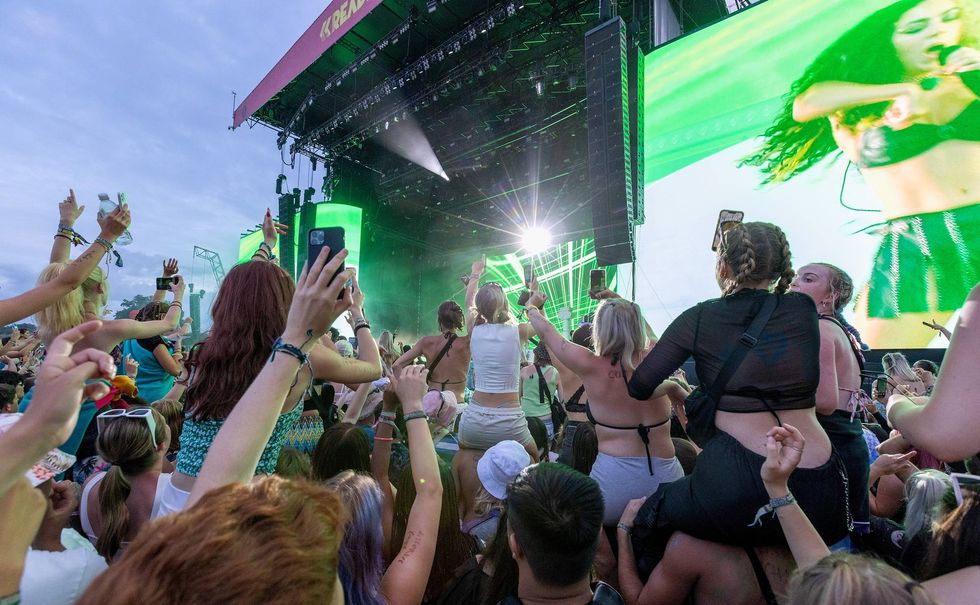
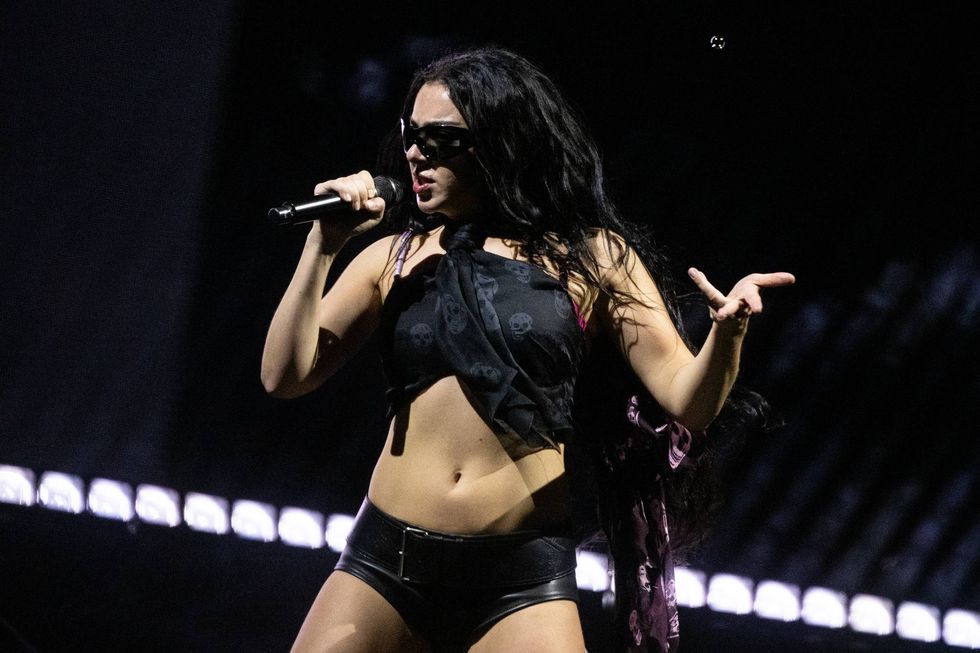
Concert dressing was once normal. Today it is part of the experience of live pop music itself, whether a concentrated effort to follow instructions from whoever you’re already shelling out triple digits to go see live, or even perhaps something more unwittingly subconscious: Charli XCX, music’s doyen of cool, has never made much of a fuss about what her fans wear. And yet across the Brat tour, audiences assembled in Charli’s signature look of rave shades and white ribbed tanks, that vivid green shade more present in her audiences than on stage itself.
For the case of Charli’s audiences probably speaks to the undercurrent of this sensation. Best Dressed at Brat won’t win the honor of the “Apple” cameo, in the same way the most bejewelled cowboy hat won’t be declared Sally at a ROLE MODEL concert. Instead, young music fans are spending their time and money – even more time and money than already pledged from acquiring the concert ticket – to make a live music experience a community event. Sure, it’s a somewhat parasocial one. It’s also deeply embedded with commercialization.
But for a generation raised predominantly online – many of whom missed whole years of school due to the very pandemic that ushered in this shift of fandom behaviour – there is something both sweet and extraordinary about this advancement in how we consume culture. Pop has long been a lean, mean, money-making machine. And yet there is both sincerity and remarkability in how audiences turn to each other, rather than the artist themselves, for the purpose of societal placement. They’re not dressing with validation from the artist in mind, but rather, for a place within the artist-made, but people-led, community. For a generation regularly analysed, criticised, and prodded with a sociological think piece on their anxiety and isolation, their interpretation of how they experience live music feels revolutionary. Even if it does cost twenty dollars for a shitty feather boa.
Photography courtesy of Getty Images