Can Pop Music Be Sexy and Earnest? Just Ask Carly Rae Jepsen
by Bea IsaacsonAug 06, 2026

Every few years or so, a pop track will seemingly appear out of nowhere and kind of change everything. The single will dominate public radio and personal playlists like a sonic tyrant. And the sweet melody of perfect pop craftsmanship will spread across wider culture, like a dusting of icing sugar over the internet.
When Carly Rae Jepsen’s “Call Me Maybe” was released, it was probably the greatest pop song ever written — with an Oscar snubbed music video to boot. Every box is enthusiastically, perhaps even obnoxiously, ticked: iconic hook, glorious chorus, sprawling melodies and the tightest production. Fitting, as the early 2010s was a fabulous time for pop lovers. The kids have no idea; we had Glee episodes every week, One Direction music videos every month, and a new Rihanna album every year.
Yet the track never feels formulaic. It set the stage for the pop star to come, a pop star that had been brewing for years just north of Hollywood, in Canada.
As Twitter users have happily discussed and dissected this week, between Madonna streams and upon the announcement of Carly’s forthcoming album, Day and Night, out September: “Call Me Maybe” actually isn’t her best song. For most, it’s not even in their Top 5. But most would agree its the essence of what makes her music so singular.
The favorites among stalwart fans are a range of tracks, with most listing at least a few from her follow up to Kiss, 2015’s Emotion. Amazingly, and partly proof of its enduring cult status, the album didn’t really chart. (Then again, we all know how both sides of the Atlantic voted a year after.) Reviving the synth-pop that so characterized the music of Cyndi Lauper and Madonna, without once veering into nostalgia, tracks like “I Really Like You” and “Run Away With Me” are notable for celebrating having a crush.
Stay with me here. There’s a difference between writing about a crush – which is, like, half of all pop songs anyway – and finding victory in vulnerability. And aged 30 when promoting this album, Carly’s girlish candor, often personal, never performative, felt - still feels! - pretty radical in a society that celebrates Carrie Bradshaw’s life while simultaneously disapproving of it in practice.
That clip of Carrie seeing the Eiffel Tower for the first time and clapping euphorically? That’s “Cut To The Feeling” coded, baby!
Because, look: our girl Carly? She fucks. She isn’t scared to alienate Church Twitter by singing about sex. She writes about it as part of the fun of a crush: “I wanna wake up with you all in tangles,” / “Show me devotion and take me all the way”. Carly just doesn’t make sex her entire songwriting gimmick. Coming to international attention at a time when Katy Perry was shooting whipped cream out from her tits, and releasing her sixth album during following a wave of Sabrina Carpenter's kitschy sexiness, part of Carly’s appeal is that she doesn’t sell sex, nor does she shy away from it; rather, it is just part of the human condition she so earnestly pens.
Similarly, she sings that sometimes it is her, not the man, who is the heart breaker in relationships. “I'm not that good at goodbyes / sometimes it's best to just fly”, she details in “Store”, a B-side track about turning the gendered suffering on its head and being the woman who ghosts a man. It’s the sort of lyricism that mirrors conversations with girlfriends over cocktails, daydreams in the shower. Carrie Bradshaw, you would fucking love Carly Rae!
Even the somewhat slept upon “Your Type”, which chronicles the frustration of being in unrequited love with a close mate. It’s a premise similar to “You Belong With Me”, but elevated: “And I’d break all the rules for you / Break my heart and start again / I’m not the type of girl you love more than a friend”, she croons. That’s some heartbreaking stuff! Yet this brazen banger, so successful in converting personal pining into a communal dancefloor experience, enjoyed newfound appreciation with Gen Z audiences after usage in The Summer I Turned Pretty a near decade after release.
Back in 2008, just after finishing third place on Canadian Idol, Carly Rae Jepsen wasn’t doing badly, necessarily. She had been signed to a label, in which one of the co-founders was Nickelback frontman Chad Kroeger. A year later, she released a few singles that would peak around the 30s in the Canadian Hot 100; her debut album, Tug of War, soon followed.
Would anyone even believe Tug of War was a folk album? Both Wikipedia and Spotify confirm it. Well, it sold some records. When Carly and the gang began to write up the lyrics to gay people's version of the King James Bible, her followup record Kiss, it took some Josh Ramsay from Marianas Trench to tell them “Call Me Maybe” should be a pop, not folk, record.
The pop song it would become was released September 2011. Where were you that December, when Justin Bieber, Selena Gomez, and Ashley Tisdale made a YouTube video via Apple Photobooth dancing to what Bieber tweeted “is possibly the catchiest song I’ve ever heard”? It was like the Gettysburg Address for people who clutch their chests when they sing: suburban teenage girls, voting-age gay men, theater kids, wine moms. It wasn’t just the perfect song of summer, but a defining track in its own right for both zeitgeist and artist. The combined forces of bandage dresses and hipsterism were waning, making room for the maximalist, 2010s millennial poptimism to come.
Through that opening, almost suddenly, “Call Me Maybe” became 2012’s ubiquitous, easily meme-d anthem. The proof? It was covered by the aforementioned Glee gang.
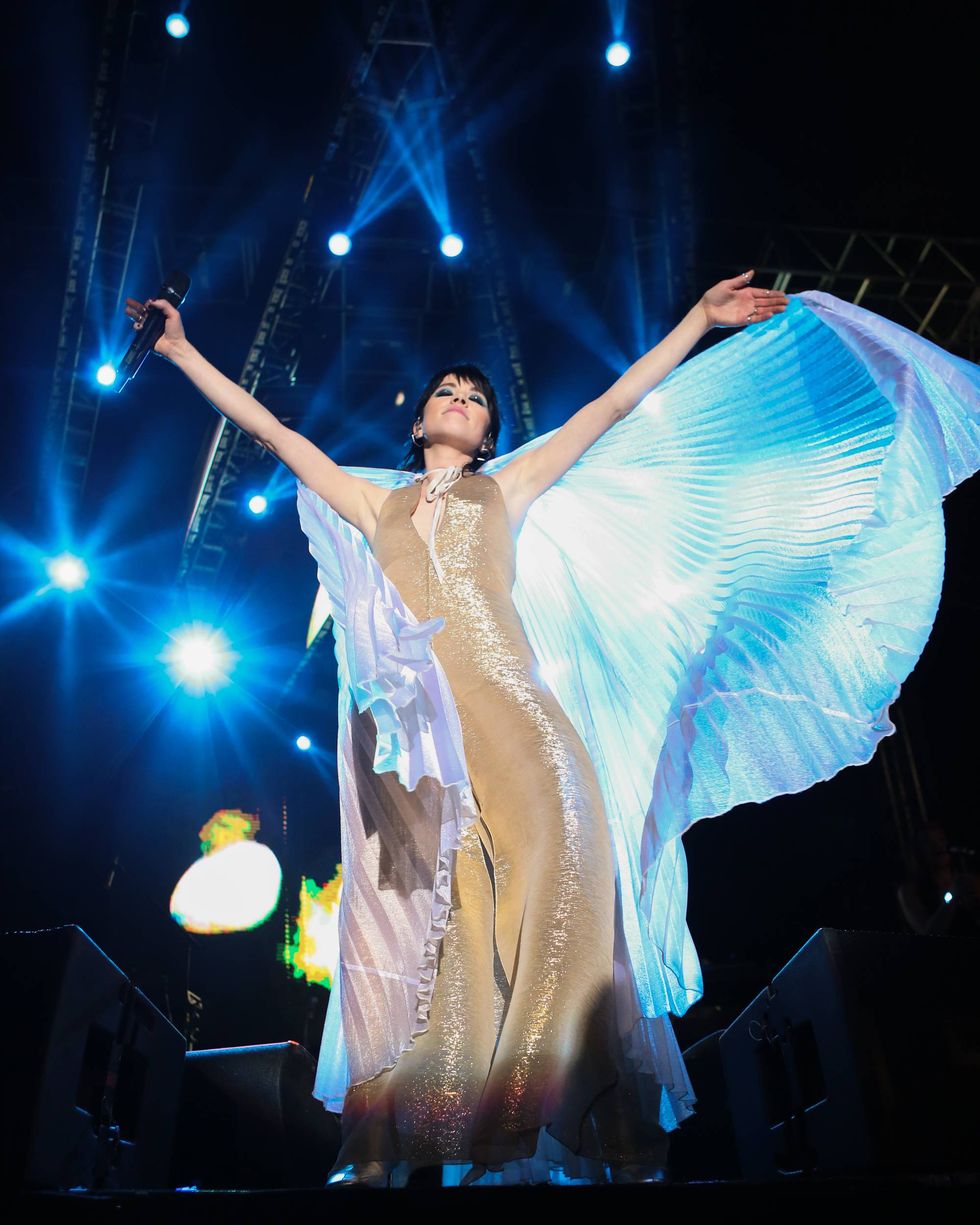
Next up: the aforementioned Emotion. It’s a no skips album, a seemingly infinite treasure trove. Her lust for life, that unapologeticaly feminine act of romanticising the unremarkable – paired with excellent synthesizers, vocals, and soaring atmospheric textures – would come to define Carly’s unique sound for her next albums, Dedicated (2019), The Loneliest Time (2022) and its companion album, The Loveliest Time (2023).
In a pop zeitgeist of constantly shifting sounds and aesthetics – ‘eras’, if you’re fellow 2012 Billboard Hot 100 chart topper, Taylor Swift – Carly has remained totally steadfast to the pop beat she found with “Call Me Maybe.” Carly is remarkably loyal to the sound that broke her through, doubling down on her artistic vision and expanding it, codifying and then redefining it. In its entirety, she flies right in the face of radical, if not even sometimes desperate, attempts at reinvention for the public’s attention.
And while the public love a pop shock – the hijinks, the press cycles, the Instagram wipes, the brand new hair and wardrobe – I’m not sure the music industry fully appreciates how much we also love the reliability of consistency. For with Carly, it’s really about the excellent music: there are no rivalries, no money laundering schemes, no desperate attempts at number one. And that is the formula behind the exact alchemy that glues together her artistry and fan base. Upon the recent release of Day and Night’s lead single “On Wires,” the response was predominantly jubilation – even relief – that she’s back.
Why? Perhaps in a lineage that stretches from “Dancing Queen” to “Dancing On My Own”, Carly’s music is culturally timeless. It is sonically effortless pop that treats earnestness as something sacred, rather than silly. Or, even, exclusively youthful. When earnest music is centered within the domain of music for, and by, young women often referred to as girls — Olivia Rodrigo, Gracie Abrams, Aubrey Hobert — in which subject matter, if not general aesthetic, centers on the conditions of feminine youth, Carly delicately establishes the balance between sultry and saccharine. Her commitment to sincerity feels, at both her age and her pop tenure, quietly radical.
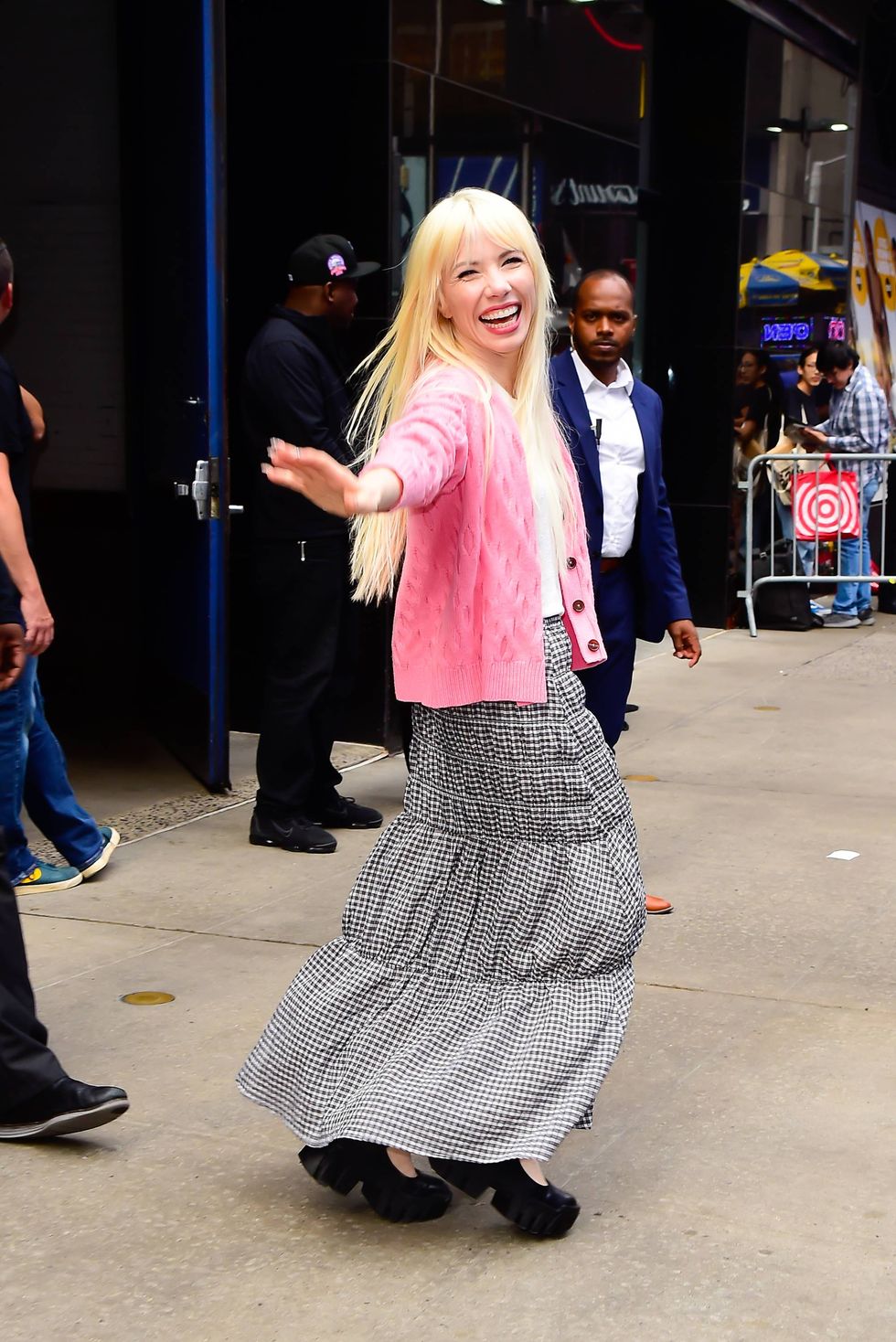
With Carly, pop doesn’t need to be cool, just confident: there is no irony, no lack of self-awareness. For her loyal legions of girls and gays — or just anyone who has ever mistaken hope for naivety, or still dreams of their own Disney kiss — her music offers a place to dance, to ache. “I don’t feel like there are many people who can pick up my mood as much as Carly Rae Jepsen,” my friend Ross tells me. “I had to see her at Glastonbury to get the feeling I did when I was going to queer spaces for the first time, and expressing myself like the fag I am.”
Isn’t that the point of pop, anyway?
Images via Getty