'Minions & Monsters' Director Pierre Coffin Has Seen the Memes
Story by Taylor Lomax

Believe it or not, there was an Internet before the Minions.
When we first met the little yellow guys, the better part of twenty years ago, some of the dominant meme currency included: “thanks, Obama.” Wojak and trollface. “Imma let you finish…” And, most chillingly, Annoying Orange. In other worlds, it was the Wild West.
The Minions, of course, first appeared in 2010’s Despicable Me as the lovable man(?)power supporting Steve Carell’s Gru. As initially presented, they were shrouded in enigma, an amorphous mass of slapstick comic relief. They babbled rather than spoke, barring the word “banana,” they occasionally had names like Bob or Kevin or Steve (again, it was 2010), and they indulged in a post-credits “reaching contest” to justify the movie’s 3D showings. But Despicable Me was decidedly Gru’s movie, focusing on his rivalry with Jason Segel’s Vector and his relationship with his adopted little gorls (“it’s so fluffy I’m gonna die” permanently seared into the cultural consciousness).
And then came the memes.
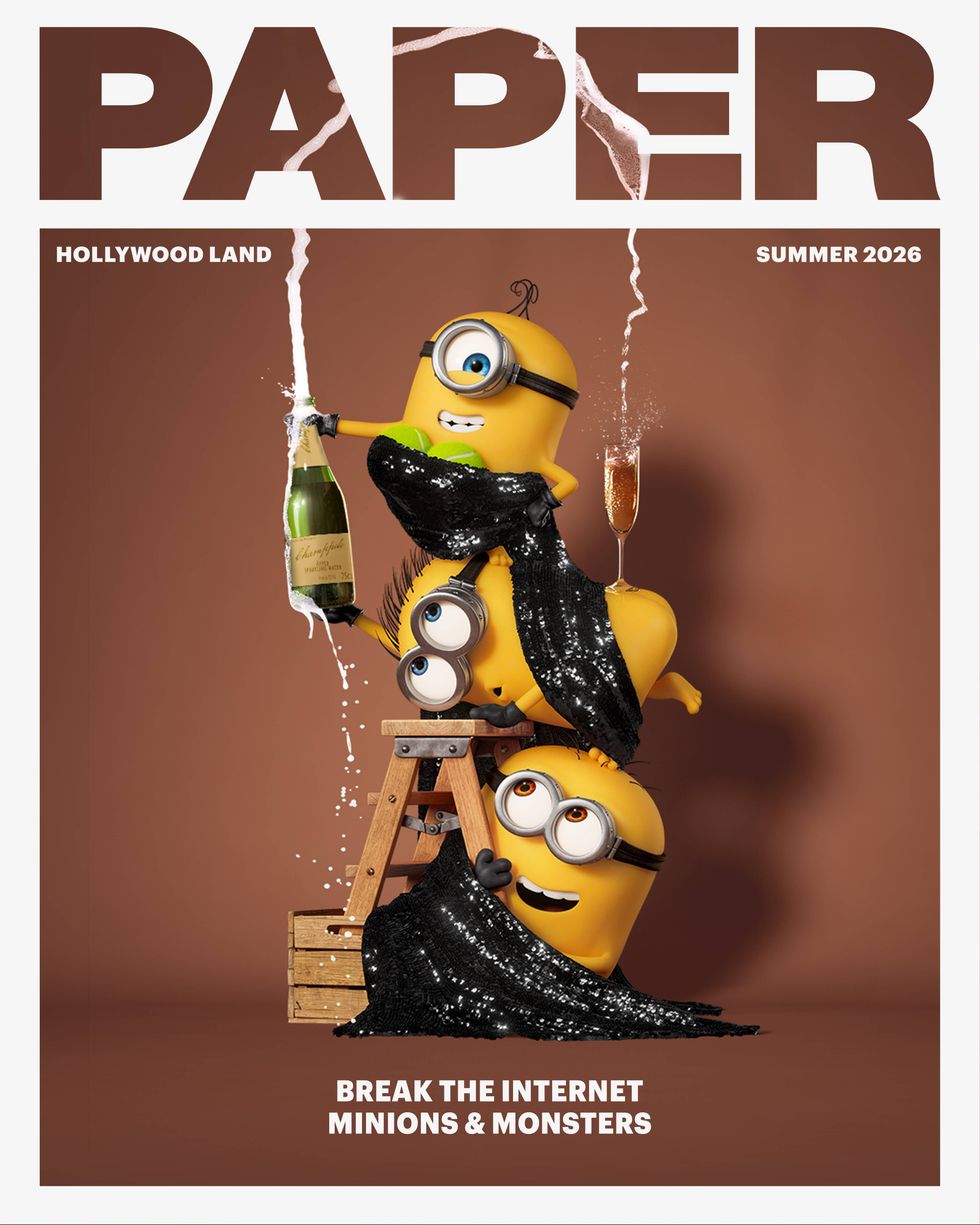
We here at PAPER Magazine know a thing or two about breaking the Internet and can authoritatively say that the Minions have the rare distinction of doing so on two (2) occasions. The first came with the influx of memes which catapulted the characters to immediate cultural ubiquity. You know the ones — the sort your fourth-grade teacher reposts on Facebook from a page called Minions Top Quotes, or something along those lines. They need not be directly related to the Minions or their regular activities. In fact, they often aren’t. Nor are they particularly “jokes” or even “funny” as much as just… observations, paired with a tangentially-related (sometimes) image of one of our little yellow avatars. They are sometimes sassy, sometimes jovial, often in their maid drag, but no matter what, they are around. Making the people come together, if you will.
Naturally, when Despicable Me became a franchise, the Minions held more of a pivotal role, covering “Barbara Ann” for the sequel’s teaser trailer (went platinum in my household) and getting a storyline of their own in the film itself. And then came their own spinoff series, which explored their origin and led to their second Internet-breaking moment, when massive groups of teen boys put on suits and arrived en masse to screenings of Minions: The Rise of Gru. There was also that Yeat song. Diana Ross was on the soundtrack, which also included Brockhampton covering Kool & The Gang, Phoebe Bridgers covering The Carpenters, and that beautifully deranged St. Vincent “Funkytown” cover. It was a moment.
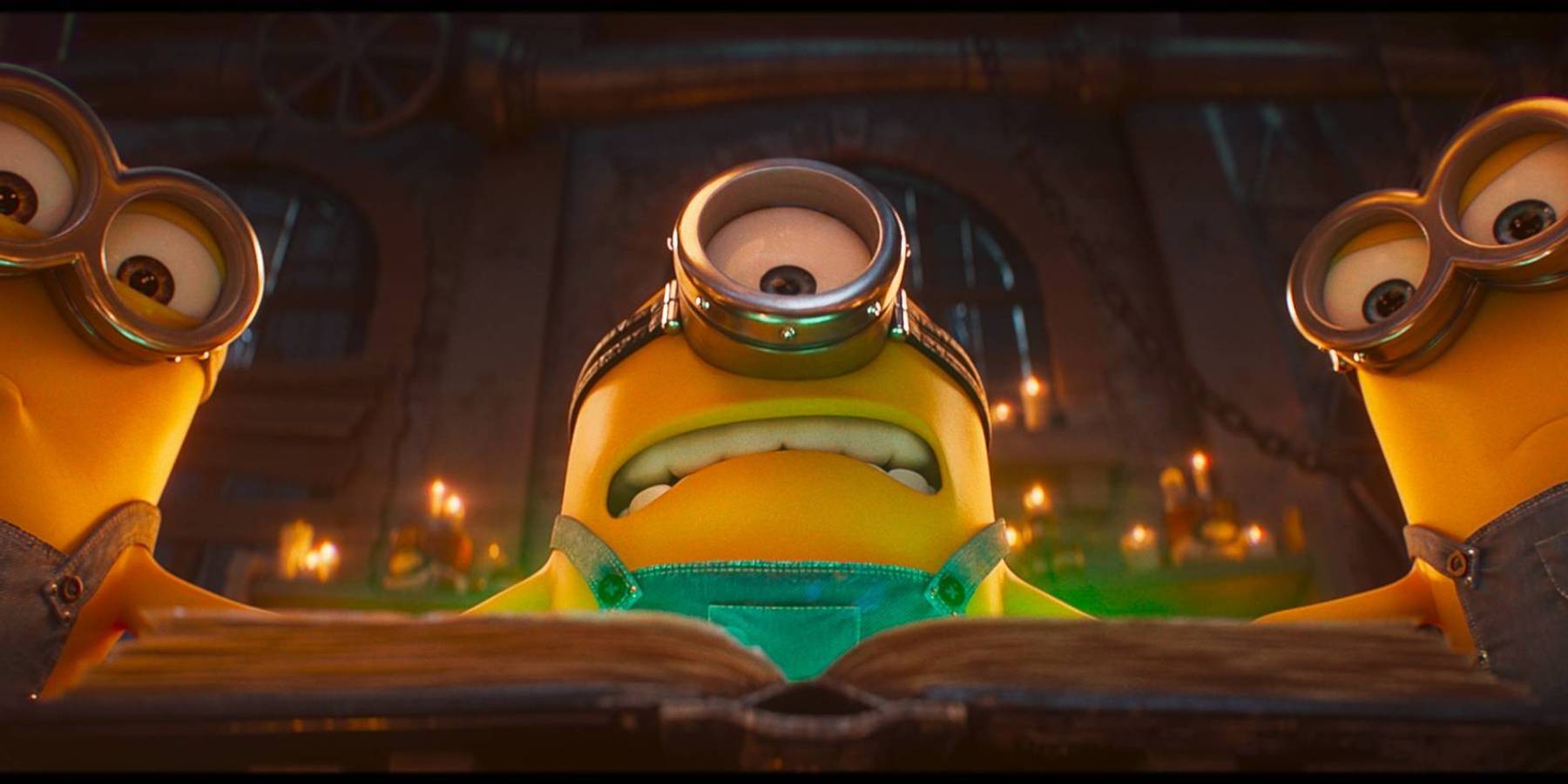
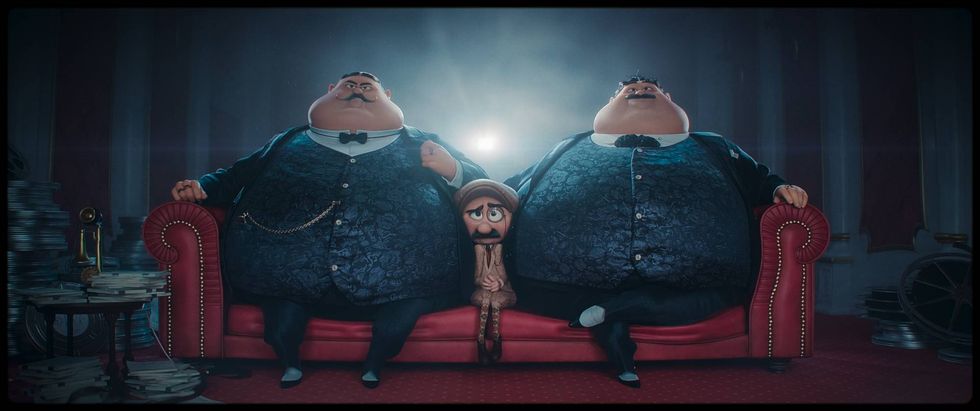
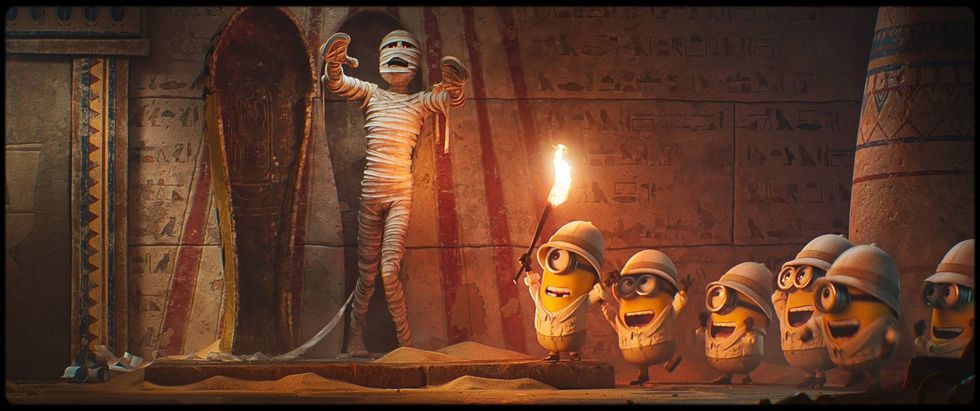
Now, they’re back with Minions & Monsters, asserting that, well, they’ve fought worse monsters than you for years in Hollywood. The film follows the gang as they stumble into silent film stardom in 1920s Hollywood, with one Minion, James, discovering a love of filmmaking himself. Audiences love them as a slapstick troupe, and studios love them for their spinoff and merchandising potential. Then comes the dawn of talkies, and Minionese doesn’t exactly translate, leaving studio execs scrambling for what to do with the little yellow guys everyone loves so much as James takes matters into his own hands and tries to make his own monster movie.
PAPER sat down with Pierre Coffin, the film’s director and the voice behind all the Minions, to get into the new film and how these little guys captured the world’s attention.
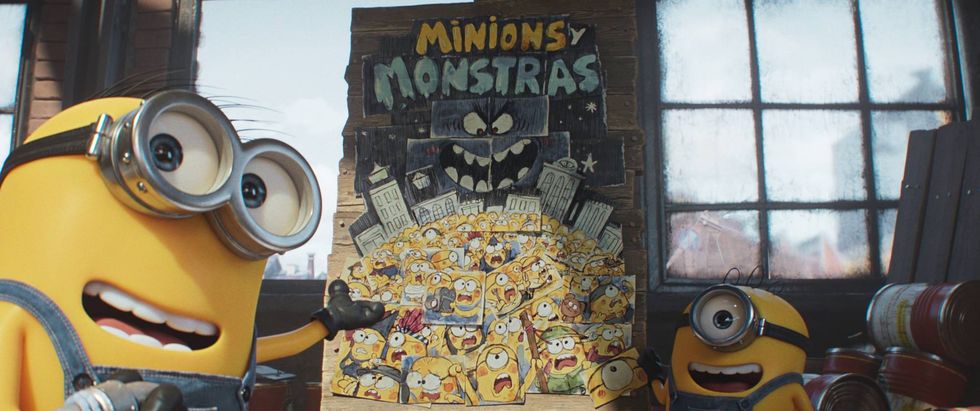
The Minion memes kind of became a beast of their own. Do you recall the first Minion meme that you saw? Or, maybe one that made you realize the Minions had become such a cultural force?
Pierre: No. Really, no, because I had my very small Facebook phase, and then I started hating Facebook, so I got away from it. And then all the stuff that was relayed to me was, that people were sending stuff to each other, you know, more or less funny anyway. But I never questioned the idea of: “How come this is becoming a thing?” I've always seen all this stuff going around with other characters, and so I think this is more of the same for me. It didn't come out as being very, very special. I found the exercise very highly creative, and I enjoyed it, but I didn't really notice it at first. So I don't know if that answers your question.
Do you have any others that are particular favorites or things that are close to your heart or things that you find particularly funny?
Pierre: Oh man, [laughs] it's hard though, because you're asking the guy who's making these things, and not really seeing what the people are making with them.
Right.
Pierre: I'm seeing a lot of stuff, and I enjoy some of it, but I'm not seeing the full thing. And I don't spend my time on Instagram or TikTok, so I see people doing stuff, but I'm not really into it, so I don't, I don't recall them, really. Sorry.
What do you think it is about the Minions that makes them so ubiquitous and makes people latch onto them so much?
Pierre: I want to say it's the design, maybe. The credit goes to our designer, Eric Guillon, who sort of designed those guys. And I think also the fact that they're a bit ubiquitous, it could also be the fact that they're highly reproducible. As soon as you draw two eyes and then have that color scheme of yellow and blue, instantly you recognize a Minion. There is something that's very easy to replicate, in terms of people who don't know how to draw, who know how to draw a Minion. So there is something that's very intelligent about the design, and I take no credit for it, because it's not me.
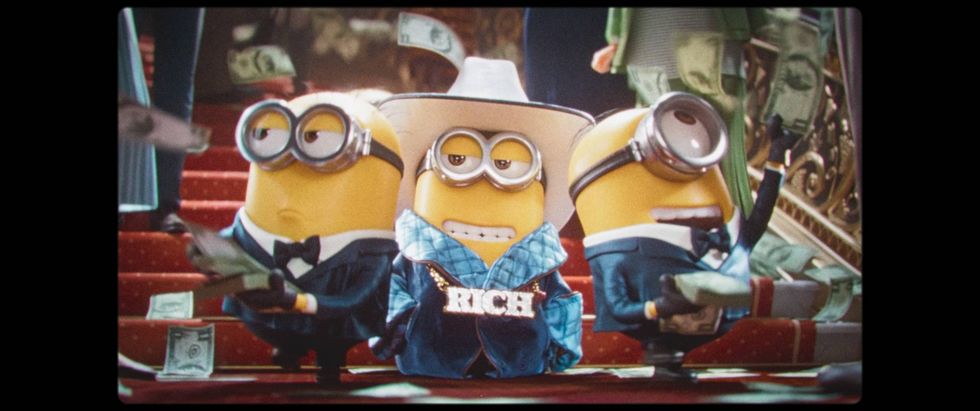
There's been kind of this conversation recently, post-Connor Storrie, about clowning, and clowning as an art form. Do you see the Minions as kind of doing a sort of clowning? Do you see the Minions as doing a sort of take on that comedy vein?
Pierre: The inspiration of the way they're animated, the way they're living, the way we sort of tell the story through them, is through animation, and through a particular style of animation that's close to slapstick, and maybe that's what you're referencing to with clowning, where it doesn't involve necessarily the language, them making funny noises and stuff, but it's more about them having a sense of physical comedy that conveys humor.
They've always referenced slapstick, and slapstick is typically something from Hollywood in the '20s. The great masters of it were Chaplin, Buster Keaton, Harold Lloyd, and so those guys were always an inspiration to the Minions, just because in the animation form, those guys were conveying stuff without words already, and to great success. And so everything that's animated, and I'm not just talking about the Minions, but everything that Chuck Jones did with the Road Runner, two non-talking characters also, and Jim Carrey, also known for the most wacky stuff, doesn't really need words. Mr. Bean, a non-talking character, who's using all these physical things to convey a story— and really nice stories. I mean, all these guys have been paying tribute to those slapstick gods.
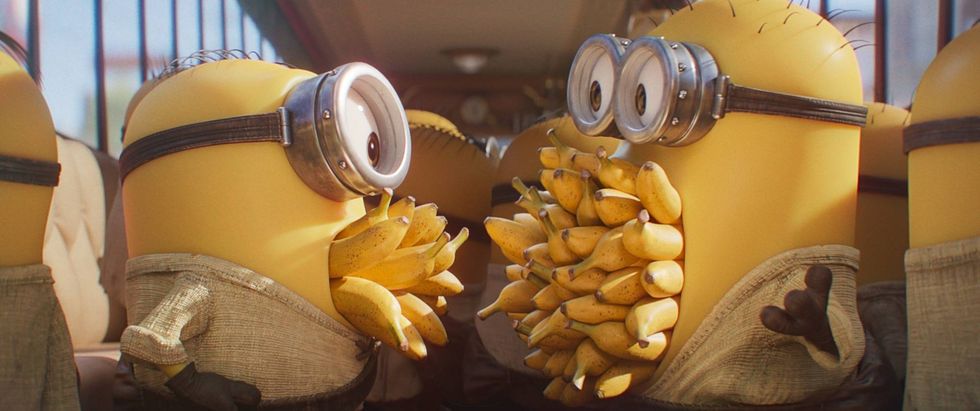
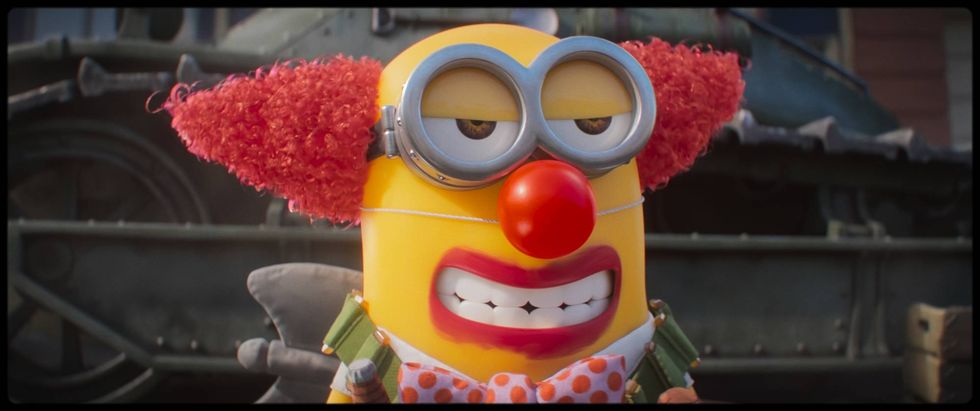
You put large sections of the film in uninterrupted, unsubtitled Minionese, which I thought was really bold, and I was really impressed by that choice. Did you ever consider subtitling, and would there even be a translation between Minionese and English?
Pierre: No, never. Never, because there is something about— and I'm not proud or anything about the Minion language. I mean, someone had to do it, and I was the guy, and then I tried to make it work as best as I could. And the reason why I think it's been okay is just because it's my fifth movie, and I've gotten better at it, I think. And there was never, never a time when we said, “We should put subtitles in,” just because we relied, maybe too confidently sometimes, on the audience paying attention to not necessarily the words but to the context to that little melody that I'm saying that expresses an emotion, question or an annoyance.
Or, “He's saying a swear word,” even though I'm not saying a swear word. “Oh, he's insulting that guy,” even though I'm saying nonsensical words to insult that guy. It goes to the slapstick thing, where there was no sound, there was no music, but you had to pay attention to whatever was happening, because otherwise you wouldn't know what the story was about. The Minions are all about that. You can't do something else and then go back to it and then say, “What happened?” Well, you have to watch. You have to pay attention, and you have to try to understand.
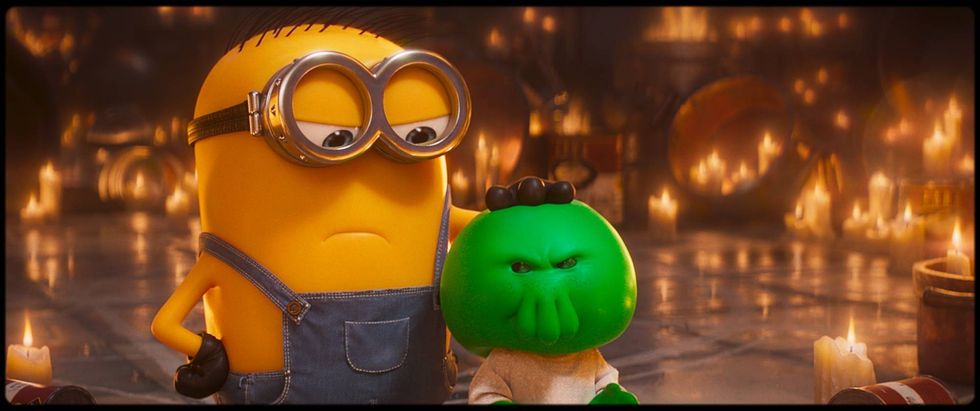
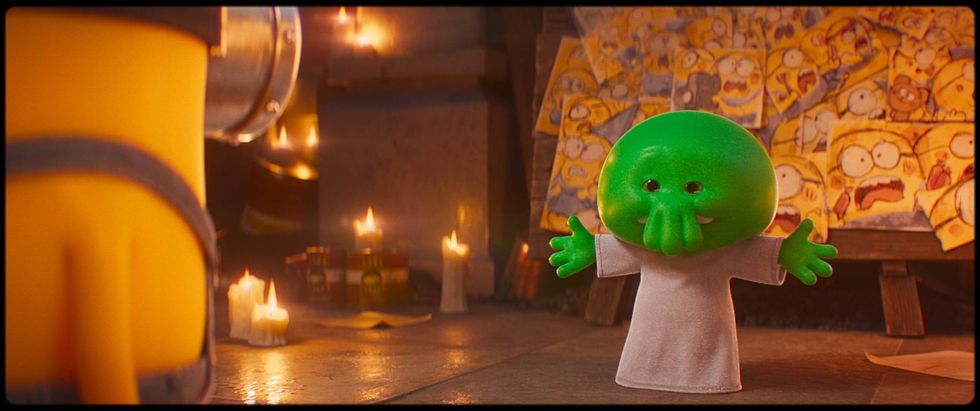
I've been bold, but I also have gotten better at finding tricks to make it easy on the ear and also: “I need to convey something that's a little bit more complicated, so maybe I need to write in another character who either understands the Minions or doesn't understand them and asks questions.” Like, “Oh, you need advice?” Or you have characters like Goomi, the antagonist of the movie, who magically knows what the Minions are saying, and he just repeats it.
Kind of a cool bridge between Minionese and English that I really liked, and that was fun, was the song contest at the premiere the other night. Could you talk to me about where that idea came from?
Pierre: Chris Meledandri, the producer, asked me about it and asked me if I thought it was going to be a good idea or not. I don't know where the idea came from, but it was relayed to me by Chris. It could have been his idea, and I thought it was a good one. I thought it was really cool that I didn't have to sing, also, so it was nice.
If you did have to sing, what song would you have done?
Pierre: Oh, I would have done exactly the song that Ella, the first contestant, did: “Bohemian Rhapsody”.
The song is kind of already in Minionese in many ways.
Pierre: Oh yeah, totally. Well, in terms of what he is saying.
Apologies if you've said this elsewhere, and I couldn't find it. What's the average lifespan of a Minion, like the ones we've met, Bob or Kevin from other movies?
Pierre: Well, for one thing, the reason they're not in [Minions and Monsters], or they're in it at the very end, is because I wanted to get away from the Minion world. I did like three Despicable Mes. I did the first Minions. I did voices for all the movies that came out involving Minions, and if I was going to pull back into that world and direct another movie with Minions, I really, really needed, just for my own sanity, to make it really different from whatever had been made before.
Then came the idea of imagining this whole other tribe, which we've never seen, which was somewhere else in time and space, and make the protagonist characters that we have never met before, just for the freshness of it all, which justified the fact of, “Oh, they're in '20s Hollywood,” because the other guys were elsewhere at the time.
To answer your question about lifespan, I don't think we've answered that. [laughs] I don't know if they die yet.
Minions are eternal. I love it.
I think so.
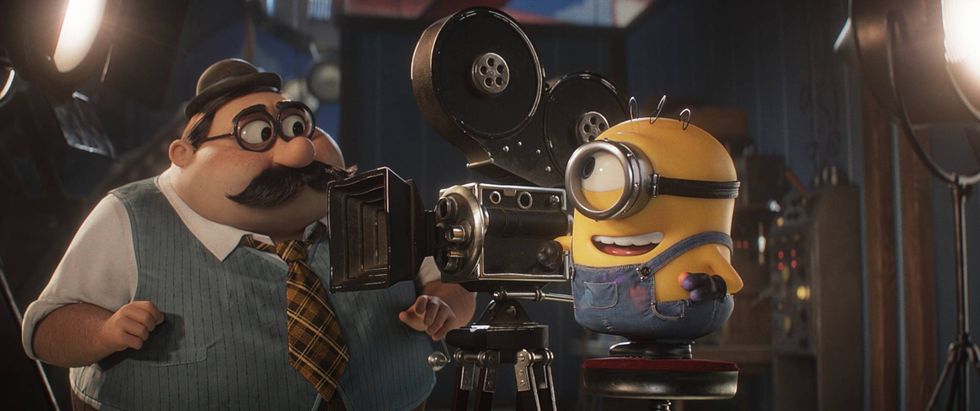
On that note, if we're thinking of the character James as an auteur, if you will, and this would be his movie about movie making, his 'Babylon', his '8 1/2', what do you see as his next artistic evolution?
Pierre: We had a beat in there where he was appearing in the French New Wave and making and messing up the editing of 'Breathless,' and that's the reason why the 'Breathless' editing is kind of what it is. So that whole credit sequence used to be that, them crashing different sets of famous movies. We had them crashing the set of The Legend of the Eight Samurai, but then they killed one by mistake.
—That’s why it’s seven. [Chuckle]
Pierre: And then they crash the set of Singing in the Sun, but then they screw up with those fire things, and it becomes Singin' in the Rain. So, we had all these references, but in the end, we thought that it'd be better to continue with the book and maybe reintroduce Kevin, Stewart and Bob, which people seem to be really missing. [Laughs]
This story is a collaboration between PAPER and 'Minions and Monsters', now playing in theaters.
Photos courtesy of Illumination Entertainment and NBC Universal