
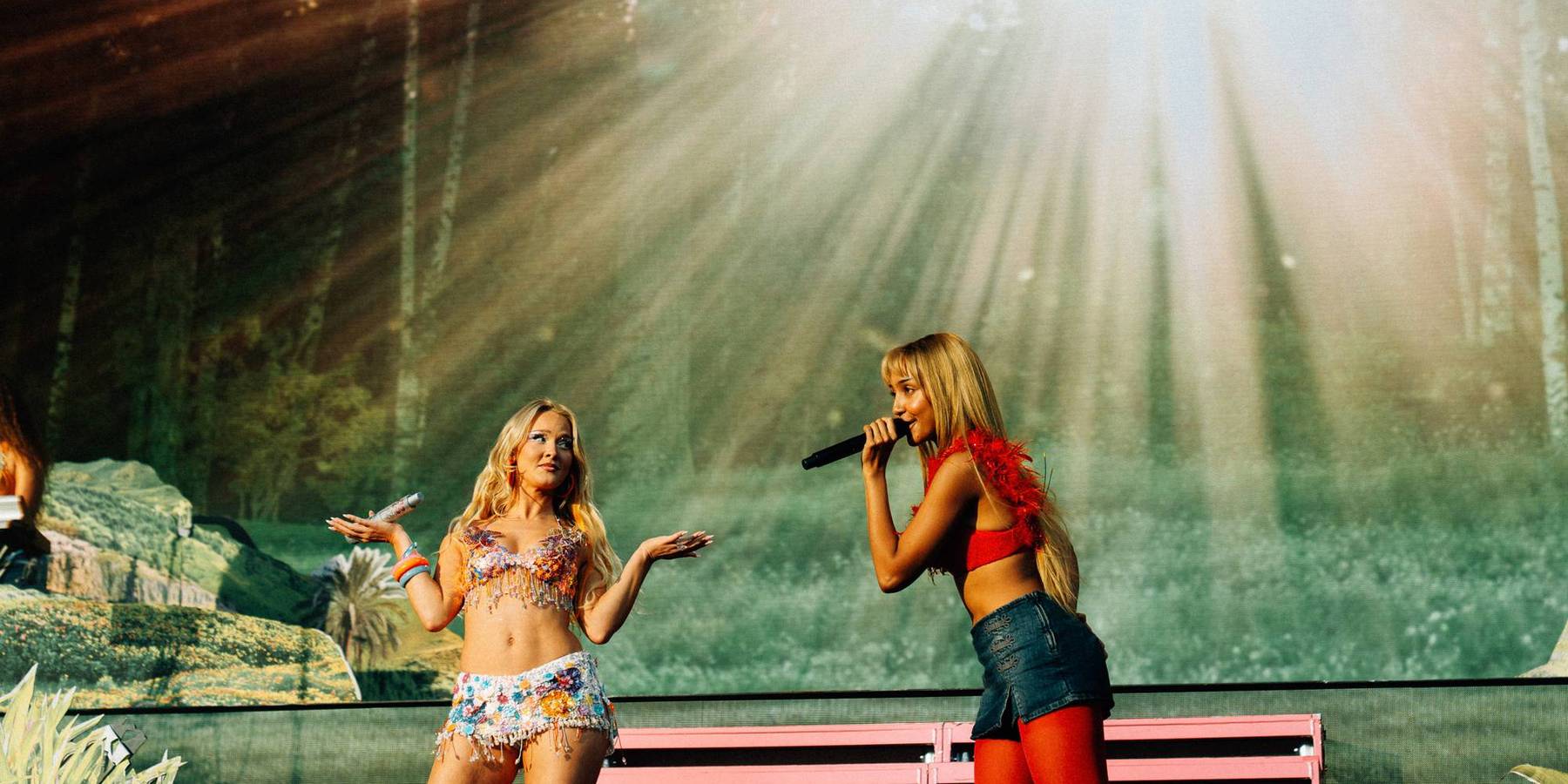
All Points East time again, is it? End-of-summer dancing and flirting and drinking and smoking and sometimes even snorting, if you’re so inclined, in East London’s Victoria Park. In late August, when the city is a tapestry of shades of brown and yellow: the hazy sun, the bleached grass, our tanned limbs, the dust that licks every shoe. Not quite summer, and most definitely not autumn. Back to School loiters in the air, like an awkward guest who arrives while the hosts are still getting ready. Oh, yes. It’s All Points East time once again.
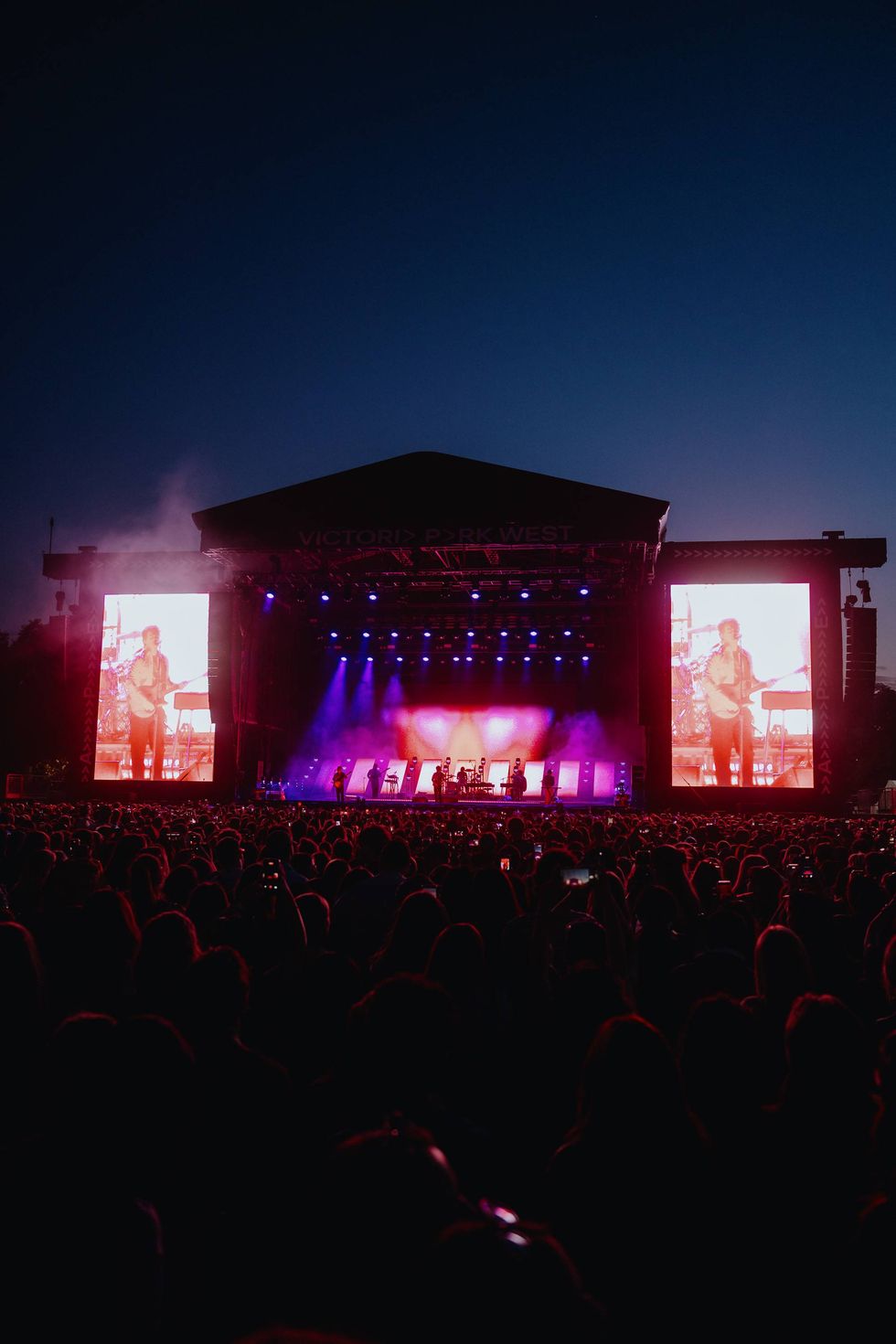
Located in the cradle of London’s creative scene, the usually peaceful, picturesque Victoria Park is totally transformed into a music lover’s fairground. Six stages, a Ferris wheel, loads of bar stands. Enough pop-up food vendors to provide adequate choice; never enough to suggest All Points East is anything but a music festival. One of the biggest in the city — so technically, the country — the festivities sprawl across two weekends, loosely split by genre. Not so zealously that it looks calculated, but enough to flex just how well All Points East knows its audiences. And their Spotify Wrappeds.
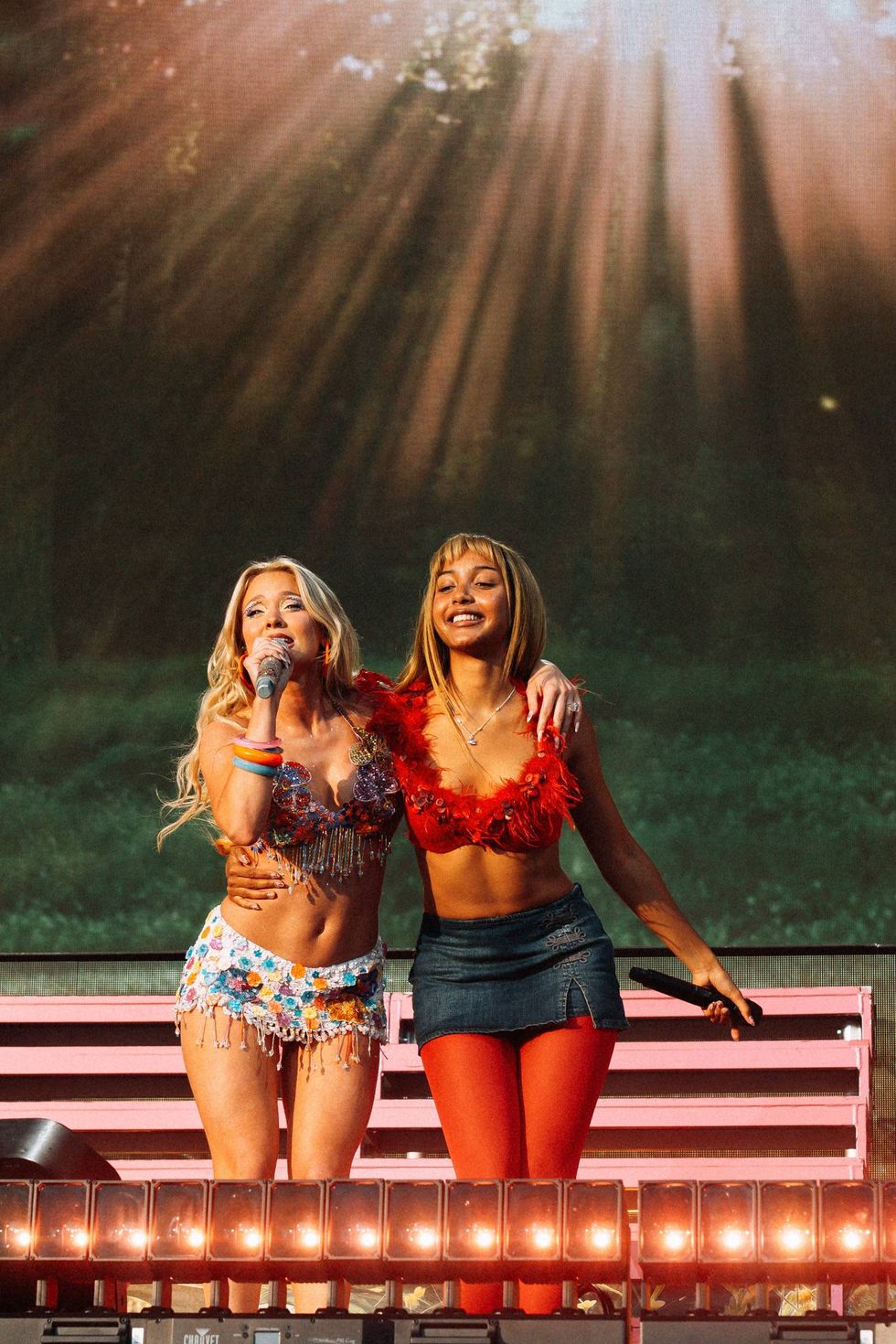
Day One this year, for example, was Tems and Jorja Smith. Tems brought out Dave; Jorja brought out Loyle Carner; even AJ Tracey performed a surprise set. In a packed, even saturated, summer of international live music, All Points East cements its cultural status with all the quiet confidence and smirking swagger of any Londoner. Day Two’s line-up lived up to Day One, while radically moving the needle. Zara Larsson! PinkPantheress! Audrey Hobert! Rose Gray! Well, every girl group has that stoner straight guy they kick it with at times, and for this generation of pop girls, it was DJO. And headlining the day, marking her return to All Points East for the first time since 2018, was generational spokesperson, lyrical prophetess, Lorde herself.
It was the kind of hot day that holds no breeze; the kind of sun that, combined with the dust of the summer’s drought, made the park feel otherworldly. For the first time, the White Girl Festival uniform of cowboy boots and bandanas, so inherited from Coachella Instagrams gone by, felt utterly appropriate. The day belonged to the Girls and Gays, and we were utterly ecstatic, jumping along to Audrey Hobert’s set on the main stage. She’s had a hard time on Twitter recently; people have been calling Our Audrey ugly, which is so mean. None of that at All Points East. A young woman with only one — EXCELLENT! — album out, unafraid to embrace her insecurities, a target online for right-wing losers? Quirky without being annoying? Jumping on a fucking trampoline to “Sue Me”? Audrey Hobert is the pop star of 2027. Or, as my fellow PAPER writer Taylor Lomax said to me, “pop star of 2025 and 2026 for those who know.” In the perfect sunshine in this imperfect city, Audrey got everyone dancing and jumping.
And then. Zara Larsson.
You’ve seen the videos already. You’ve played, and replayed, The Moment. Not the Charli xcx documentary, but the moment Zara Larsson brought out PinkPantheress, a mere hour before her own set, to perform “Stateside” together for the first time. Right after her opening rendition of “Midnight Sun,” the arms and heads of the audience glowed gold in the setting sunlight. It may have been the summer of the World Cup, but this was our euphoric, long-awaited, daring-to-dream — hopefully, cautiously, speculating — Final.
It came home, alright. To Victoria Park. “Get ready for herstory,” Zara had purred. Even after London’s very own Pink hugged goodbye and left, Zara effortlessly — sometimes earnestly, often excitedly — asserted why she is the pop icon of the moment. “Pretty Ugly” got the girls, on stage and off it, busting a whine; the expected roll call, a tour favorite, was received with thunderous applause.
I didn’t catch DJO’s set, but his mates from Stranger Things did. In a Glastonbury fallow year — the intermittent year out of every five that the world-famous festival takes off to let the ground recover; don’t make me quote Vanessa Hudgens’ iconic stance on cancelling Coachella due to Covid — All Points East neatly swept up the cultural moments for King and Cunty.
Of course, on an absolutely stacked day of next-generation pop, the reigning monarch was Ms. “Royals” herself. Lorde. The whole day had been leading up to this. Like footage of an ancient pilgrimage, thousands of us slowly strolled over to the main stage, assembling into crowd formation with biological instinct. Jostling a bit, craning necks, hustling shoulders. The sun had set, and the last of the summer stars were out, sprawling above the stage lights, dimmed by the urban fog of the city.
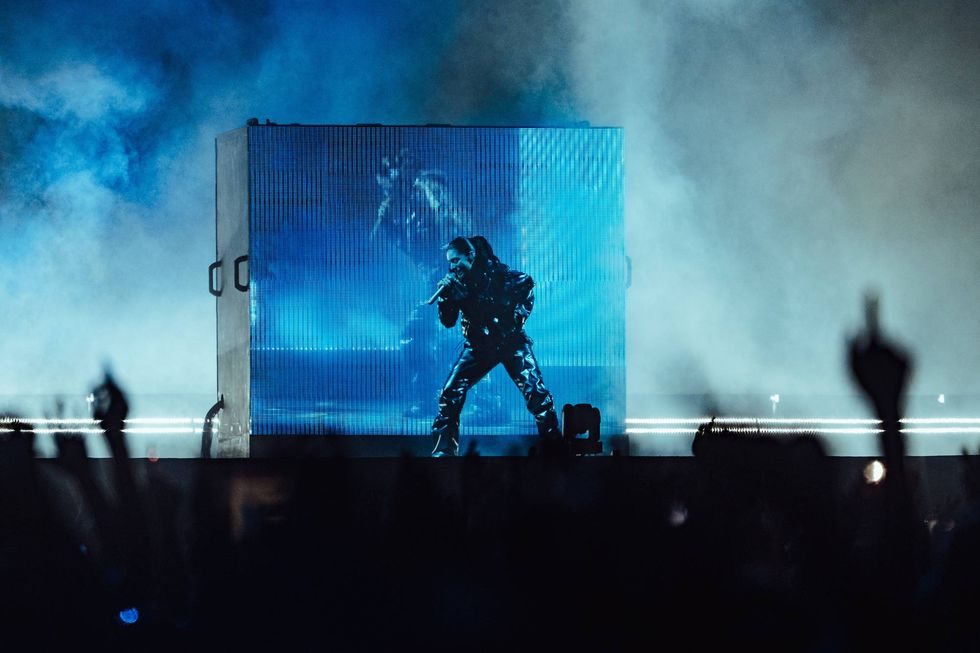
With slicked-back hair in a tight ponytail, outfitted at first in a puffer jacket, Lorde looked like any urbanite in any city across the world. She started with “Royals,” the 2013 breakout hit that gave her teenage generation their long-desired anthem. It speaks to her power that this single is as impactful over a decade later. “I’ve never seen a diamond in the flesh,” she drawled. “I cut my teeth on wedding rings in the movies,” we yelled back. Dancing in the dark, illuminated by strobe lights, caught in the dust bowl, Lorde’s set was as much a collective catharsis as it was a celebration of a generation.
For we are only ever a cologne scent, a chorus, an old-school Instagram post away from remembering who we were when we were fifteen. Teenage life was, for most, uncomfortable; often, it was cruel. The release of Pure Heroine was, for those of us who were teenagers in the early 2010s, electrifying: her jaded vulnerability, her urban disposition, her dreamy electro snarls. “I’m kind of over being told to throw my hands up in the air,” she stated on “Team.” It was one of the many lyrics that instantly asserted Lorde as our choker-wearing, Tumblr-scrolling scribe.
So listening to “Team” live — as with “Buzzcut Season” and the aforementioned “Royals” — was the kind of gut-punching euphoria our still-confused, still-angry, somewhat nihilistic generation needed. Obviously, it wasn’t all Pure Heroine. Perhaps the best moment of the whole day — if not even my whole summer? — was the ecstatic dancing to “Green Light,” 2017’s Melodrama hit. “I’m waiting for it, that green light, I want it,” we screamed at her, at each other, jumping up and down with all the frenzied abandon of a finally understood youth.
But it wasn’t our Zillennial generation that propelled “Ribs” back to the forefront of the zeitgeist; rather, it was Gen Z that rediscovered it, making it their generational anthem. Closing with the haunting chorus, the throbbing electronic build, the intensity of living, the fear of — well, “getting old,” to quote the lyrics directly — was visually spectacular and emotionally overwhelming. “Laughing ’til our ribs get tough / but that will never be enough,” as the song concludes. In that perfect moment, throats aching, eyes watering, hearts bursting, Lorde’s grand finale at All Points East was not just enough: it was a spectacular display of Lorde’s deserved status as a singular, generational talent, and a beating-heart reminder of the jagged beauty of youth, the human necessity for storytelling, the memories we had, and the memories we’re still making.
Photography by Bethan Miller-Carey