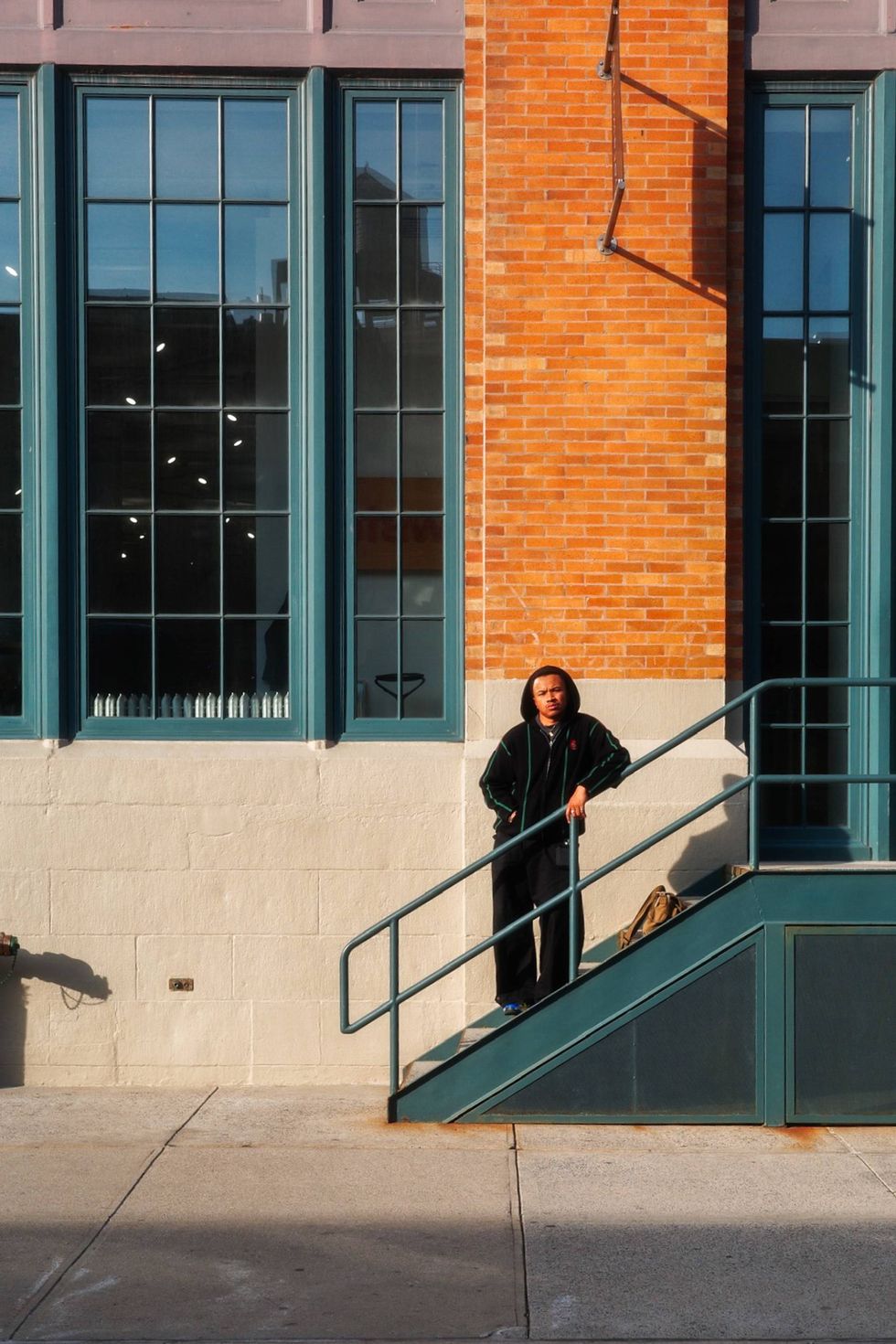
When I connect with DJ Dennis Free over Zoom, he is smiling down at his phone, walking the streets of Kuala Lumpur. There’s a thunderous grey sky spread above the Malaysian capital and I can practically feel the humidity from the other side of the screen divide. “It’s about to start raining,” Free, one of New York City’s most exciting new DJs, tells me.
We can call when you get back to yours, I suggest. But Free, with all the easy-going good nature of his Californian upbringing, shakes his head. “I’m going to start running,” he says. Watching the tropical rain fall across my laptop, we continue talking until he gets back in.
Free is having what the internet calls a generational run. He’s been invited to Malaysia for both studio sessions and to play at clubs across the capital, which he is thoroughly enjoying – “I love just dropping into a city and trying to live not like a tourist, but really try to understand what the day to day is. Very fun” – a long-haul flight from JFK he assumedly got a lot of sleep on, having just come from Coachella – “it was my second year going, so I kind of had a much better understanding of how to navigate the whole thing.”
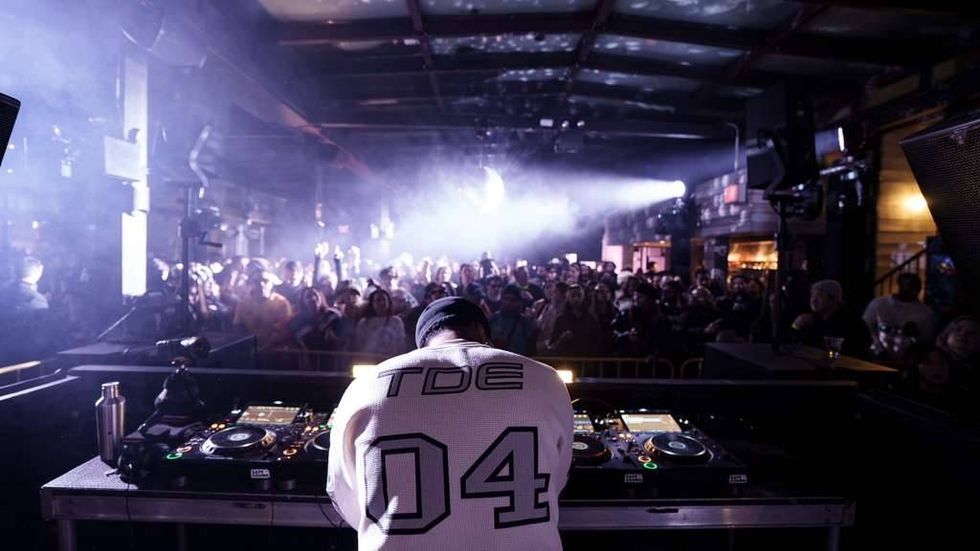
With a unique sound that blends house with dance and tech, Free has been booked for iconic music spaces in London; played, naturally, at adjacent spots in New York, like Basement; he’s even spun for Jack Harlow’s private party. A testament to just how his city is making space for him is his recent appearance on Subway Takes, in which the Oakland native made the case against watching films with subtitles.
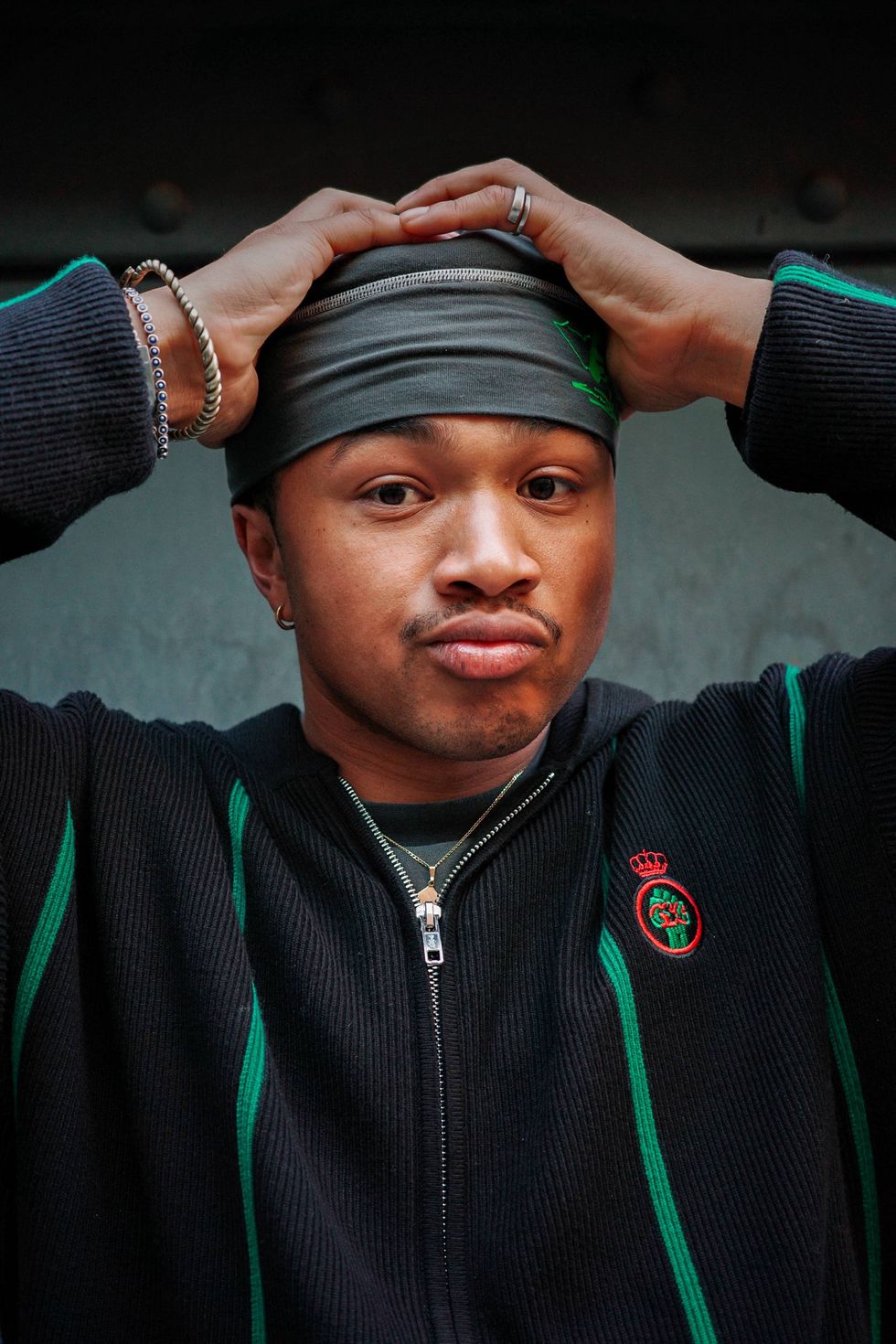
At just 25 years old, Free is establishing himself as one of the most exciting names in dance music. “Surreal is kind of the only term that I would say to describe it,” he tells me once he’s back inside his hotel room. “When I first started DJing, it came out of just a real desire to make a room have a feeling. And I think that now being able to do that on these stages that are where people may know who I am, may not know who I am, is just a pretty incredible thing, that I now have a sense of trust with an audience that I didn’t have before.”
Warm, funny, and erudite – with a mutual friend to boot – speaking with Free doesn’t feel like a formal interview, but rather a vivid conversation with someone in a club smoking area. If that someone was the night’s totally in-demand DJ, and one of his city’s rising music makers, that is. Read below for PAPER’s exclusive interview with Dennis Free.
You’ve been DJing for years, but now you’re really taking off. How does playing at international iconic club level compare to college parties?
In London, for example, it's like the first set that I had there, or the first few sets that I've had there have been at, you know, Fabric and Color Factory and now Drum Sheds. And it's in spaces I was going when I was in college there, studying abroad, like just kind of first experiencing what it felt like to be in the electronic scene in London. When I went into those rooms, I had full trust over whoever the DJ was, and most of the time I didn't even know who the DJ was. So then going back there, on, on the other side has been just pretty interesting.
I guess it just is an automatic feeling of the crowd, where they know what they came for, but there's no question of what their experience is going to be. WhenI first started my DJ career, that was such a hard thing to get over, because people come up to you with the request to play Bad Bunny, and play this and play that, and it just feels like you're any other DJing into a bar, just like pressing play on stuff. To be able to commit that type of respect in a room is just something that I definitely don't take for granted. So, yeah, it's overall a really incredible feeling. But I know, obviously there's a lot more that I can do. So I try not to be trying not to feel satisfied.
You’re clearly really guided by music both as a hobby and also a love. What first made you think, oh, I could do this full time.
My very first interactions with music, where my dad played two specific albums, there was U2 and like a U2 best hits. Not the one they put on everyone’s iPhones. I got an iPod Shuffle…
Oh god, do you remember those?
Yeah! I put it on my iPod Shuffle. So every day for about a year, maybe I was six years old, I just remember listening to that constantly. And he would play a lot of soul as well, like Aretha Franklin and Kirk Franklin. All kinds of those 60s, 70s legends. But it was really that U2 album that was like, okay, now this is technically my music. This is on my Shuffle. But at the same time it was his Apple ID and his Apple account. So if I wanted to get any new music, I would have to get permission from him.
So when it came to getting that first time, it was ‘Take You There’ by Sean Kingston.
Nice.
I was pretty young, and I think my friends were playing it or something. So I went to him, and I was like, hey, I want to get this song called ‘Take You There’ by Sean Kingston.
And he goes, you need to print out the lyrics for me. And I'm like, oh god. So I remember it very vividly. I'm like, standing over this printer, it's all coming out. Second line, and we can go to the slums, where killers get hung. He was like, absolutely not. I think from that, from that time, I kind of had this like, internal vendetta about the fact that I wasn't in control of my music.
When I got to middle school, I was very into the Oakland scene. The Bay Area is very adjacent to Atlanta and Detroit. So a lot of my friends were listening to a lot of songs like, Atlanta trap, and at that time… YSL, Young Thug, and all those guys were really coming up. And I remember every day at the lunch table, it was them, like that whole Atlanta crew of the YSL crew, and then Top Dawg Entertainment with Kendrick and Jay Rock. Every single day we would be screaming the words at the lunch tables, in the cars, like everywhere.
Good thing you didn’t have to print those lyrics anymore.
I went to this boarding school in Connecticut, and everybody was required to play sports every semester. So there’s all these sports teams who are, like, really popular sports teams, but they had no music at the games. So I started making these walkout playlists. I made the walkout mix for the field hockey team, but it was a mix that I made in GarageBand. I didn’t understand how BPM worked. So I was doing that, started up SoundCloud rapping and stuff. My friends would come to my room, and I set up a studio. We had this whole crew name called OG, which stood for Always on Grind.
When I got to college, I remember I was rushing. I was at Columbia. And this Frat that I was rushing, the way that the parties weren’t organized enough to have any type of Bluetooth system, so they had this big speaker system that had, like, an aux cord sticking out. In order for the music to come out of the aux cord, they had to bend the phone in a certain way.
It would always be a phone dangling from a ceiling, propped up by three wine bottles.
Yes… I was getting very upset when I was going into these parties and I'm hearing absolutely no flow or sequence. So I remember during winter break during my freshman year, I went home and I bought a new mark party mix, the smallest possible controller you could get, all plastic. And I went into my room and I told my mom, I'm gonna be here for four days. I'm gonna sit in my room for four days if you have any food, like, just leave it outside the door, because I was like, prison cell type of situation.
This is such a good story.
Okay, so I was living in my apartment during Columbia, and there were about 30 kids in the group chat, all from different schools, doing different jobs, but all in college.
And one of the kids was Anthony, who's now my manager, but at the time, I didn't really know him, and he had this apartment with these three other kids, Jaden, Ness and Renee. They lived in Harlem, and the basement of the apartment could fit probably 150 people, and they lived in this basement, so it was like you walk in. You're walking, you walk up off the street and you go down the stairs and walk to the very back. So it's kind of a situation where if there was a party, nobody could hear it from the street.
That makes this all an even better story. Mark Ronson, in his recent memoir Night People, writes really interestingly about the balance of being a DJ and your daily life. How do you navigate it all?
I do quite a lot of different things outside of DJing. I work at Apple Music, I have this collective Level III, and we’re having parties all the time, and doing curations for other brands. I think that because I have all these things going on, I really treat each of those things as a break from the other things. I don’t ever truly rest all that much, which could be an issue, but at least for now, it’s not too bad.
My day to day, I'm not really thinking too heavily about what I'm going to play that weekend. I am thinking about it in more like, you know,I'll have some mix on, or I'll have some playlists on that I've put that I've put together, but I try to just fully shut my mind off of DJing until it really gets to, you know, the Thursday, Friday, Saturday, and then my entire focus is on that.
I don't think my mind is fully consumed by DJing, because I am just trying to focus on a lot of different things at the same time. Which I think is just very healthy for me in general.
Where do you draw your inspiration from; both music wise, and I suppose, your peers within the industry?
It’s a good question. When I went to London for my senior year of college, my entire focus was almost all UK garage and jungle. In Amsterdam with some of my favorite artists that I’ve heard, because it kind of brings that nostalgic feeling for me, of this music that I really grew up with. In the current moment, I have taken a lot of interest in really digging deep into the history of classic 90s house music.
Really, for me, I’m just trying to understand how we got here, and making sure that I’m not forgetting that in my other music making. I think from a peer sense, we have a really great group of young DJs in New York, who are of that same mind set. Who collaborate all the time. Yeah, I think that mostly people in New York have been very inspirational in their willingness to not be pushed by fear that their slot is going to get taken on a line-up. At the end of the day, we’re just homies playing music in the zone.
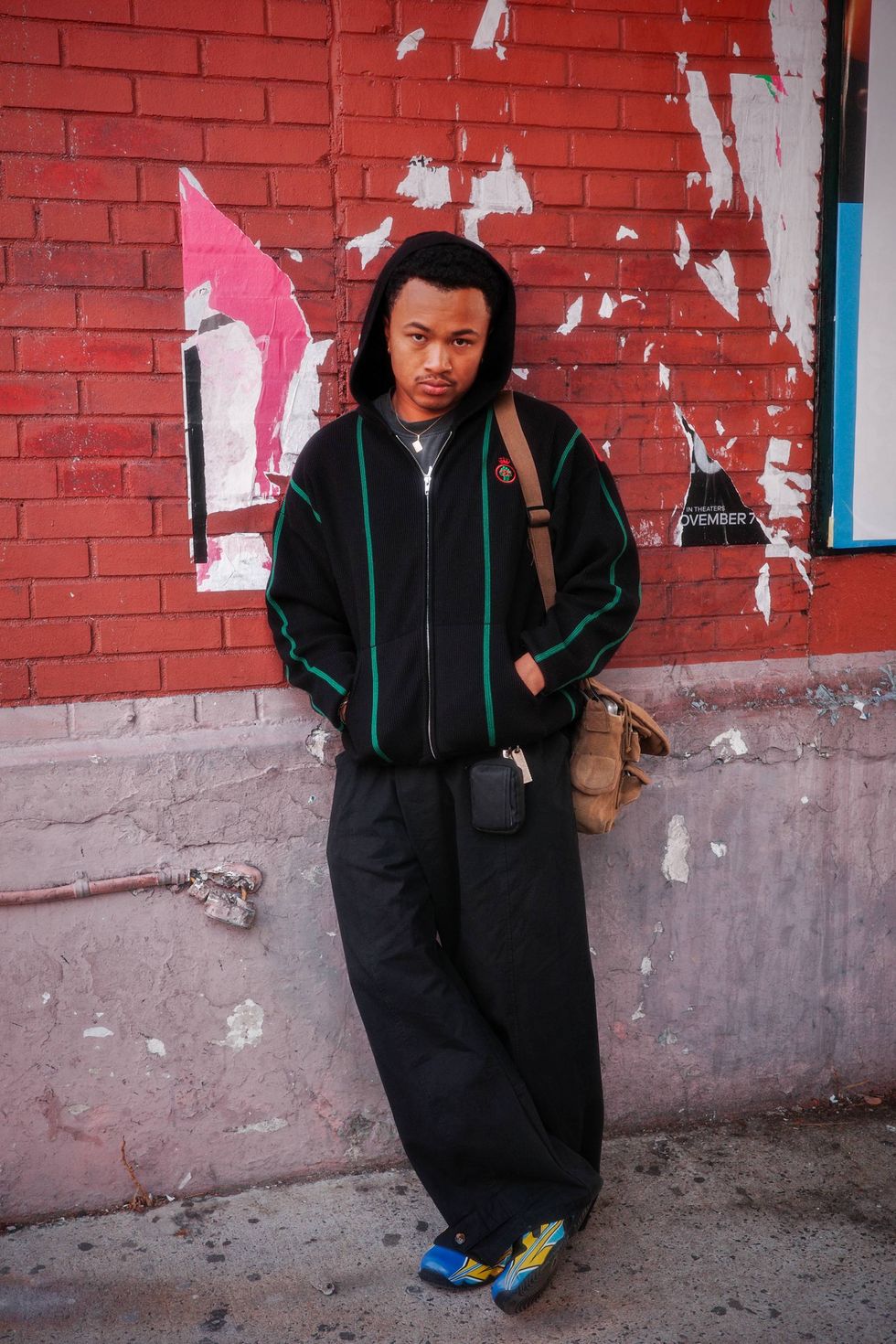
Photography courtesy of Dennis Free
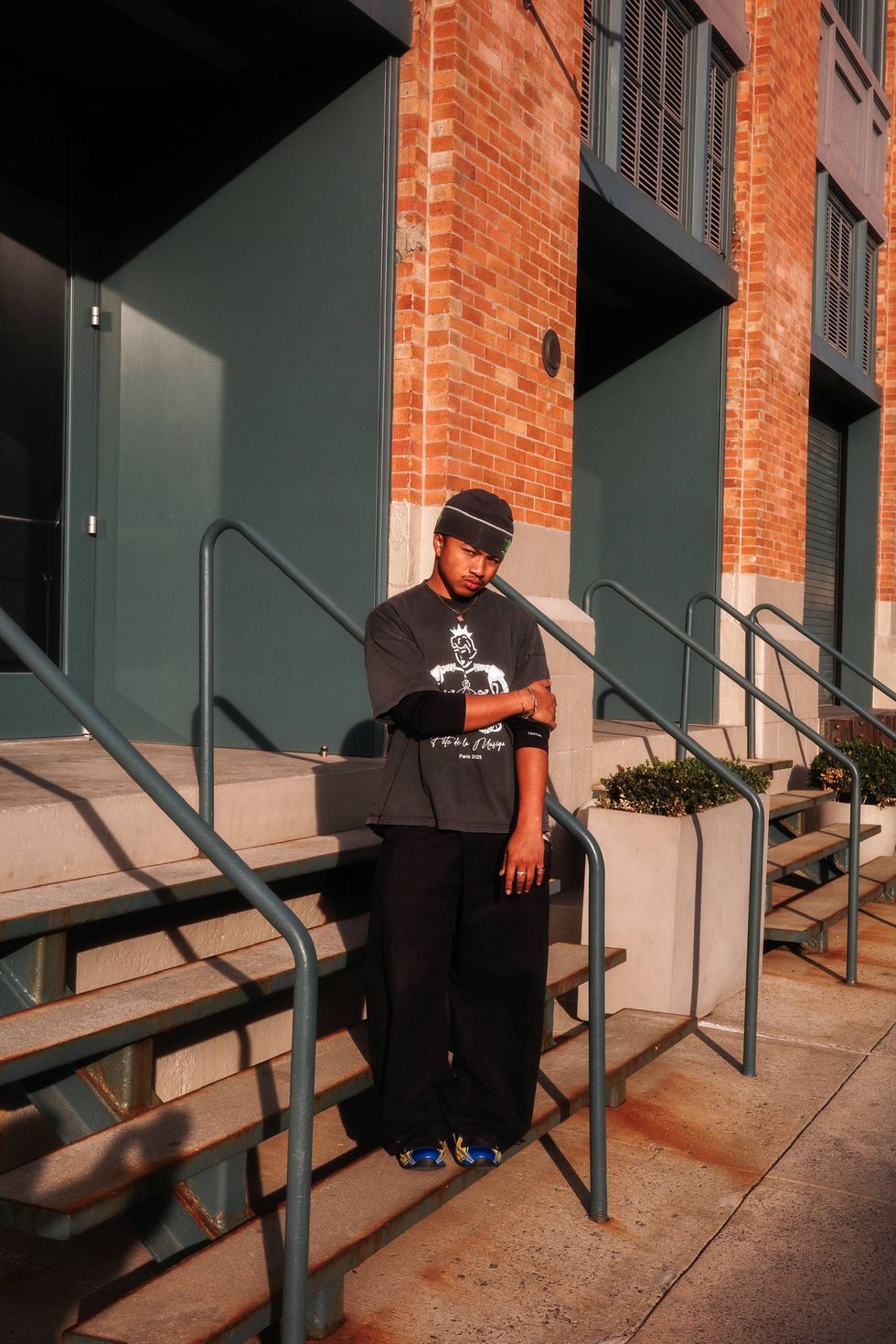
Photography by @fortunatosapocalypse
From Your Site Articles